
Henry Hodgkin
Medical doctor and British Quaker missionary.
About Henry Hodgkin
Lived 1877 – 1933 (aged 55–56). Henry Hodgkin was a British physician, missionary and pacifist.
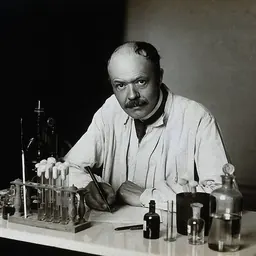
Henry Theodore Hodgkin (H. T. Hodgkin; 21 April 1877 – 26 March 1933) was a medical doctor and a British Quaker missionary who, in the course of his 55-year life, co-founded the West China Union University in Chengdu, co-founded and led the first Christian pacifist movement, the International Fellowship of Reconciliation, and founded the Pendle Hill Quaker meeting and training center, in Wallingford, Pennsylvania.
Life
Early years Henry Theodore Hodgkin was born on 21 April 1877 in a very affluent Quaker family of Darlington in County Durham, North East England. He was the son of Jonathan Backhouse Hodgkin (1843-1926), banker and mayor of Darlington, and of Mary Anna Pease, both from Quaker families. The Hodgkins lived in the majestic Victorian manor of Elm Ridge in Darlington.
After Leighton Park School he studied first in King's College, Cambridge, then in St Thomas' Hospital, London, to become a medical doctor (M.B. B.Ch [Cantab]). he became President of the English Student Missionary Union from 1902 to 1905. This organization's aim was to recruit missionaries among British students.
Missionary work in China After completing his studies in 1905, Henry Hodgkin left immediately for Chengdu, in the Sichuan province, China, as a missionary of the Friends' Foreign Mission Association, a Quaker organisation which later became the Friends Service Council; he stayed in China until 1909. During his stay in Chengdu, he succeeded Omar Leslie Kilborn as editor of The West China Missionary News in May 1909, a position he held until January 1910. He helped set up the West China Union University, a Protestant university sponsored by several Protestant churches until its closure in 1926; after 1926 the Chinese professors took over from the foreign professors, and perpetuated their work so well that this university has now been incorporated into Chengdu's various universities.
From 1910 to 1920, Henry Hodgkin returned to England, to be the Secretary of The Friends' Foreign Missionary Association. He departed again for China in 1921, initially to deliver a series of lectures. He received however as a result a pressing invitation to become one of the secretaries of the National Christian Council of China; he held this position from 1922 to 1929. Hodgkin kept his word immediately and initiated a first meeting at Queens' College, Cambridge, where he lectured in philosophy: an ecumenical group of about 20 people came together to reflect on the implications of war on their personal and community life. They wrote a common declaration stating they could conceive God as a nationalist and couldn't accept the idea of a moratorium on the Sermon on the Mount on hold for the duration of the war. The first chapter of the Fellowship of Reconciliation (FOR) was born. Another meeting gathered 128 people at Trinity College, Cambridge, where Henry Hodgkin was elected president of the FOR. In 1915 Hodgkin travelled to New York City with a group of 66 people and convened a meeting at Union Theological Seminary that included some very influential theologians and ministers the day, including Reinhold Niebuhr (who would become critical of Christian pacifism in the ’30s and consequently break with the FOR). Among those present that day were Edward Evans, Norman Thomas, socialist educator Jessie Wallace Hughan (who would later found the more secular War Resisters League), Episcopalian bishop Paul Jones (who would be forced to resign his Utah see in April 1918 because of his outspoken opposition to World War I), Grace Hutchins et John Haynes Holmes. The American chapter of the now International Fellowship of Reconciliation was then founded.
Work in the United States In 1929 Henry Hodgkin was called to launch the Quaker religious and social meeting centre of Pendle Hill near Philadelphia (Pendle Hill being the name of the Lancashire hill where George Fox, the inspirator of Quakerism, had his founding vision). Pendle Hill’s early vision was to be "a vital center of spiritual culture and as a place for training leaders." In 1929, Henry Hodgkin gathered a dozen leaders to discern the direction for this new center and four key focus areas were chosen as a result: House of Rest, a place of peace and deep quiet; School of the Prophets, a place to be grounded in a few well-chosen areas rather than teaching on many interesting topics; Laboratory of Ideas, a place to test beliefs in practice; and Fellowship ’Round Christ among students and staff. He had to leave this position in 1932 for health reasons. Lay religion (New York, 1919) The Missionary Spirit - Swarthmore Lecture for 1916 His brother Jonathan Edward Hodgkin (1875-1953) was a devoted humanitarian during World War I, heading the local branch of The Friends War Victims Relief Committee - FWVRC. From 1916 on he served in Durham as a Quaker chaplain to the imprisoned conscientious objectors and organised transport for wounded in Darlington district. He also became treasurer of the London Peace Society. His sister Mary Hodgkin (1882-1956) was the secretary of Darlington Town Mission for many years. She raised the needed money to build the Chapel at the Darlington Memorial Hospital for the use of the patients.
Don’t just read it —
keep it.
Full-length biographies made to live with: read them, listen on the way to work, watch them tonight.
- E-book
- Audio
- Video
Instant download · yours to keep · every purchase keeps this site free
Important facts
People in Henry Hodgkin's life
Named in this biography and alive at the same time


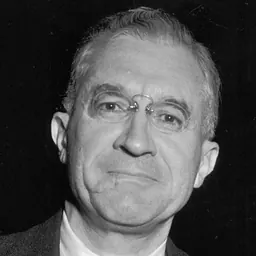
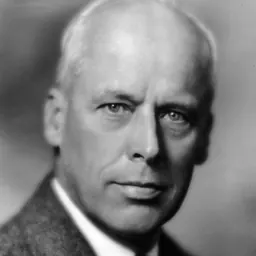


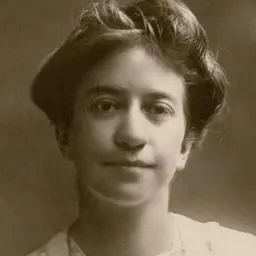
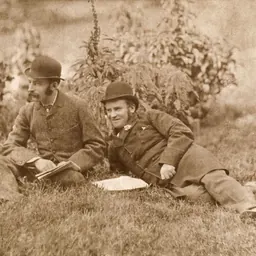
Related people
Same field, nearest in time




Contemporaries
People whose lives overlapped Henry Hodgkin's


Frequently asked questions
Who was Henry Hodgkin?
Medical doctor and British Quaker missionary.
When was Henry Hodgkin born?
Henry Hodgkin was born on 21 April 1877 in Darlington.
When did Henry Hodgkin die?
Henry Hodgkin died in 1933 in Dublin.
What was Henry Hodgkin's occupation?
Henry Hodgkin was a physician, missionary and pacifist.
What nationality was Henry Hodgkin?
Henry Hodgkin was British.
Sources & further reading
Cite this page
APA: Biography.guide. (2026). Henry Hodgkin. https://biography.guide/henry-hodgkin/
MLA: "Henry Hodgkin." Biography.guide, https://biography.guide/henry-hodgkin/.
Chicago: "Henry Hodgkin." Biography.guide. https://biography.guide/henry-hodgkin/.
Data last updated: 2026-09-20 · Spot an error? Report a correction.
Page generated 2026-09-27 05:20 UTC