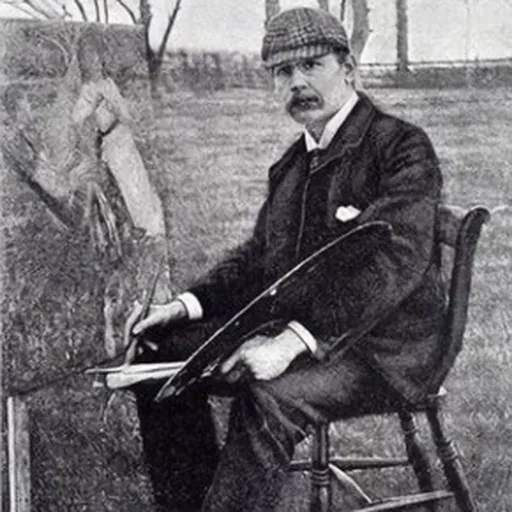
About Henry Herbert La Thangue
Lived 1859 – 1929 (aged 70). Henry Herbert La Thangue was a British painter and visual artist.
Henry Herbert La Thangue (19 January 1859 – 21 December 1929) was an English realist rural landscape painter associated with the Newlyn School.
Early life La Thangue was born in Croydon, Surrey, now a suburb of London, to schoolmaster Richard Henry La Thangue and his wife Clara (née Twisden). His paternal grandparents Robert and Elizabeth were both surnamed 'La Thangue' (probably distant cousins). In the 1700s the surname was 'Lethangie', a place in Kinross-shire, Scotland, from which the family takes its name. Henry was schooled at Dulwich College where he met fellow painters Stanhope Forbes and Frederick Goodall. He studied painting first at the Lambeth School of Art and then, from 1874 to 1879, at the Royal Academy, London, winning a gold medal for his work in 1879. This led to a prestigious scholarship for 3 years at the studio of Jean-Léon Gérôme at the École des Beaux-Arts in Paris. Here La Thangue came under the influence of the Barbizon school of open-air landscape painters, such as Bastien-Lepage and Dagnan-Bouveret, despite the fact that his teacher was strongly critical of the movement.
Career
Between 1881 and 1882 La Thangue spent some time painting on the coast of Brittany (one of his works from this period is The Boat-builder's Yard), then in Donzère in the Rhone valley (1883). He became a member of the Royal Institute of Oil Painters in 1883. He returned to England in 1886, exhibiting at the Royal Academy, Royal Society of British Artists (RBA), Grosvenor Gallery, New Gallery, Royal Institute of Oil Painters, and many regional galleries. helping to found the rival New English Art Club (NEAC) and exhibiting his work there.
In the late 1880s, La Thangue moved to South Walsham in Norfolk. A painting of this period, Return of the Reapers (1886), reflected his interest in photography and photo-realistic depictions. In the early 1890s he settled in Bosham, in Sussex, where he continued his large-scale rural genre paintings, some of which proved to be controversial. In 1896 Tate acquired The Man with the Scythe. In 1898 he was made an Associate of the Royal Academy, becoming a full Member in 1912.
La Thangue eventually made his base at Haylands in Graffham, Sussex, though he also spent much time painting in Provence in France (after 1901), Liguria in Italy (1903–11) and the Balearic Islands. His southern European landscapes were shown in a successful commercial exhibition at the Leicester Galleries in London, just before the outbreak of World War I.
In 1929 he was reportedly deeply affected by the loss of two of his paintings when the ship Manuka carrying them foundered off the New Zealand coast. In that same year he died in London on 21 December. On 26 December the paintings were recovered near Long Point, New Zealand, in fairly good condition.
Personal life La Thangue's wife Kate died on 22 September 1940 leaving a bequest of five of La Thangue's works to Australasian public art collections: Village Fountain, Provençal Fishing Boats, and Plovers on the Marshes to the Robert McDougall Art Gallery in Christchurch, New Zealand and The Weir and The Wood Gatherers to the Art Gallery of Western Australia, Perth.
Legacy La Thangue's work regularly reaches high prices at auction. In 2006, his "Packing grapes" was sold for £70,000 and in December 2009 "In the orchards" realised over £285,000.
Gallery
Don’t just read it —
keep it.
Full-length biographies made to live with: read them, listen on the way to work, watch them tonight.
- E-book
- Audio
- Video
Instant download · yours to keep · every purchase keeps this site free
Important facts
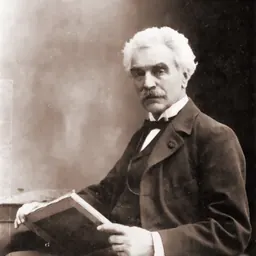
People in Henry Herbert La Thangue's life
Named in this biography and alive at the same time


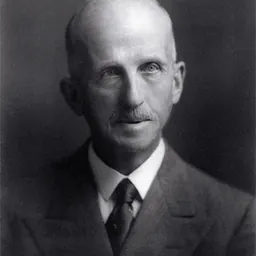

Related people
Same field, nearest in time
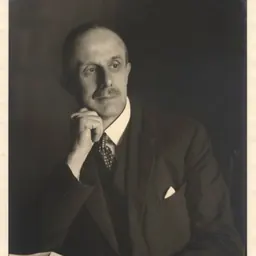
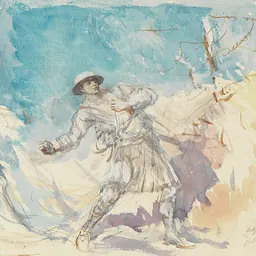
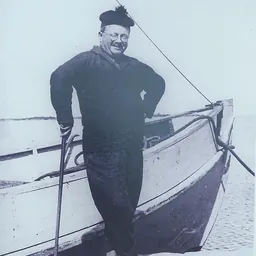
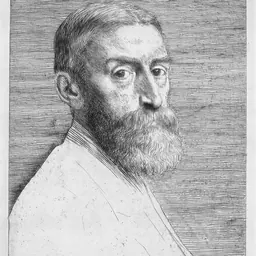

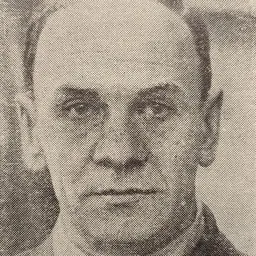
Contemporaries
People whose lives overlapped Henry Herbert La Thangue's


Frequently asked questions
Who was Henry Herbert La Thangue?
British artist (1859-1929)
When was Henry Herbert La Thangue born?
Henry Herbert La Thangue was born on 19 September 1859 in London, London Borough of Croydon.
When did Henry Herbert La Thangue die?
Henry Herbert La Thangue died on 21 December 1929 in London.
What was Henry Herbert La Thangue's occupation?
Henry Herbert La Thangue was a painter and visual artist.
What nationality was Henry Herbert La Thangue?
Henry Herbert La Thangue was British.
Sources & further reading
· Wikipedia: Henry Herbert La Thangue
· DBpedia: Henry Herbert La Thangue
Cite this page
APA: Biography.guide. (2026). Henry Herbert La Thangue. https://biography.guide/henry-herbert-la-thangue/
MLA: "Henry Herbert La Thangue." Biography.guide, https://biography.guide/henry-herbert-la-thangue/.
Chicago: "Henry Herbert La Thangue." Biography.guide. https://biography.guide/henry-herbert-la-thangue/.
Data last updated: 2026-09-23 · Spot an error? Report a correction.
Portrait: Wikimedia Commons · author & licence
Page generated 2026-09-27 05:05 UTC