
Henry Heathcote
Royal Navy officer during the French Revolutionary Wars and Napoleonic Wars.
About Henry Heathcote
Lived 1777 – 1851 (aged 74). Henry Heathcote was a British naval officer.
Admiral Sir Henry Heathcote (20 January 1777 – 16 August 1851) was an officer of the Royal Navy who served during the French Revolutionary and Napoleonic Wars.
Heathcote was born into a gentry family in 1777, the son of a baronet. He entered the navy several years before the start of the French Revolutionary Wars, and after seeing action in the Mediterranean, was advanced to lieutenant in 1795. After several acting commands he became a post-captain but saw no further service until the outbreak of the Napoleonic Wars. He took a frigate out to the West Indies, and achieved some successes against privateers. An attempt to cut out a moored privateer in 1804 ended in failure and heavy casualties after the French defenders were forewarned.
Heathcote then went out to the East Indies commanding a ship of the line. After service transporting the ambassadors to Persia, he was based on the Indian coast. While there he took a bold decision to open despatches and then quit his post to deliver them to the station commanders, who were at the time involved in the Java Expedition. He was court-martialed for this, but though several charges were proved, he was judged to have acted in the service's best interests, and was acquitted. He went out to the Mediterranean late in the Napoleonic Wars, and commanded the inshore squadron during the blockade of Toulon. He led one of the last attacks on the French Mediterranean Fleet at the action of 5 November 1813, and retired ashore after the end of the wars. He developed a new technique for hoisting staysails, received further promotions, and a knighthood, while in retirement, before his death in 1851 at the rank of admiral.
Family and early life Henry Heathcote was born on 20 January 1777, the fourth son of Sir William Heathcote, 3rd Baronet and his wife, Frances.
William Heathcote was Member of Parliament for Hampshire between 1790 and 1806, and had his seat, Hursley House, in that county. Henry's younger brother, Gilbert, would also have a naval career, dying a post-captain in 1831. Henry Heathcote entered the navy in 1790, serving aboard the 74-gun under Captain Archibald Dickson in the English Channel.
For the second action, the Battle of Hyères Islands on 13 July 1795, Heathcote was a master's mate aboard the 28-gun , commanded by Admiral Hotham's nephew, William Hotham.
He arrived back in Britain in early 1798, and was promoted to post-captain on 5 February 1798. His promotion apparently brought about a break in his service, as he is not recorded commanding another ship until 1803, after the resumption of the wars with France. In February 1804 Galatea sailed to the West Indies as escort to a convoy of 150 merchant vessels.
Heathcote remained in the West Indies until April 1805, when he took command of the 36-gun and sailed her back to Britain escorting a convoy of 101 ships, afterwards paying her off. He was appointed to command the Isle of Wight Sea Fencibles on 21 March 1807, and received his next sea-going command in February 1808, when he took over the 64-gun .
He made two voyages to India, carrying Gore Ouseley and Mirza Abolhassan Khan Ilchi, the ambassadors between Persia and Britain. They would be instrumental in arranging for Heathcote's knighthood in 1819.
Aware that with Broughton absent, any important orders that the despatches contained might go unread for some time, Heathcote took the unusual step of opening them. The despatches contained a warning that eighteen French frigates, carrying between 3,000 and 4,000 troops, were expected to be sailing for Java to frustrate the British attempt to capture the island, and that the securing of the island by the British was considered vitally important for the future of British operations in the East Indies.
His commander, Vice-Admiral Sir Edward Pellew placed him in charge of the inshore squadron during the blockade of Toulon in Autumn 1813, and on 5 November 1813 he became involved in one of the last clashes with the French Mediterranean Fleet.
Strong gales in late October 1813 had forced both the British inshore squadron and the main battlefleet off their stations, and the French commander, Vice-Admiral Maxime Julien Émeriau de Beauverger, decided to make a sortie to exercise his fleet off Cape Sicié.
Heathcote, commanding four 74-gun ships, had recently arrived back on station and was observing the French movements. At 11:30 am the wind suddenly changed direction, shifting to the north-west.
Concerned about the sudden arrival of the British and unfavourable winds, Émeriau abandoned the exercises and ordered the fleet to make for Toulon. The advanced squadron of the French fleet, commanded by Rear-Admiral Julien Cosmao and consisting of five ships of the line and four heavy frigates, now found itself to leeward, beating back to port.
The British ships tacked and wore, exchanging fire with the French until the wind carried Cosmao-Kerjulien's squadron under the safety of the shore batteries covering the approach to Toulon.
By this time the couple had produced a large family. Their eldest child, Sarah-Frances Heathcote married Major-General Henry Somerset. Their third son, Thomas Hamilton Heathcote, entered service with the East India Company, and died a lieutenant at Bombay in 1824 at the age of 20. The couple had eleven children in total, at least one of whom followed his father into the navy.
Despite this, Heathcote's obituary reported that 'the plan was tried aboard two frigates, and was reported by the Admiralty of being worthy of its acceptance.'
Admiral Sir Henry Heathcote died at Ingouville, France on 16 August 1851, at the age of 74.
Don’t just read it —
keep it.
Full-length biographies made to live with: read them, listen on the way to work, watch them tonight.
- E-book
- Audio
- Video
Instant download · yours to keep · every purchase keeps this site free
Important facts
People in Henry Heathcote's life
Named in this biography and alive at the same time



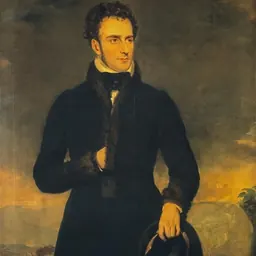
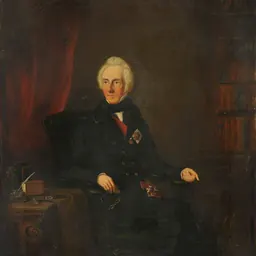

Related people
Same field, nearest in time

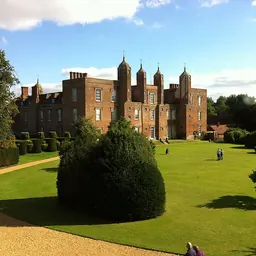



Contemporaries
People whose lives overlapped Henry Heathcote's




Frequently asked questions
Who was Henry Heathcote?
Royal Navy officer during the French Revolutionary Wars and Napoleonic Wars. (1777-1851)
When was Henry Heathcote born?
Henry Heathcote was born on 20 January 1777.
When did Henry Heathcote die?
Henry Heathcote died on 16 August 1851 in Ingouville.
What was Henry Heathcote's occupation?
Henry Heathcote was a naval officer.
What nationality was Henry Heathcote?
Henry Heathcote was British.
Sources & further reading
Cite this page
APA: Biography.guide. (2026). Henry Heathcote. https://biography.guide/henry-heathcote/
MLA: "Henry Heathcote." Biography.guide, https://biography.guide/henry-heathcote/.
Chicago: "Henry Heathcote." Biography.guide. https://biography.guide/henry-heathcote/.
Data last updated: 2026-09-20 · Spot an error? Report a correction.
Page generated 2026-09-27 05:10 UTC