
About Henry F. Schricker
Lived 1883 – 1966 (aged 83). Henry F. Schricker was an American lawyer, politician and governor.
Henry Frederick Schricker (August 30, 1883 – December 28, 1966) was an American politician who served as the 36th and 38th governor of Indiana from 1941 to 1945 and from 1949 to 1953. He is the only Indiana governor elected to two non-consecutive terms, and the only governor between 1852 and 1977 to be elected to more than one term in office. His terms were marked by strong opposition party control of the Indiana General Assembly, which attempted to remove powers from the governor that had been granted during the Great Depression. Schricker fought the attempt in the state courts, and although his power was significantly reduced, the Indiana Supreme Court ruled in the case of Tucker v. Indiana that the governor was the chief executive of the state, and the legislature could not pass legislation that interfered with the division of powers.
Family and background Schricker was born in North Judson, Indiana, on August 30, 1883, to Bavarian immigrants Christoph and Magdelena (Meyer) Schricker. He attended a Lutheran parochial school in North Judson to elementary school and attended a public school and completed grade eight. After graduation, he began working in his family's grocery store as a bookkeeper. His parents sent him to a local college to take a course in bookkeeping as the final step in his education. After working in the grocery store for nine years, Schricker decided to become a lawyer and worked toward that goal by taking a position in the Starke County clerk's office in Knox, Indiana.
After a year of studying law on the side, he passed the bar examination and began practicing law in Knox with his mentor, Adrian Courtright. He became the cashier of the Hamlet bank in 1907.and became the owner, publisher, and editor of the Starke County Democrat in 1908. He was actively involved in the community, organizing the first Boy Scout troop in Starke County in 1912 and presiding as the chief of the Knox Fire Department. It was also during this time that Henry met Maude Brown, a teacher in North Dakota, who had originally come from Knox. In 1914, she finished her five years proving the homestead in North Dakota, and returned to Knox, Indiana, resulting in their marriage on October 21, 1914. In 1919, he returned to his previous career and became the cashier of the First National Bank of Knox.
Lieutenant governor He was nominated to run again for re-election to the Senate in 1936, but turned down the nomination after Governor Paul V. McNutt arranged for the convention to nominate him to run for Lieutenant Governor of Indiana, on a ticket with M. Clifford Townsend. McNutt was considered to be significantly more conservative than Townsend, and party leaders believed Schricker would help draw more Republican votes.
As President of the Democratic-controlled Senate, Schricker helped pass welfare measures supported by Townsend. As lieutenant governor, he was also head of the state's agricultural department and spent considerable time traveling around the state for meetings with leaders of farming communities. The state party was in the midst of a dispute during his term, with the McNutt and Frederick Van Nuys faction opposing President Franklin D. Roosevelt's plan to stack the US Supreme Court. Roosevelt intervened in the state party affairs, and with the support of Townsend, he attempted to remove the state's senators, who were blocking his plan. Schricker did not takes sides in the debate, which McNutt ultimately won, but tried to avoid the Capitol. His traveling effectively turned into a four-year campaign for the governorship as he gained support around the state.
Governor
First term
As Schricker took office in January 1941, the battle with the General Assembly was inevitable. Once convened the assembly immediately repealed the Executive Reorganization Act, stripping the governor of his direct authority over numerous government agencies and his authority to appoint officials, which reverted to the Assembly. Schricker openly supported the repeal of the act, stating he had no desire for "dictatorial powers". However, when the bill arrived to be signed into law, he vetoed it claiming that as it was written it would reduce his status to that of an "errand boy."
Schricker refused to call a special session of the General Assembly. The legislature was unable to reconvene until 1943 when it promptly passed a bill to reform the patronage system and transferred most of the state's agencies to the merit system already employed in some agencies. It also took over the Two Percent Fund, which required all state employees to contribute two percent of their income to a fund that supported the Democratic Party. By creating a board to oversee the fund, they guaranteed that it would be split equally between both parties. Schricker vetoed the bill, but the legislature again overrode it. Despite the mentions in the press, Shricker made no effort to run for vice president; at the Democratic National Convention, the Indiana delegation, led by Schricker, attempted unsuccessfully to generate support for Paul V. McNutt or Sherman Minton as an alternative to Wallace or the favorite to succeed him, Harry S. Truman. When support for McNutt or Minton failed to materialize, the Indiana delegation supported Truman. Prevented by law from running for reelection to a consecutive term as governor, Schricker was nominated to run for the United States Senate. The race was hard-fought, but Schricker lost to Homer E. Capehart by 48.9% to 50.2% of the vote.
Schricker left office with the state having a $115 million surplus fund due to frugal spending and his own support of the spending plans. The state's highway system, public schools, and prisons suffered during the years because of their neglect. He died on December 28, 1966.
Don’t just read it —
keep it.
Full-length biographies made to live with: read them, listen on the way to work, watch them tonight.
- E-book
- Audio
- Video
Instant download · yours to keep · every purchase keeps this site free
Important facts
People in Henry F. Schricker's life
Named in this biography and alive at the same time
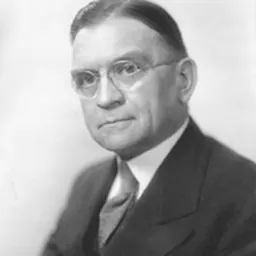
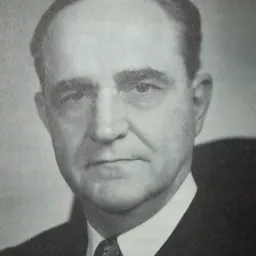
Related people
Same field, nearest in time
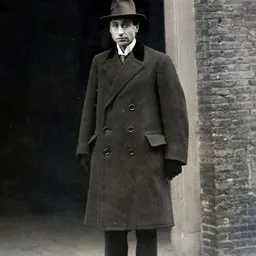
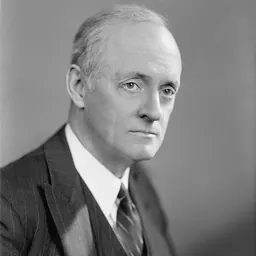

Contemporaries
People whose lives overlapped Henry F. Schricker's



Frequently asked questions
Who was Henry F. Schricker?
American politician (1883-1966)
When was Henry F. Schricker born?
Henry F. Schricker was born on 30 August 1883 in North Judson.
When did Henry F. Schricker die?
Henry F. Schricker died on 28 December 1966 in Knox.
What was Henry F. Schricker's occupation?
Henry F. Schricker was a lawyer, politician and governor.
What nationality was Henry F. Schricker?
Henry F. Schricker was American.
Sources & further reading
· Wikipedia: Henry F. Schricker
Cite this page
APA: Biography.guide. (2026). Henry F. Schricker. https://biography.guide/henry-f-schricker/
MLA: "Henry F. Schricker." Biography.guide, https://biography.guide/henry-f-schricker/.
Chicago: "Henry F. Schricker." Biography.guide. https://biography.guide/henry-f-schricker/.
Data last updated: 2026-09-20 · Spot an error? Report a correction.
Page generated 2026-09-27 05:32 UTC