
About Henry F. Pulitzer
Lived 1899 – 1979 (aged 79–80). Henry F. Pulitzer was an American art collector.
Dr. Henry Franz Pulitzer (1899–1979) was an Austrian-born gallery owner and "avid art collector", and connoisseur. He was the owner of the Pulitzer galleries in London and Bern, Switzerland, and of the Isleworth Mona Lisa, a painting famous for the claim passed down from its previous owners that there was evidence that it was painted by Leonardo da Vinci. Pulitzer himself took up the cause of proving the claimed provenance of the painting, including writing a book in support of it, but his efforts did not lead to acceptance of the claim during his lifetime.
Biography Born in Vienna, then within Austria-Hungary, Pulitzer recalled developing a love of art at an early age, particularly remembering having a "passionate adoration of a Dombrovsky that had been relegated to his room", and disliking occasions in which his family would move it to the great hall for state occasions. Pulitzer was at one time "a gentleman-in-waiting" at the court of Zog I of Albania. In 1936, he attended a display at the Leicester Galleries, at which he first saw the painting known as the Isleworth Mona Lisa, then owned by English art collector Hugh Blaker, with Pulitzer later describing that as the point at which he had "fallen in love with it".
By the 1950s, Pulitzer had become the proprietor of the Pulitzer Gallery and the Pulitzer Studio at Kensington High Street in London. A 1953 Advertiser's Weekly article noted that "Pulitzer Studios of Kensington are the other 'all colour' firm" in the advertising field", and described a "teaming-up of Eugene Vernier, the outstanding French fashion photographer, with Dr. Henry F. Pulitzer, who, in recent years, has done much technical development work in colour and other fields". as did a 1959 display of "Minor English Masters", and later in 1959, he discovered "a fine specimen" of a rare painting by Caspar Netscher, "showing a shepherd and shepherdess in a sylvan setting with a sculptured group of a nymph, centaur and cupid in the background".
A 1962 account described Pulitzer as a connoisseur and art dealer in London and Bern. The painting was shipped in a box with another larger painting, by Desportes, but when the box was opened, only the Desportes was found. Agents of the Federal Bureau of Investigation investigated the disappearance, and found the missing Borgognone the next day in the same box, "under piles of excelsior". By February 1963, Pulitzer recounted making a trip to Phoenix, Arizona "intending to stay for three days" before leaving for California, but instead staying for three months out of fascination with the artwork that had been collected locally, noting for example "a magnificent terracotta by Andrea della Robbia, covering a whole wall specially built to house it" some miles from Scottsdale.
A 1969 account lamenting the tendency of art dealers to break up collections noted:
In 1979, Ronald Hambleton acknowledged Pulitzer for providing details about a painting by Hieronymus Bosch previously incorrectly attributed to Herri met de Bles.
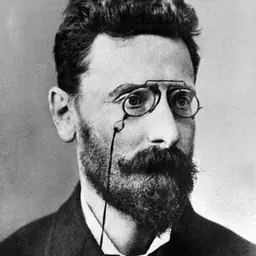
Henry F. Pulitzer has been confused in some sources with Joseph Pulitzer (1847-1911), publisher of the New York World and other newspapers (e.g. "den New Yorker Verleger and Multimilliardär Henry F. Pulitzer"). They may have been relatives. Henry F. Pulitzer was not a publisher.
Advocacy of the Isleworth Mona Lisa In 1962, Pulitzer purchased the Isleworth Mona Lisa from Blaker, Archibald Cecil Chappelow, Arduino Colasanti, and Adolfo Venturi. Art historian Jean-Pierre Isbouts asserts of Pulitzer that despite his success as a publisher he was "not a very talented author", concluding that "is unfortunate 1966 book about the painting, filled with uppercase screeds... did far more harm than good, and ensured that no self-respecting art historian would go near the work". Brownlow and Pulitzer genially disputed who had the "real" Mona Lisa in the press, Martin Kemp, a skeptic with respect to the origin of the Isleworth Mona Lisa, nevertheless noted that he "enjoyed a short correspondence with Pulitzer during the 1970s, by which time the Pulitzer Gallery in London was no longer in business", and that Pulitzer had sent Kemp a photograph of the painting.
Personal life and death In his later years, Pulitzer was described as living "in a fortress-like flat, guarded by a plethora of electronic devices, in Kensington High Street". He died in 1979, leaving the Isleworth Mona Lisa to his girlfriend in his will. It then spent decades in the vault of a Swiss bank, from which it emerged to renewed attention in the art world and in the media in the 2010s.
Don’t just read it —
keep it.
Full-length biographies made to live with: read them, listen on the way to work, watch them tonight.
- E-book
- Audio
- Video
Instant download · yours to keep · every purchase keeps this site free
Important facts
People in Henry F. Pulitzer's life
Named in this biography and alive at the same time





Related people
Same field, nearest in time




Contemporaries
People whose lives overlapped Henry F. Pulitzer's


Frequently asked questions
Who was Henry F. Pulitzer?
British art collector
When was Henry F. Pulitzer born?
Henry F. Pulitzer was born in 1899 in Vienna.
When did Henry F. Pulitzer die?
Henry F. Pulitzer died in 1979.
What was Henry F. Pulitzer's occupation?
Henry F. Pulitzer was an art collector.
What nationality was Henry F. Pulitzer?
Henry F. Pulitzer was American.
Sources & further reading
· Wikipedia: Henry F. Pulitzer
Cite this page
APA: Biography.guide. (2026). Henry F. Pulitzer. https://biography.guide/henry-f-pulitzer/
MLA: "Henry F. Pulitzer." Biography.guide, https://biography.guide/henry-f-pulitzer/.
Chicago: "Henry F. Pulitzer." Biography.guide. https://biography.guide/henry-f-pulitzer/.
Data last updated: 2026-09-22 · Spot an error? Report a correction.
Page generated 2026-09-27 05:00 UTC