
About Henry Ernest Atkins
Lived 1872 – 1955 (aged 82). Henry Ernest Atkins was a British teacher and chess player.
Henry Ernest Atkins (20 August 1872 – 31 January 1955) was a British chess master who is best known for his unparalleled record of winning the British Chess Championship nine times in eleven attempts. He won every year from 1905 to 1911, and again in 1924 and 1925. A schoolmaster, Atkins treated chess as a hobby, devoting relatively little time to it and playing in only a handful of international tournaments. He was an extremely gifted player who would likely have become one of the world's leading players had he pursued the game more single-mindedly. FIDE, the World Chess Federation, awarded him the International Master title in 1950 in recognition of his past achievements.
Non-chess life Born in Leicester, Atkins was educated at Wyggeston Grammar School for Boys. In 1890, he went to Peterhouse, Cambridge, as a mathematical scholar. He was a mathematical master at Northampton College from 1898 to 1902 and at the Wyggeston School from 1902 to 1909. He was then appointed principal of what later became Huddersfield New College in 1909, serving in that position until 1936.
Atkins died on 31 January 1955 in Huddersfield, England.
Chess career
Atkins is considered by many to be Britain's most talented player ever. A schoolmaster who played chess only in his spare time, he nonetheless became one of the strongest amateur players. He made a deep study of the games of Wilhelm Steinitz, and modeled his play so closely on Steinitz's that he became known on the European continent as "der kleine Steinitz" ("the little Steinitz").
Atkins learned chess from one of his brothers, and joined the Wyggeston School Chess Club at age 10. One of his sisters gave him a copy of Howard Staunton's treatise The Chess-Player's Handbook, which he closely studied. In four years playing for Cambridge he only lost one match game. These included the minor tournament at the great Hastings 1895 tournament, where he finished equal second, behind Géza Maróczy, and was awarded the Newnes Cup for the best result by a British amateur. At Bristol 1896, he yielded just one draw in nine games. At Southampton 1897, the Eighth British Amateur Championship, he scored an undefeated 8.5 points out of 10 possible, retaining his British amateur title. At Craigside 1899, he scored 7.5/10, behind Amos Burn (9/10). At Amsterdam 1899, an amateur tournament that was Atkins' first international appearance, he achieved a rare perfect score, winning all 15 games and finishing 4 points ahead of the second-place finisher. He scored 4/6, again finishing behind Burn (5/6), at Birmingham 1899. At Bath 1900, he scored 12.5/14, yielding just 3 draws in 14 games. At Llandudno 1901, a four-man double-round robin, Atkins was again bested by Burn, who scored 4.5/6 to Atkins' 3.5 points. Between 1896 and 1911, Atkins participated in the annual 10-board cable match between Britain and the United States every year except 1909.
Atkins' best-ever result came at his first major international tournament, Hanover 1902. He finished third with 11.5/17 (8 wins, 7 draws and just 2 losses), behind David Janowski (13.5 points) and Harry Nelson Pillsbury (12 points), but ahead of Mikhail Chigorin and Frank Marshall, among others. Chessmetrics ranks Pillsbury number 2 in the world at the time; Chigorin had played matches for the World Chess Championship in 1889 and 1892, and Marshall and Janowski would go on to do so in 1907 and 1910, respectively. Although Atkins could at this point have considered making chess his career, he did not, and indeed played in no international tournaments for the next 20 years because "he 'never found it possible again to play'". Atkins played eleven times, winning in all but his first and last attempts. He first played at Hastings 1904, the first Championship organized by the newly formed British Chess Federation. He tied for first with William Ewart Napier, each scoring 8.5/11. However, Atkins lost the playoff (3 draws, 1 loss) and was thus relegated to second place. Remarkably, this was to be Atkins' worst result in the Championship for a third of a century. He proceeded to win the next seven Championships: Southport 1905 and Shrewsbury 1906, again scoring 8.5/11 each time; Crystal Palace 1907 (7.5/11); Tunbridge Wells 1908 (8/11); Scarborough 1909, where he tied for first with Joseph Henry Blake, each scoring 8.5/11, but won the playoff with 2.5/3; Oxford 1910 (8.5/11); and Glasgow 1911, tying for first with Frederick Yates at 8.5/11, and winning all three games in the playoff. Coles writes, "His success in these years was all the more striking because of his lack of other first-class practice, which not infrequently caused him to get away to a bad start; yet such was his natural ability and determination that he invariably overhauled the field before the end as confidence and skill returned."
After the 1911 Championship, Atkins retired completely from tournament chess for the next 11 years. He later remarked, "I really can't say why I didn't play after 1911 for so many years." In 1922, a major international tournament was organized in London, the first in almost a quarter of a century; many of the world's leading players agreed to compete, such as newly crowned World Champion José Raúl Capablanca, Alexander Alekhine, and Akiba Rubinstein. Despite his long layoff from the game, Atkins was also invited, and agreed to play. However, did have the consolation of claiming among his victims Rubinstein and Savielly Tartakower.
His appetite for competition having been stirred, he returned to the British Championship, playing at Southport in 1924. This time he showed his old form, winning his eighth championship with his usual score of 8.5/11. The following year, he exceeded himself, winning at Stratford-on-Avon with his best-ever score of 9.5/11 (8 wins, 3 draws). His final Championship appearance was in 1937, when he tied for third at the age of 65.
Atkins also represented England at the Chess Olympiads of 1927 and 1935. England did not place this high again until Haifa 1976. At age 63, he played fourth board for England at the Warsaw 1935 Olympiad, scoring 3 wins, 6 draws, and 4 losses (46.2%).
G. H. Diggle recollected of Atkins: ... we well remember his giving a "simultaneous" at the Lincoln Chess Club in 1924, winning 17 and drawing two. One of his more elderly opponents (a notorious non-resigner) who for 30 moves had been wobbling along with a piece down until "time" had to be called, then proceeded to "demonstrate a draw" by concocting a continuation so optimistic that even clubmates with lifelong experience of his powers stood aghast. Atkins, with his greatcoat on ready to go home, made no attempt to refute this analytical masterpiece but merely remarked with great deference: "I don't think we can play it quite like that!" and then beat a craven retreat "escorted by Club Officials".
An unobtrusive man, we last saw him as a spectator at "Nottingham, 1936" wandering about as if he was nobody.
Contribution to chess theory
Playing strength
In 1950, FIDE, in its first award of international titles, awarded Atkins the International Master title in recognition of his past achievements.
Don’t just read it —
keep it.
Full-length biographies made to live with: read them, listen on the way to work, watch them tonight.
- E-book
- Audio
- Video
Instant download · yours to keep · every purchase keeps this site free
Important facts
People in Henry Ernest Atkins's life
Named in this biography and alive at the same time

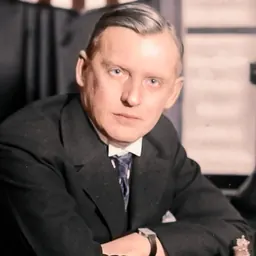
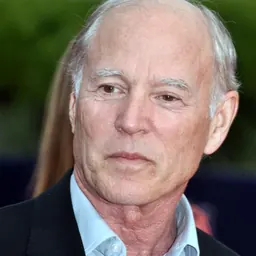

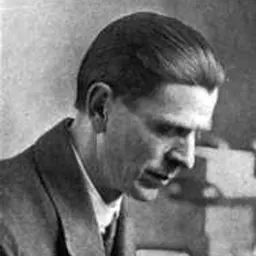
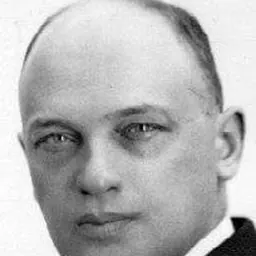

Related people
Same field, nearest in time


Contemporaries
People whose lives overlapped Henry Ernest Atkins's


Frequently asked questions
Who was Henry Ernest Atkins?
British chess master (1872–1955)
When was Henry Ernest Atkins born?
Henry Ernest Atkins was born on 20 August 1872 in Leicester.
When did Henry Ernest Atkins die?
Henry Ernest Atkins died on 31 January 1955 in Huddersfield.
What was Henry Ernest Atkins's occupation?
Henry Ernest Atkins was a teacher and chess player.
What nationality was Henry Ernest Atkins?
Henry Ernest Atkins was British.
Sources & further reading
· Wikipedia: Henry Ernest Atkins
· DBpedia: Henry Ernest Atkins
Cite this page
APA: Biography.guide. (2026). Henry Ernest Atkins. https://biography.guide/henry-ernest-atkins/
MLA: "Henry Ernest Atkins." Biography.guide, https://biography.guide/henry-ernest-atkins/.
Chicago: "Henry Ernest Atkins." Biography.guide. https://biography.guide/henry-ernest-atkins/.
Data last updated: 2026-09-26 · Spot an error? Report a correction.
Page generated 2026-09-27 05:16 UTC