
About Henry Dumas
Lived 1934 – 1968 (aged 33). Henry Dumas was an American writer, poet and short fiction.
Biography
Dumas was born in Sweet Home, Arkansas, in 1934 and lived there until the age of ten, when he moved to New York City. In Harlem, he attended public school and graduated from Commerce High School in 1953. After graduating, he attended City College of New York before joining the Air Force, where he was primarily stationed at Lackland Air Force Base in San Antonio, Texas. Prior to joining the military, he had met a woman named Loretta Ponton in New York. The two kept in touch, marrying in 1955. Dumas also spent a year in the Arabian Peninsula, where he developed an interest in Arab culture. He was in the military until 1957, at which time he enrolled at Rutgers University, where he attended both as a part-time student without attaining a degree. Dumas and Ponton had two sons: David, born in 1958, and Michael, born in 1962.
Death On May 23, 1968, at approximately 12:15 a.m., Dumas was shot to death at the age of 33 by a New York City Transit Police officer on the southbound platform of the 125th Street station of the New York City Subway. According to the Associated Press report, the officer claimed that Dumas had been threatening another man with a knife. The officer said that he ordered Dumas to drop the knife, but that Dumas instead turned, attacked the officer, and slashed the officer's cheek. The officer stated that he fired three times.
The circumstances of the shooting remain unclear, as no witnesses testified and no records remain since the Transit Police Department's records of the shooting were destroyed when the agency merged into the New York City Police Department in 1995. Dumas's death is often called "a case of mistaken identity".
Dumas was buried in Long Island National Cemetery in Suffolk County, New York, on May 29, 1968. His death is mentioned in the poem "An Alphabet of My Dead" by Robert Pinsky, the poem "Night, for Henry Dumas" by Aracelis Girmay, and the poem "For Henry Dumas" by Stanley Cooperman.
Posthumous recognition
A limited amount of Dumas's work was published during his lifetime in several small magazines and journals in the 1960s. It is mainly through the efforts of Eugene B. Redmond, the executor of Dumas's literary estate, that various collections of his work have been published. Ark of Bones and Other Stories and Poetry for My People were both first published in 1970 by Southern Illinois University Press, where Dumas worked before his death. Toni Morrison, then working as an editor at Random House, read Poetry for My People and used her influence to have Random House publish two collections of Dumas's published and unpublished writings in 1974: Play Ebony, Play Ivory (a re-edition of Poetry for my People) and Ark of Bones. When Play Ebony, Play Ivory was released in 1974, Julius Lester, writing in The New York Times Book Review, called Dumas "the most original Afro-American poet of the sixties."
In 1976, Dumas's short story "Thalia" won The Black Scholars first creative writing award, chosen by James Baldwin. Redmond helped renew interest in Dumas in 1988 with the publication of the short story collection Goodbye Sweetwater, which contained both previously published and new works. Redmond released a second collection, Knees of a Natural Man, in 1989. In 2015, Redmond spoke of his hope that "the Black Lives Matter movement will help introduce Dumas to a whole new audience and help bolster the foundation that the moment rests upon."
Rapper R.A.P. Ferreira has referenced Dumas in songs multiple times, most notably in the song "Napping Under the Echo Tree", whose title is a reference to the book Echo Tree: The Collected Short Fiction of Henry Dumas. Dumas is also referenced by name in the song's lyrics.
Influences
Dumas described himself as having been heavily influenced by Moms Mabley and gospel music at a young age. Dumas used his spiritual upbringing as well as his other experiences as a Black child growing up in the American South during the 1930s and 1940s frequently in his writings. In his poem "Afro American", he attempts to define not only what it means to be Black, but also of dual heritage and proposes the recognition of both a dual heritage and that of each of its creators.
Dumas had a strong interest in Black folk music, particularly gospel, spirituals, jazz, and blues. In the 1960s, he became recognized as one of the most important voices of the Black power movement and the Black Arts Movement. Dumas studied with jazz musician Sun Ra during the mid-1960s. Dumas's poem "Black Paladins" became the title track for a recording by Joseph Jarman and Famoudou Don Moye in 1979.
Writer Margaret Walker and musicians James Brown and John Coltrane were major influences on his writing. Elements of Black Christianity, Islam, Sufism, Hinduism, Buddhism, Native American mythology, and African mythology appear in Dumas's works.
Don’t just read it —
keep it.
Full-length biographies made to live with: read them, listen on the way to work, watch them tonight.
- E-book
- Audio
- Video
Instant download · yours to keep · every purchase keeps this site free
Important facts
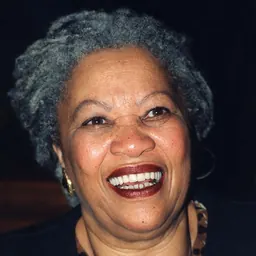
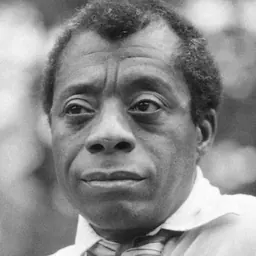
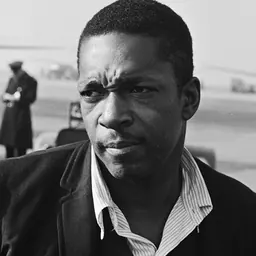
People in Henry Dumas's life
Named in this biography and alive at the same time





Related people
Same field, nearest in time

Contemporaries
People whose lives overlapped Henry Dumas's




Frequently asked questions
Who was Henry Dumas?
American writer (1934–1968)
When was Henry Dumas born?
Henry Dumas was born on 20 July 1934 in Sweet Home.
When did Henry Dumas die?
Henry Dumas died on 23 May 1968 in Manhattan.
What was Henry Dumas's occupation?
Henry Dumas was a writer, poet and short fiction.
What nationality was Henry Dumas?
Henry Dumas was American.
Sources & further reading
Cite this page
APA: Biography.guide. (2026). Henry Dumas. https://biography.guide/henry-dumas/
MLA: "Henry Dumas." Biography.guide, https://biography.guide/henry-dumas/.
Chicago: "Henry Dumas." Biography.guide. https://biography.guide/henry-dumas/.
Data last updated: 2026-09-20 · Spot an error? Report a correction.
Page generated 2026-09-27 05:01 UTC