
About Henry Deane
Lived 1440 – 1503 (aged 62–63). Henry Deane was a catholic priest, judge and catholic bishop.
Henry Deane ( – 1503) was Archbishop of Canterbury from 1501 until his death.
Early life and education In 1457, circa age 17, Deane is recorded as a Canon of Llanthony by Gloucester, his first appearance in the records.
In 1473 (ca age 33) and again in 1488 (ca age 48), Deane is recorded as having rented rooms from Exeter College, Oxford, from which it has been assumed that he was a student at the university.
Career
Legal career In 1481, circa age 41, Deane was able to join the priory of Llanthony Prima in Monmouthshire to his own priory. He instituted a programme of building works at his priory and also added his own arms to the gatehouse. Later in 1485 when Henry VII came to the throne, Deane was able to continue in royal favour.
In 1489, Deane was admitted to the society of Lincoln's Inn, suggesting knowledge of common law. On 13 September 1494, as part of a campaign to staff the Irish judiciary with Englishmen of proven loyalty to the Tudor dynasty, he was appointed Lord Chancellor of Ireland under Sir Edward Poynings, in which capacity he made the opening address at the Drogheda Parliament of December 1494. When Poynings was recalled in January 1496, Deane was appointed his successor as Deputy Governor, but sour relations with the local clergy led to his removal in August of the same year.
Bishopric On 13 April 1494, Deane was appointed Bishop of Bangor (confirmed by the Pope in July 1495), where he engaged in rebuilding the fortunes of the diocese after the rebellion led by Owain Glyndŵr. On 7 December 1499, Henry VII appointed him to the much more significant bishopric of Salisbury, confirmed by the Pope on 8 January 1500.
Archbishropic On 13 October 1500, at age 60, after the death of the Chancellor, Archbishop John Morton, Deane was appointed Lord Keeper of the Great Seal, which he held until 27 July 1502. Thomas Langton, Bishop of Winchester, was elected to succeed Morton at Canterbury, but following his death on 27 January 1501, Deane was, in turn, elected on 26 April 1501. He was the first monastic to be elevated to Canterbury for 135 years and the last.
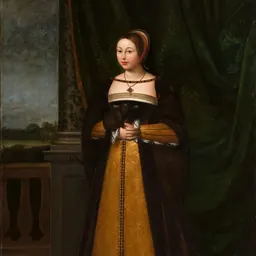
As archbishop, Deane's main contribution was the negotiation of the Treaty of Perpetual Peace (signed January 1502) between England and Scotland, which also arranged the marriage of Margaret Tudor, daughter of Henry VII, and James IV of Scotland. He also officiated at the wedding of Arthur, Prince of Wales and Catherine of Aragon, assisted by 19 bishops, on 14 November 1501.
Death On 15 February 1503, Deane died and was subsequently buried at Canterbury on 24 February. Sir Reginald Bray was one of his executors. Elrington Ball described him as one of the greatest ecclesiastical statesmen of his age.
Don’t just read it —
keep it.
Full-length biographies made to live with: read them, listen on the way to work, watch them tonight.
- E-book
- Audio
- Video
Instant download · yours to keep · every purchase keeps this site free
Important facts
People in Henry Deane's life
Named in this biography and alive at the same time





Related people
Same field, nearest in time

Contemporaries
People whose lives overlapped Henry Deane's

Frequently asked questions
Who was Henry Deane?
Archbishop of Canterbury (1440-1503)
When was Henry Deane born?
Henry Deane was born in 1440.
When did Henry Deane die?
Henry Deane died on 15 February 1503 in Lambeth Palace.
What was Henry Deane's occupation?
Henry Deane was a catholic priest, judge and catholic bishop.
Sources & further reading
· DBpedia: Henry Deane (archbishop of Canterbury)
Cite this page
APA: Biography.guide. (2026). Henry Deane. https://biography.guide/henry-deane-catholic-priest/
MLA: "Henry Deane." Biography.guide, https://biography.guide/henry-deane-catholic-priest/.
Chicago: "Henry Deane." Biography.guide. https://biography.guide/henry-deane-catholic-priest/.
Data last updated: 2026-09-20 · Spot an error? Report a correction.
Page generated 2026-09-27 04:57 UTC