
About Henry Deacon
Lived 1822 – 1876 (aged 53). Henry Deacon was a British chemist and businessperson, known for Alkali and Chlorine.
Henry Deacon (30 July 1822 – 23 July 1876) was a chemist and industrialist who established a chemical factory in Widnes, Lancashire, England.
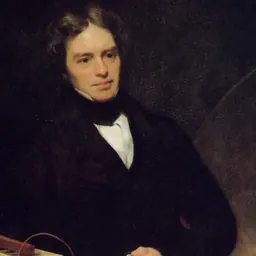
Henry Deacon's father was also named Henry Deacon and his mother was Esther Deacon, his father's cousin. The family were members of the Sandemanian church, one of whose members, Michael Faraday, was a friend of the Deacon family. Faraday played an important part in the development of Henry junior's life and development. His education was at a Quaker school in Tottenham. He was apprenticed at the age of 14 to the London engineering firm of Galloway & Sons. When this company failed, he joined the business of Nasmyth, Gaskell and Company in their factory at Patricroft, Manchester, on the banks of the Bridgewater Canal. In 1851 he left to join John Hutchinson, alkali manufacturer, in Widnes. Later that year Deacon left Hutchinson and went into partnership with the younger of the Pilkington brothers, William, to establish their own alkali works in Widnes on land between the Sankey Canal and St Helens and Runcorn Gap Railway. This partnership was dissolved in 1855. In a new partnership with his previous employer, Holbrook Gaskell who provided the capital, the firm of Gaskell, Deacon and Co was founded. Deacon also presented a number of papers to learned societies, including the British Association for the Advancement of Science in 1870, the Chemical Society in 1870, and the Warrington Literary and Philosophical Society in 1874.
He was elected to membership of the Manchester Literary and Philosophical Society on 15 November 1870
In 1867 Deacon took on a chemist, Ferdinand Hurter, on a month's probation. In time Hurter was to become the chief chemist to the company. Deacon worked with him to discover an improved method of manufacturing chlorine from hydrochloric acid, a noxious by-product of the Leblanc process, and in 1870 discovered a better process, using cupric chloride as a catalyst.
Henry Deacon also played a part in public life in Widnes. He was chairman of the Local Board and played a significant part in establishing the waterworks at Pex Hill. He was chairman of the first school board in the town. After Emma's death he married Caroline Rutt of Islington, Middlesex, in 1866. They had at least three sons and a daughter. Deacon died in 1876 from typhoid fever at his home in Widnes. He was survived by his widow, seven sons and four daughters. His estate was in excess of £100,000.
Don’t just read it —
keep it.
Full-length biographies made to live with: read them, listen on the way to work, watch them tonight.
- E-book
- Audio
- Video
Instant download · yours to keep · every purchase keeps this site free
Important facts
People in Henry Deacon's life
Named in this biography and alive at the same time

Related people
Same field, nearest in time


Contemporaries
People whose lives overlapped Henry Deacon's



Frequently asked questions
Who was Henry Deacon?
British chemist and businessman (1822–1876)
When was Henry Deacon born?
Henry Deacon was born on 30 July 1822 in London.
When did Henry Deacon die?
Henry Deacon died on 23 July 1876 in Widnes.
What was Henry Deacon's occupation?
Henry Deacon was a chemist and businessperson.
What was Henry Deacon known for?
Henry Deacon was known for Alkali and Chlorine.
What nationality was Henry Deacon?
Henry Deacon was British.
Sources & further reading
· DBpedia: Henry Deacon (industrialist)
Cite this page
APA: Biography.guide. (2026). Henry Deacon. https://biography.guide/henry-deacon-chemist/
MLA: "Henry Deacon." Biography.guide, https://biography.guide/henry-deacon-chemist/.
Chicago: "Henry Deacon." Biography.guide. https://biography.guide/henry-deacon-chemist/.
Data last updated: 2026-09-26 · Spot an error? Report a correction.
Page generated 2026-09-27 05:14 UTC