
About Henry Daglish
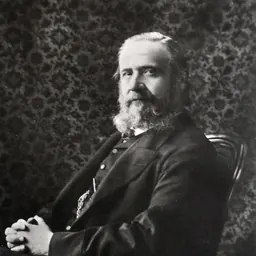
Lived 1866 – 1920 (aged 53). Henry Daglish was an Australian politician, civil servant and mechanical engineer.
In the 1904 state election, Labor won 22 of the Legislative Assembly's 50 seats, making it the party with the most seats. On 8 July 1904, the Labor Party caucus elected Daglish as the party's leader, and on 9 August, he successfully moved a motion of no confidence in the government of Walter James, who resigned as premier on 10 August. Governor Frederick Bedford then swore in Daglish as premier of Western Australia, colonial treasurer and minister for education. His keynote speech on 23 August was poorly received; militant Labor supporters saw him as giving up on Labor policies. In parliament, Daglish struggled to achieve anything due to a hostile Legislative Council; his one major success was the passing of a new Public Service Act. In June 1905, a cabinet reshuffle decreased Daglish's popularity within the Labor Party but he defeated a motion of no confidence at a caucus meeting later that month. Daglish resigned as premier on 22 August 1905 when his plan to buy the Midland Railway Company for £1.5 million failed to pass through parliament. Hector Rason succeeded him as premier on 25 August.
On 27 September 1905, Daglish resigned as leader of the Labor Party. He then left the party and styled himself as an Independent Labor politician. He was again elected Mayor of Subiaco on 5 June 1907 and served until 1908. From August 1907 to September 1910, Daglish held the position of Chairman of Committees, and from September 1910 to October 1911, he was the minister for works in Frank Wilson's Liberal (Also known as the Ministerialists, the Liberals were only a grouping within Parliament and were not a party until 1911 but a year later, he left engineering to join the public service as a clerk in the Victorian Police Department.)
On 20 August 1894, in Carlton, Victoria, Daglish married Edith May Bishop, with whom he had a son, H. Daglish, of the Bank of New South Wales, Narrabeen, and a daughter, Rae Daglish. Later the same year, Daglish moved to Western Australia (WA) after taking an offer of £200 to resign from the recession-hit Victorian public service; he settled in the working-class suburb Subiaco, west of Perth, the state capital. Daglish wrote a letter to Premier John Forrest requesting work in the WA public service in 1897; he was offered and accepted a position as assistant to the chief clerk in the WA Police Department. The following year, he was elected unopposed to the council's South Ward, his term starting on 1 December 1900.
One of Daglish's successes in his first term is the carrying of his motion in favour of an eight-hour working day for the Railway Department. He was sworn in on 1 December 1902 by Walter James, the premier of Western Australia. The premier had earlier made a speech heaping much praise on Daglish. He was again elected mayor unopposed the following year.
Daglish was appointed to the Kings Park Board in his capacity as the member for Subiaco in October 1902. In January 1903, Daglish joined the Perth Hospital Board, which managed Perth Public Hospital (now known as Royal Perth Hospital). On the board, he "earned a reputation for shouldering the real or fancied troubles of dissatisfied ex-patients". Referendum on abolishing the Legislative Council A tax on unimproved land values and no further alienation of crown lands Old age pensions Maximum working day of eight hours Local control and state management of the liquor trade Departmental construction of public works Nationalisation of monopolies and the establishment of a Department of Labour State banking and insurance Limitation on state borrowing except for the purpose of reproductive works The establishment of a sinking fund for the redemption of all future loans
In the general campaign were policies of electoral, taxation, land, industrial and mining reform.
Labor leader Robert Hastie said James should not resign until parliament met, and so James continued as premier following the election. The party decided to sit in opposition and not try and seek government because the caucus had been divided on whether to align with independents sympathetic for the party's cause. When Daglish was elected Labor leader, the Sunday Figaro, a newspaper in Kalgoorlie, said he was "certainly one of the best debaters in the Legislative Assembly. He is a quiet, deliberate speaker, given more to argument than declamation, bearing in this respect a likeness to [Prime Minister Chris Watson]".
On 9 August, Daglish successfully moved a motion of no confidence and James resigned as premier on 10 August. Governor Frederick Bedford then swore in Daglish as premier of Western Australia, colonial treasurer and minister for education. Daglish's Cabinet were sworn in the same day; his party granted him the freedom to choose his own cabinet. Due to constitutional requirements that at least one minister be from the Legislative Council, Daglish invited John Drew, an unaligned politician, into the ministry, resulting in criticism from within his own party. Despite becoming premier, Daglish did not move from Subiaco to a more affluent area as many other premiers had. A few days later, Daglish said; "we have never, as a Labor Party advocated the abolition of the Legislative Council".
The Legislative Council prevented much of Daglish's agenda; his government's one major change was the passing of a new Public Service Act. and the second failed to pass before the Daglish government resigned. Daglish did not contest the November 1904 Subiaco municipal election; he was succeeded as mayor by John Henry Prowse.
Daglish reshuffled his cabinet on 7 June 1905, making Thomas Bath the minister for education, leaving himself as premier and colonial treasurer. Patrick Lynch was added to cabinet, and George Taylor and John Holman were clumsily demoted. The cabinet reshuffle caused a split in the Labor Party; Daglish's opponents said he acted towards his colleagues in a high-handed and humiliating manner. On 18 June, The Sunday Times wrote; "it has taken the Labor Party in politics – and in Parliament – nearly a year to find out that its leader is not in every particular, fully qualified to hold responsible office". At a meeting of the Labor caucus on 26 June, Daglish defeated a motion of no confidence 14–3.
After this, the government created a plan to buy the Midland Railway Company for £1.5 million . The company owned the Midland railway line, which ran from Midland Junction near Perth to Walkaway near Geraldton. Opponents criticised the price for being too high, and Daglish failed to get approval from parliament on 17 August. On 25 August, the governor accepted the resignations of Daglish and his ministry, and appointed Hector Rason and the Rason Ministry to replace them.
After premier On 27 September 1905, Daglish resigned as leader of the Labor Party and on 4 October, William Johnson was elected leader of the party. Daglish later left the party and began styling himself as an Independent Labor politician. The resulting election was called for 27 October. Labor Party lost eight seats at the election but Daglish narrowly retained his seat.
On 5 June 1907, Daglish was again elected Mayor of Subiaco, following the resignation of the previous mayor Austin Bastow. Daglish was sworn in on 12 June 1907. He was re-elected unopposed in November 1907 and did not re-contest the post in 1908.
From 20 August 1907 to 16 September 1910, Daglish held the position of Chairman of Committees. From 16 September 1910 to 3 October 1911, he was the minister for works in Frank Wilson's Liberal government. The club relocated there in 1908. From 1912, Daglish worked as an estate agent and from March that year, he was appointed the employers' representative in the Court of Arbitration, a post in which served until his death. Daglish returned to Perth, arriving on 12 August 1920, and died at his home in Subiaco four days later.
Although the Daglish government was little-remembered decades later, the Labor Party's coming to power marked the start of two-party politics in Western Australia. Labor came to be seen as the alternative to the Ministerialists, also known as Liberals. When Daglish resigned, he became Western Australia's first leader of the opposition. The Perth suburb Daglish, adjacent to the railway station, was also named after him. The Subiaco house in which Daglish lived in from 1908 is heritage listed.
Don’t just read it —
keep it.
Full-length biographies made to live with: read them, listen on the way to work, watch them tonight.
- E-book
- Audio
- Video
Instant download · yours to keep · every purchase keeps this site free
Important facts
Family & relationships
People in Henry Daglish's life
Named in this biography and alive at the same time




Related people
Same field, nearest in time





Contemporaries
People whose lives overlapped Henry Daglish's



Frequently asked questions
Who was Henry Daglish?
Australian politician (1866–1920)
When was Henry Daglish born?
Henry Daglish was born on 18 November 1866 in Ballarat.
When did Henry Daglish die?
Henry Daglish died on 16 August 1920 in Subiaco.
What was Henry Daglish's occupation?
Henry Daglish was a politician, civil servant and mechanical engineer.
What nationality was Henry Daglish?
Henry Daglish was Australian.
Sources & further reading
Cite this page
APA: Biography.guide. (2026). Henry Daglish. https://biography.guide/henry-daglish/
MLA: "Henry Daglish." Biography.guide, https://biography.guide/henry-daglish/.
Chicago: "Henry Daglish." Biography.guide. https://biography.guide/henry-daglish/.
Data last updated: 2026-09-20 · Spot an error? Report a correction.
Page generated 2026-09-27 05:27 UTC