
About Henry Cunliffe Owen
Lived 1821 – 1867 (aged 45–46). Henry Cunliffe Owen was a military personnel.
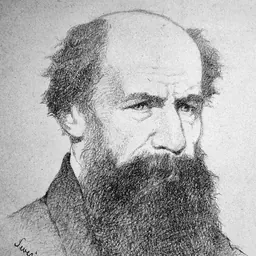
Henry Charles Cunliffe-Owen, (1821–1867) was an English officer in the British Army, rising to the rank of lieutenant-colonel in the Royal Engineers. After graduating from Woolwich, he served variously, including in the campaign against insurgent Boers, and in the Kaffir War of 1845–1847, in the Cape. Returning to England, he was appointed to civilian posts: general superintendent of the Great Exhibition of 1851, and afterwards inspector of art schools in the department of practical art. This last appointment he resigned to fight in the Crimean War, and he was gravely wounded before Sebastopol; whereupon he was made a C.B. and pensioned. He later served as deputy inspector-general of fortifications, from 1856 to 1860, and commanding Royal Engineer of the western district, from 1860. He was made regimental lieutenant-colonel in 1862. He was a staunch High Church Anglican.
Origins Henry Charles Cunliffe-Owen, son of Captain Charles Cunliffe-Owen, Royal Navy, from the ancient family of Cunliffe of Wycoller, and of his wife Mary, daughter of Sir Henry Blosset, Knt., Chief Justice of Bengal, was born at Lausanne, Switzerland, on 16 October 1821. Sir Francis Philip Cunliffe-Owen was his brother. He was educated privately, and, after passing through the Royal Military Academy at Woolwich, obtained a commission as second lieutenant in the Corps of Royal Engineers on 19 March 1839. He went to Chatham for the usual course of professional instruction, and thence to Devonport.
Early career In January 1841 Owen was sent to the Mauritius. On 30 September he was promoted lieutenant. In January 1845 he was ordered to the Cape of Good Hope, where he took part in the campaign then going on against the insurgent Boers, and in the Kaffir War of 1846–1847. He was thanked for his services in general orders, and he received the Kaffir war medal. On 28 October 1847 he was promoted second captain. Owen returned to England in April 1848, and was first quartered at Devonport and then at Chatham, until, in November 1850, he was permitted by the commander-in-chief to accept an appointment under the royal commission for the Exhibition of 1851 as computer of space for the United Kingdom, and later as superintendent of the foreign departments, and finally, after the exhibition was opened, as its general superintendent. Owen's courtesy, firmness, and business habits won him golden opinions. When the exhibition closed, Owen was appointed to another civil post—inspector of art schools in the department of practical art, then under the board of trade, with offices at Marlborough House. He was elected an associate-member of the Institution of Civil Engineers on 3 February 1852. Cunliffe-Owen died at his home, 3 Leigham Terrace, Plymouth, on 7 March 1867.
Personal life Owen married in 1855, in London, Agnes, daughter of Lewis Cubitt, Esq., by whom he left a son Edward, born on 1 January 1857. His widow married, in 1872, the Rev. Henry Edward Willington, M.A.
Legacy According to Robert Hamilton Vetch, "Owen was a man of charming manner, and a most pleasant companion. A hard worker and devoted to his profession, his sympathies were broad and many-sided. He was a good man, and generally loved." He was a High Churchman, a friend of Edward Bouverie Pusey, and one of the original founders of the English Church Union. There entered the possession of his son a sepia drawing of him as a child, and a life-sized medallion of him in later life done by Francis Adams. Owen contributed the following papers to the Professional Papers of the Corps of Royal Engineers, in vol. ix. new series, "Experiments in Breaching a Merlon of Masonry at Gibraltar in 1859"; in vols. xii. and xiii., "Fortifications versus Forts"; in vol. xiv., "Remarks on Expense Magazines".
Honours
Don’t just read it —
keep it.
Full-length biographies made to live with: read them, listen on the way to work, watch them tonight.
- E-book
- Audio
- Video
Instant download · yours to keep · every purchase keeps this site free
Important facts
People in Henry Cunliffe Owen's life
Named in this biography and alive at the same time




Related people
Same field, nearest in time

Contemporaries
People whose lives overlapped Henry Cunliffe Owen's





Frequently asked questions
Who was Henry Cunliffe Owen?
army officer, 1821–1867
When was Henry Cunliffe Owen born?
Henry Cunliffe Owen was born in 1821.
When did Henry Cunliffe Owen die?
Henry Cunliffe Owen died in 1867.
What was Henry Cunliffe Owen's occupation?
Henry Cunliffe Owen was a military personnel.
Sources & further reading
· Wikipedia: Henry Cunliffe Owen
· DBpedia: Henry Charles Cunliffe-Owen
Cite this page
APA: Biography.guide. (2026). Henry Cunliffe Owen. https://biography.guide/henry-cunliffe-owen/
MLA: "Henry Cunliffe Owen." Biography.guide, https://biography.guide/henry-cunliffe-owen/.
Chicago: "Henry Cunliffe Owen." Biography.guide. https://biography.guide/henry-cunliffe-owen/.
Data last updated: 2026-09-20 · Spot an error? Report a correction.
Page generated 2026-09-27 05:23 UTC