
Edward Bouverie Pusey
Conservative churchman of the Church of England and Hebraist
About Edward Bouverie Pusey
Lived 1800 – 1882 (aged 82). Edward Bouverie Pusey was a British linguist, university teacher, writer, priest, translator and anglican theologian.
alt=The Reverend Edward Bouverie Pusey (about 80 years old). Edward Bouverie Pusey (; 22 August 180016 September 1882) was an English Anglican cleric, for more than fifty years Regius Professor of Hebrew at the University of Oxford. He was one of the leading figures in the Oxford Movement, with interest in sacramental theology and theological typology.
Early years He was born at Pusey House in the village of Pusey in Berkshire (now administratively a part of Oxfordshire). His father, Philip Bouverie-Pusey, who was born Philip Bouverie and died in 1828, was a younger son of Jacob des Bouverie, 1st Viscount Folkestone; he adopted the name of Pusey on succeeding to the manorial estates there. His mother, Lady Lucy Pusey, the only daughter of Robert Sherard, 4th Earl of Harborough, was the widow of Sir Thomas Cave, 7th Baronet, MP before her marriage to his father in 1798. Among his siblings was older brother Philip Pusey and sister Charlotte married Richard Lynch Cotton.
Pusey attended the preparatory school of the Rev. Richard Roberts in Mitcham. He then attended Eton College, where he was taught by Thomas Carter, father of Thomas Thellusson Carter. For university admission he was tutored for a period by Edward Maltby.
In 1819 Pusey became a commoner of Christ Church, a college at the University of Oxford, where Thomas Vowler Short was his tutor. He graduated in 1822 with a first in Greats. Fellow and professor During 1823 Pusey was elected by competition to a fellowship at Oriel College, Oxford.
In 1828 Pusey took holy orders, and he married soon afterwards. His opinions had been influenced by German trends in theology. That year, also, the Duke of Wellington as Prime Minister appointed Pusey as Regius Professor of Hebrew at Oxford, with the associated canonry of Christ Church. "He was not, however, fully associated with the movement till 1835 and 1836, when he published his tract on baptism and started the Library of the Fathers".
When John Henry Newman quit the Church of England for the Roman Catholic church around 1841, Pusey became the main promoter of Oxfordianism, with better access to religious officials than John Keble with his rural parsonage. But Pusey himself was a widower, having lost his wife in 1839, and much affected by personal grief. Oxfordianism was known popularly as Puseyism and its adherents as Puseyites. Some occasions when Pusey preached at his university marked distinct stages for the High Church philosophy he promoted. The practice of confession in the Church of England practically dates from his two sermons on The Entire Absolution of the Penitent, during 1846, which both revived high sacramental doctrine and advocated revival of the penitential system which medieval theologians had appended to it. The 1853 sermon on The Presence of Christ in the Holy Eucharist, first formulated the doctrine which became largely the basis for the theology of his devotees, and transformed the practices of Anglican worship.
Pusey was involved with theological and academic controversies, occupied with articles, letters, treatises and sermons. He was involved with the Gorham controversy of 1850, with the question of Oxford reform during 1854, with the prosecution of some of the writers of Essays and Reviews, especially of Benjamin Jowett, during 1863, and with the question as to the reform of the marriage laws from 1849 to the end of his life. He himself, however, had little sympathy with the revival of ritualism (i.e. with the revival of pre-Reformation ceremonies) and protested that as part of a university sermon of 1859. He did come to defend those who were accused of violating the law by their practice of ritual, but did not himself embrace and endorse it. Nevertheless, supporters of Pusey's theological claims and adherents of ritualism came to coincide to a large extent. As a result, the term "Puseyite" was replaced by "ritualist" as the designation of the adherents of the theological doctrines Pusey had argued for.
Not a great orator, Pusey compelled attention by his earnestness. His major influence was as a preacher and spiritual adviser, for which his correspondence was enormous.
Works Pusey's first work, An Historical Enquiry into the Probable Causes of the Rationalist Character Lately Predominant in the Theology of Germany of 1828, was an answer to Hugh James Rose's Cambridge lectures on rationalist tendencies in German theology. Rose's State of Protestantism in Germany Described has been called "over-simplified and polemical", and Pusey had been encouraged by German friends to reply.
Christus consolator (1883) was published after his death, edited by his godson and friend George Edward Jelf.
In addition to his original works, Pusey also published multiple translations as part of the Library of the Fathers series, including of the Confessions by St. Augustine.
Family Pusey married during 1828 Maria Catherine Barker (1801–1839), daughter of Raymond Barker of Fairford Park; they had a son and three daughters. His son, Philip Edward (1830–1880), edited an edition of Saint Cyril of Alexandria's commentary on the minor prophets.
Don’t just read it —
keep it.
Full-length biographies made to live with: read them, listen on the way to work, watch them tonight.
- E-book
- Audio
- Video
Instant download · yours to keep · every purchase keeps this site free
Important facts
People in Edward Bouverie Pusey's life
Named in this biography and alive at the same time



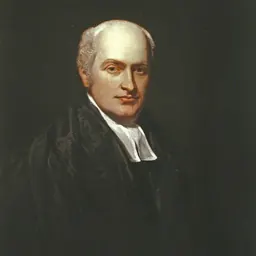
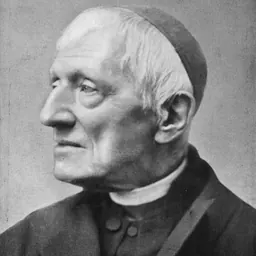
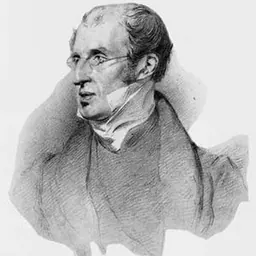
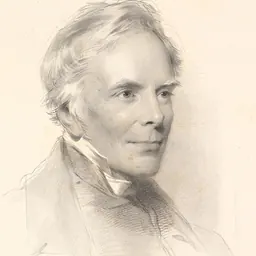

Related people
Same field, nearest in time
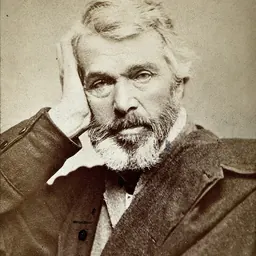
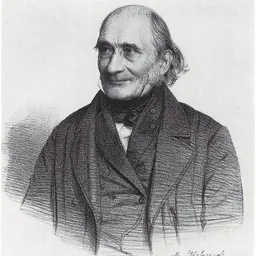
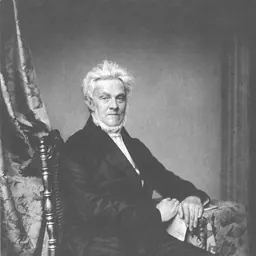
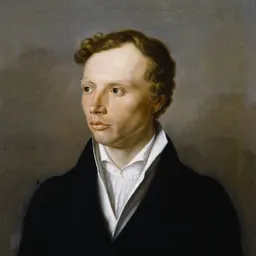

Contemporaries
People whose lives overlapped Edward Bouverie Pusey's






Frequently asked questions
Who was Edward Bouverie Pusey?
conservative churchman of the Church of England and Hebraist (1800–1882)
When was Edward Bouverie Pusey born?
Edward Bouverie Pusey was born on 22 August 1800 in Pusey.
When did Edward Bouverie Pusey die?
Edward Bouverie Pusey died on 16 September 1882 in Oxford.
What was Edward Bouverie Pusey's occupation?
Edward Bouverie Pusey was a linguist, university teacher, writer, priest, translator and anglican theologian.
What nationality was Edward Bouverie Pusey?
Edward Bouverie Pusey was British.
Sources & further reading
· Wikipedia: Edward Bouverie Pusey
· DBpedia: Edward Bouverie Pusey
Cite this page
APA: Biography.guide. (2026). Edward Bouverie Pusey. https://biography.guide/edward-bouverie-pusey/
MLA: "Edward Bouverie Pusey." Biography.guide, https://biography.guide/edward-bouverie-pusey/.
Chicago: "Edward Bouverie Pusey." Biography.guide. https://biography.guide/edward-bouverie-pusey/.
Data last updated: 2026-09-20 · Spot an error? Report a correction.
Page generated 2026-09-27 05:32 UTC