
About Henry Cotton
Lived 1790 – 1879 (aged 89). Henry Cotton was a historian.
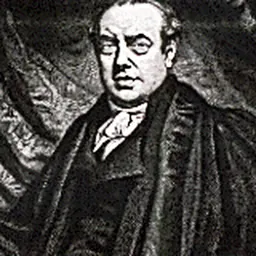
Ven. Henry Cotton (31 March 1790 – 3 December 1879) was an English Anglican divine, ecclesiastical historian and author.
Life Cotton was born in Chicheley, Buckinghamshire, the son of Rev. William C. Cotton, vicar of Chicheley. His mother was Charlotte Elizabeth Barrett, daughter of Rev. Thomas Barrett, Vicar of Stanton Harcourt and Southleigh.
Beginning in 1803, Cotton spent four years at Westminster School and then in 1807 he entered Christ Church, Oxford. He obtained a B.A. in classics in 1811 and a M.A. in 1813. He would later dedicate his work on Bible editions to the memory of Cyril Jackson, dean of Christ Church.
In 1818, he married Marie Vaughan Laurence, daughter of Richard Laurence. He was sub-librarian of the Bodleian Library from 1814 to 1822. In 1820, he received a D.C.L. from Oxford.
He also compiled A List of Editions of the Bible in English from 1505 to 1820, with Specimens of Translations, &c. (Oxford, 1821, second edition, corrected and enlarged, 1852).
Cotton's other works (not including occasional sermons and articles in periodicals) are: Dr. Wotton's Thoughts on a proper Method of studying Divinity, with Notes, &c. (Oxford, 1818). A Typographical Gazetteer attempted (Oxford, 1824, second edition, corrected and enlarged, 1831; and a second series, especially rich in details of the foundation of newspapers in the United States, and of missionary publications in our colonies, Oxford, 1866). Memoir of a French New Testament, with Bishop Kidder's Reflections on the same (London, 1827, second edition 1863). A Short Explanation of Obsolete Words in our Version of the Bible (Oxford, 1832). Five Books of Maccabees in English, with Notes and Illustrations (Oxford, 1832). Cui Bono? A Letter to the Right Hon. E. G. Stanley (Dublin, 1833). Fiat Justitia, a Letter to Sir H. Hardinge on the Present State of the Church in Ireland (Dublin, 1835). Rhemes and Doway: an Attempt to show what has been done by Roman Catholics for the diffusion of the Holy Scriptures in English (Oxford, 1855). The Four Gospels and the Acts of the Apostles, with short Notes for the use of schools and young persons (Oxford, 1857).
On the death of Archbishop Laurence in 1838, Cotton superintended the publication of Laurence's reproduction of the first ‘Visitation of the Saxon Reformed Church in 1527 and 1528,’ and he reissued the privately printed poetical pieces of Archbishop Laurence and his brother, French Laurence.
Don’t just read it —
keep it.
Full-length biographies made to live with: read them, listen on the way to work, watch them tonight.
- E-book
- Audio
- Video
Instant download · yours to keep · every purchase keeps this site free
Important facts
People in Henry Cotton's life
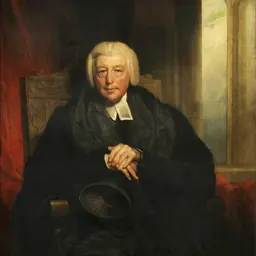
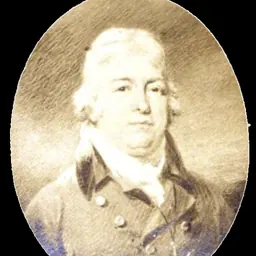
Named in this biography and alive at the same time

Related people
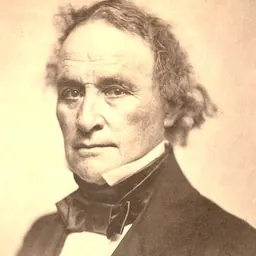
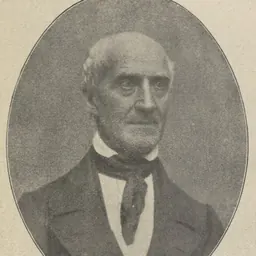
Same field, nearest in time




Contemporaries
People whose lives overlapped Henry Cotton's



Frequently asked questions
Who was Henry Cotton?
English clergyman, historian and author
When was Henry Cotton born?
Henry Cotton was born on 31 March 1790 in Chicheley.
When did Henry Cotton die?
Henry Cotton died on 3 December 1879.
What was Henry Cotton's occupation?
Henry Cotton was a historian.
Sources & further reading
· DBpedia: Henry Cotton (divine)
Cite this page
APA: Biography.guide. (2026). Henry Cotton. https://biography.guide/henry-cotton-historian/
MLA: "Henry Cotton." Biography.guide, https://biography.guide/henry-cotton-historian/.
Chicago: "Henry Cotton." Biography.guide. https://biography.guide/henry-cotton-historian/.
Data last updated: 2026-09-20 · Spot an error? Report a correction.
Page generated 2026-09-27 05:23 UTC