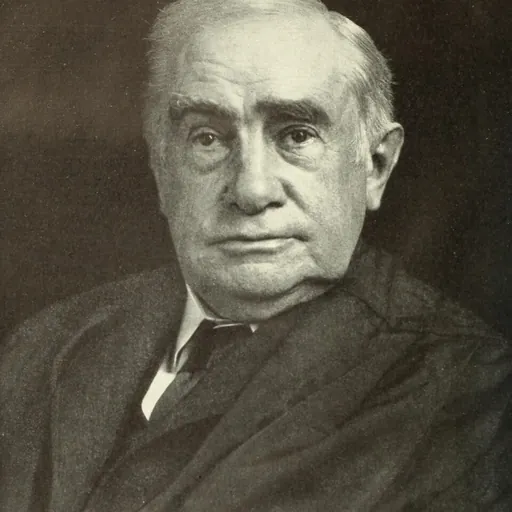
About Henry Billings Brown
Lived 1836 – 1913 (aged 77). Henry Billings Brown was an American lawyer, judge and jurist.
Henry Billings Brown (March 2, 1836 – September 4, 1913) was an American jurist who served as an associate justice of the Supreme Court of the United States from 1891 to 1906.
Although a respected lawyer and U.S. District Judge before ascending to the high court, Brown is harshly criticized for writing the majority opinion in Plessy v. Ferguson, an opinion widely regarded as one of the most ill-considered decisions ever issued by the Court, which upheld the legality of racial segregation in public transportation. Plessy legitimized existing state laws establishing racial segregation, and provided an impetus for later segregation statutes. Legislative achievements won during the Reconstruction Era were erased through Plessy's "separate but equal" doctrine.
Early career
Family and education
Brown was born in South Lee, Massachusetts, the son of Mary Tyler and Billings Brown, and grew up in Massachusetts and Connecticut. His was a New England merchant family, as his family was of entire English Puritan descent, emigrating following the Puritan migration to New England (1620–1640). The first ancestor who arrived was Edward Brown, settling in Ipswich, Massachusetts. He attended Monson Academy, Monson, MA and entered Yale College at 16. There he was a member of Alpha Delta Phi fraternity and was elected to membership in Phi Beta Kappa. He earned a Bachelor of Arts degree there in 1856. Among his undergraduate classmates were Chauncey Depew, later a U.S. Senator from New York, and David Josiah Brewer, who became Brown's colleague on the Supreme Court. Depew roomed across the hall from Brown for three years in Old North Middle Hall, and remembered "a feminine quality [about Brown] which led to his being called Henrietta" by classmates in his all-male college. After a yearlong tour of Europe, Brown studied law with Judge John H. Brockway in Ellington, Connecticut, but his refusal to participate in a local religious revival made life there unpleasant for him. He then became a partner specializing in admiralty law in the firm of Newberry, Pond & Brown, and practiced there for seven years. In 1872 Brown failed in an attempt to win the Republican nomination for a congressional seat. and later compiled a case book on admiralty law for lectures at Georgetown University. He also taught admiralty law classes at the University of Michigan Law School from 1860 to 1875, and medical jurisprudence at the Detroit Medical College (now the medical school of Wayne State University) from 1868 to 1871. Brown received honorary doctoral degrees from the University of Michigan in 1887, and from Yale University in 1891.
Supreme Court
Appointment
Satirical cartoon showing Justice Brown (standing, left-center), speaking with Justice Harlan, with Chief Justice Fuller seated at the table writing a poem, while the other justices discuss fashion issues pertaining to their judicial robes.
Brown was nominated by President Benjamin Harrison as an associate justice of the United States Supreme Court on December 23, 1890, to succeed Samuel Freeman Miller. Harrison, who had earlier considered Brown for a Supreme Court appointment following the death of Stanley Matthews the previous year, actively lobbied senators on Brown's behalf. He was confirmed by the U.S. Senate by voice vote on December 29, 1890, and was sworn into office on January 5, 1891.
Death Brown's tomb inscription in Detroit. The Latin epitaph, Integer vitae scelerisque purus can be translated "Upright of life and free of wickedness" (from Horace, Odes, I.22 ) Brown died of heart disease on September 4, 1913, at a hotel in Bronxville, New York. He is buried next to his first wife in Elmwood Cemetery in Detroit.
Legacy
Decisions concerning minority groups Despite Plessy v. Ferguson, Brown as a judge did not invariably vote against the interests of minority litigants. For example, in Ward v. Race Horse, Brown was the sole dissenter when the Court held that tribal hunting rights granted under an 1869 treaty with the Bannock Indians must yield to a state law prohibiting them. As to the Chinese Exclusion Act, Brown voted with the majority in United States v. Wong Kim Ark that a child born in the United States of Chinese parents was a U.S. citizen under the Citizenship Clause of the Fourteenth Amendment to the Constitution. Brown also voted with the majority in Wong Wing v. United States, in holding that Chinese persons allegedly in the United States illegally may not be imprisoned at hard labor without a trial pending deportation. Brown also joined Justice David Brewer's dissent in Giles v. Harris, arguing Black Americans had a right to challenge voter suppression in federal court.
Abilities
Brown has been remembered as "a capable and solid, if unimaginative, legal technician." One of his friends offered the faint praise that Brown's life "shows how a man without perhaps extraordinary abilities may attain and honour the highest judicial position by industry, by good character, pleasant manners and some aid from fortune".
Elena Kagan confirmation hearing During her 2010 Senate Judiciary Committee confirmation hearings to be an associate justice of the Supreme Court, Elena Kagan was asked by Lindsey Graham whether she knew of Justice Henry Billings Brown. Kagan stated that she did not, to which Graham replied, "Well, you don't want him to be your hero, trust me."
Memorials
The World War II Liberty Ship was named in his honor.
Non-judicial bibliography
Cases on the Law of Admiralty. St. Paul, Minn.: West Publishing Co., 1896. The Character and Services of James Valentine Campbell, Chief Justice of the Supreme Court of the States of Michigan. Delivered at the request of the Detroit Bar Association, 1890. The Dissenting Opinions of Mr. Justice Daniel. 24 Am. L. Rev. 869 (1887). The Dissenting Opinions of Mr. Justice Harlan. 46 Am. L. Rev. 321 (1912). The Distribution of Property, in Report of the Sixteenth Annual Meeting of the American Bar Association, 213 (1893). Federal Law and Federal Courts. 11 Library Am. L. & Practice 323 (1912). International Courts. 20 Yale L.J. 1 (1910). Judicial Independence, in Report of the Twelfth Annual Meeting of the American Bar Association, 265 (1889). Judicial Treatment of Criminal Offenders. 17 Chicago Legal News 171 (1910). Jurisdiction of the Admiralty in Cases of Tort. 9 Columbia L. Rev. 1 (1909). Lake Erie Piracy Case. 21 Green Bag 143 (1909). Law and Procedure in Divorce. 44 Am. L. Rev. 321 (1910). Liberty of the Press. 23 Proc. N.Y. St. Bar Ass'n 130 (1900). The New Federal Judicial Code, in Report of the Thirty-Fourth Annual Meeting of the American Bar Association, 339 (1911). Proposed International Prize Court. 2 Am. J. Int. L. 476 (1908). Reports of Admiralty and Revenue Cases Argued and Determined in the Circuit and District Courts of the United States, for the Western Lake and River Districts. New York: Baker, Voorhies & Co., 1876. The Status of the Automobile. 17 Yale L.J. 223 (1908). The Twentieth Century. An address delivered before the graduating classes at the seventy-first anniversary of Yale Law School, on June 24th, 1895. New Haven: Hoggson & Robinson (1895). Woman Suffrage; a paper read by ex-Justice Brown ... before the Ladies Congressional Club of Washington D.C. Boston: Massachusetts Association Opposed to the Further Extension of Suffrage to Women (1910).
Don’t just read it —
keep it.
Full-length biographies made to live with: read them, listen on the way to work, watch them tonight.
- E-book
- Audio
- Video
Instant download · yours to keep · every purchase keeps this site free
Important facts
People in Henry Billings Brown's life
Named in this biography and alive at the same time



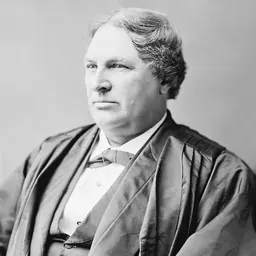

Related people
Same field, nearest in time
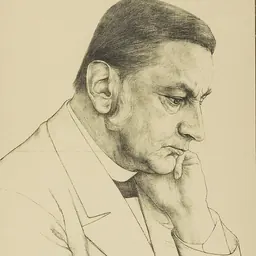


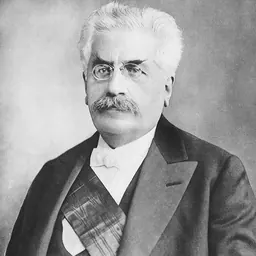
Contemporaries
People whose lives overlapped Henry Billings Brown's

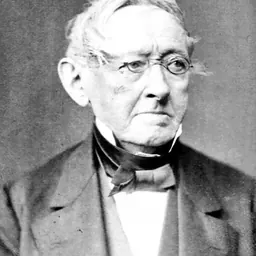



Frequently asked questions
Who was Henry Billings Brown?
US Supreme Court justice from 1891 to 1906 (1836-1913)
When was Henry Billings Brown born?
Henry Billings Brown was born on 2 March 1836 in Lee.
When did Henry Billings Brown die?
Henry Billings Brown died on 4 September 1913 in Bronxville.
What was Henry Billings Brown's occupation?
Henry Billings Brown was a lawyer, judge and jurist.
What nationality was Henry Billings Brown?
Henry Billings Brown was American.
Sources & further reading
· Wikipedia: Henry Billings Brown
· DBpedia: Henry Billings Brown
Cite this page
APA: Biography.guide. (2026). Henry Billings Brown. https://biography.guide/henry-billings-brown/
MLA: "Henry Billings Brown." Biography.guide, https://biography.guide/henry-billings-brown/.
Chicago: "Henry Billings Brown." Biography.guide. https://biography.guide/henry-billings-brown/.
Data last updated: 2026-09-23 · Spot an error? Report a correction.
Portrait: Wikimedia Commons · author & licence
Page generated 2026-09-27 05:07 UTC