
Henry Barry, 4th Baron Barry of Santry
Irish peer and murder
About Henry Barry, 4th Baron Barry of Santry
Lived 1710 – 1751 (aged 40–41).
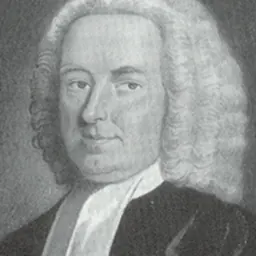
Henry Barry, 4th Baron Barry of Santry (1710–1751), often referred to simply as Lord Santry, was an Irish peer, who was a notorious rake. He is unique in being the only member of the Irish House of Lords to be convicted of murder by his peers, for which crime he was sentenced to death. He later received a full pardon for the murder but died abroad when he was still a young man.
Biography He was born in Dublin on 3 September 1710, the only son of Henry Barry, 3rd Baron Barry of Santry, and Bridget Domvile, daughter of Sir Thomas Domvile, 1st Baronet, of Templeogue, and his first wife (and cousin) Elizabeth Lake, daughter of Sir Lancelot Lake. He succeeded to the title in 1735 and took his seat in the Irish House of Lords. He married firstly Anne Thornton, daughter of William Thornton of Finglas, who died in 1742, and secondly, in 1750 Elizabeth Shore of Derby, but had no issue by either marriage. He died in Nottingham on 22 March 1751 and was buried at St. Nicholas' Church, Nottingham.
St. Nicholas' Church, Nottingham, where Lord Santry is buried
Murder of Laughlin Murphy Lord Barry of Santry seems to have been an extreme example of an eighteenth-century rake, a man of quarrelsome and violent nature, and a heavy drinker. He was a member of the notorious Dublin Hellfire Club: it is said that the club's reputation never fully recovered from the sensational publicity surrounding his trial for murder, although there is no reason to think that any of his fellow members knew of or condoned the crime. There were widespread rumours that he had committed at least one previous murder which was successfully hushed up, although there seems to be no firm evidence for this.
On 9 August 1738, Lord Santry (as he was usually known) was drinking with some friends at a tavern in Palmerstown, which is now a suburb but was then a small village near Dublin city. Santry, who had drunk even more heavily than usual, attacked a drinking companion, Mr Humphries, but was unable to draw his sword. Enraged, he ran to the kitchen, where he chanced to meet Laughlin Murphy, the tavern porter, and for no known reason ran him through with his sword.
Bowes dominated the proceedings and his speeches made his reputation as an orator. said "I never heard, never read, so perfect a piece of eloquence...the strength and light of his reason, the fairness and candour". The Bishop was scathing about the quality of counsel for the defence, describing the performance of Santry's counsel as "detestable". and for a time it seemed that Santry must die, but in due course, a reprieve was issued. Popular legend had it that his uncle Sir Compton Domvile, through whose estate at Templeogue the River Dodder flowed, secured a royal pardon for his nephew by threatening to divert the course of the river, thus depriving the citizens of Dublin of what was then, and remained long after, their main supply of drinking water. On his death in 1751 the title became extinct; his estates passed to his cousin, Sir Compton Domvile, 2nd Baronet, who made unsuccessful efforts to have the barony revived. His widow Elizabeth outlived him by many years, dying in December 1816.
Parallel cases In 1628 Lord Dunboyne was tried by his peers for manslaughter but acquitted. In 1743 The 5th Viscount Netterville was acquitted of murder by his peers, as was Robert King, 2nd Earl of Kingston in 1798.
Don’t just read it —
keep it.
Full-length biographies made to live with: read them, listen on the way to work, watch them tonight.
- E-book
- Audio
- Video
Instant download · yours to keep · every purchase keeps this site free
Important facts
People in Henry Barry, 4th Baron Barry of Santry's life
Named in this biography and alive at the same time


Contemporaries
People whose lives overlapped Henry Barry, 4th Baron Barry of Santry's




Frequently asked questions
Who was Henry Barry, 4th Baron Barry of Santry?
Irish peer and murder
When was Henry Barry, 4th Baron Barry of Santry born?
Henry Barry, 4th Baron Barry of Santry was born in 1710.
When did Henry Barry, 4th Baron Barry of Santry die?
Henry Barry, 4th Baron Barry of Santry died in 1751.
Sources & further reading
· Wikipedia: Henry Barry, 4th Baron Barry of Santry
· DBpedia: Henry Barry, 4th Baron Barry of Santry
Cite this page
APA: Biography.guide. (2026). Henry Barry, 4th Baron Barry of Santry. https://biography.guide/henry-barry-4th-baron-barry-of-santry/
MLA: "Henry Barry, 4th Baron Barry of Santry." Biography.guide, https://biography.guide/henry-barry-4th-baron-barry-of-santry/.
Chicago: "Henry Barry, 4th Baron Barry of Santry." Biography.guide. https://biography.guide/henry-barry-4th-baron-barry-of-santry/.
Data last updated: 2026-09-20 · Spot an error? Report a correction.
Page generated 2026-09-27 05:25 UTC