
About Henry B. Pullen Burry
Lived 1855 – 1926 (aged 70–71). Henry B. Pullen Burry was a writer.
Henry Burry Pullen-Burry (born Henry Burry Pullen; 18 December 185430 December 1926) was a British medical doctor best known as an occultist and author of the book Qabalism. He belonged to the famed occult group The Hermetic Order of the Golden Dawn, founded in London in 1888. The order taught and practised ceremonial magic, Qabalism, Rosicrucianism, and psychic arts such as astral projection, divination, astrology, etc.
Early life Pullen-Burry was born on 18December 1854, at the Rectory, Sompting, Sussex, to John Pullen and his wife Emily, née Heather. In 1868, his father John formally changed the family surname to Pullen-Burry - John's mother was born Ann Burry. Henry was educated at Craufurd College in Maidenhead and entered the University of London in June 1873. He did further training at the Royal College of Physicians in London.
He was married to Rose Anwyl, with whom he had a son given the same name (born 1882) and two daughters, Ethel and Winifred. which was the first founded Golden Dawn temple (in 1888). Other temples were established elsewhere later. Each Golden Dawn member was required to choose a magical motto. Pullen Burry chose Anima Pura Sit ("Let the Soul Be Pure"). His wife Rose joined the order in 1894. Her motto was Urge semper igitur ("Always press forward"?).
Pullen-Burry unexpectedly abandoned family, his Golden Dawn temple, and home country to emigrate to the US, initially drawn by the lure of gold during the Klondike Gold Rush. Case wrote well-known books on the Tarot, and Qabalah.
Pullen-Burry and Sir Arthur Conan Doyle Sir Arthur Conan Doyle described Pullen-Burry in an article "Early Psychic Experiences", published in Pearson's Magazine, March 1924. It's reproduced in part in occult historian Ellic Howe's book on The Golden Dawn. Ellic Howe continues the story, "Pullen Burry suggested that Conan Doyle should join the G.D., but did not reveal its name. Conan Doyle described an unusual dream which he appeared to equate with an 'astral visit' made by some member of the order to discover whether or not he was a suitable candidate. He decided not to ask for admission." Another occult historian, R.A. Gilbert, mentions Conan Doyle's meetings with Pullen Burry occurred in 1898. Gilbert further quotes Conan Doyle as saying he in fact found his apparent astral examination "queer and disagreeable". A month or two later, Pullen Burry brought [fellow G.D. member] Dr. Felkin (see Robert Felkin) to see him. The [Conan Doyle] article records his two visitors' extraordinary conversation about an 'astral journey' they had made together to Central Africa." [Quote from Conan Doyle's article]: "To return to the little doctor, he went out to the Klondyke [sic] and I lost sight of him for a long time. From what I learnt, I should judge that the powers of this society included that of loosening their own etheric bodies [see: "etheric body"], in summoning the etheric bodies of others (mine for example), and in making thought images ... But their line of development or philosophy is beyond me. I was destined to meet Pullen Burry again, for when I was in America last year I found him full of Rosicrucian lore and occult knowledge."
If Conan Doyle had decided to join instead of reject the Golden Dawn, he would have joined the ranks of a number of famous folks who became members, including writers W. B. Yeats, Arthur Machen, Algernon Blackwood, Bram Stoker, and Evelyn Underhill, Irish revolutionary and feminist Maude Gonne, British stage actress Florence Farr, and Oscar Wilde's wife Constance Mary Wilde who joined in the first year, 1888.
The writer Pullen-Burry wrote at least two books that were published. One is a little-known book called Our Morning Bath, possibly on the topic of personal hygiene and health. The other is his much better known Qabalism, published by The Yogi Publication Society, Chicago, 1925. The Yogi Publication Society hardcover has been reprinted repeatedly through the decades. In his book Qabalism, Pullen-Burry challenges Qabalistic orthodoxy by putting forth his own theory that the Tree of Life, the central symbolic diagram of Qabalah mysticism, should have 34 paths linking its 10 Sephira (or Spheres), instead of 32 paths, as traditionally taught.
Death His death was reported as occurring on 30December 1926 at the age of 72 years from toxemia, in Multnomah Hospital in Portland, Oregon.
Don’t just read it —
keep it.
Full-length biographies made to live with: read them, listen on the way to work, watch them tonight.
- E-book
- Audio
- Video
Instant download · yours to keep · every purchase keeps this site free
Important facts
People in Henry B. Pullen Burry's life
Named in this biography and alive at the same time




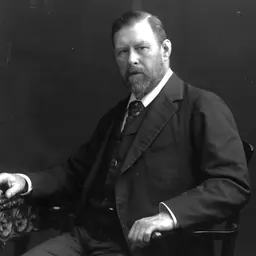
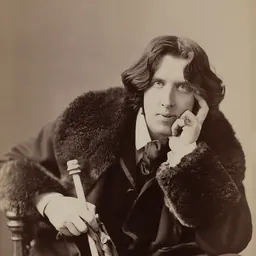
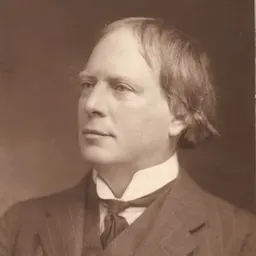
Related people
Same field, nearest in time
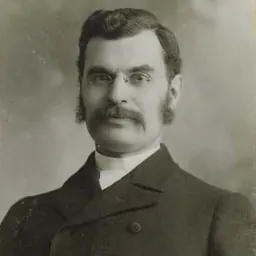
Contemporaries
People whose lives overlapped Henry B. Pullen Burry's




Frequently asked questions
Who was Henry B. Pullen Burry?
British writer
When was Henry B. Pullen Burry born?
Henry B. Pullen Burry was born in 1855.
When did Henry B. Pullen Burry die?
Henry B. Pullen Burry died on 30 December 1926.
What was Henry B. Pullen Burry's occupation?
Henry B. Pullen Burry was a writer.
Sources & further reading
· Wikipedia: Henry B. Pullen Burry
· DBpedia: Henry B. Pullen Burry
Cite this page
APA: Biography.guide. (2026). Henry B. Pullen Burry. https://biography.guide/henry-b-pullen-burry/
MLA: "Henry B. Pullen Burry." Biography.guide, https://biography.guide/henry-b-pullen-burry/.
Chicago: "Henry B. Pullen Burry." Biography.guide. https://biography.guide/henry-b-pullen-burry/.
Data last updated: 2026-09-20 · Spot an error? Report a correction.
Page generated 2026-09-27 04:58 UTC