
About Algernon Blackwood
Lived 1869 – 1951 (aged 82). Algernon Blackwood was a British writer, novelist, journalist, reporter and playwright.
Algernon Henry Blackwood (14 March 1869 – 10 December 1951) was an English broadcasting narrator, journalist, novelist and short story writer, and among the most prolific ghost story writers in the history of the genre. The literary critic S. T. Joshi stated, "His work is more consistently meritorious than any weird writer's except Dunsany's" and that his short story collection Incredible Adventures "may be the premier weird collection of this or any other century".
Life and work Blackwood was born in Shooter's Hill (now part of southeast London, then part of northwest Kent). Between 1871 and 1880, he lived at Crayford Manor House, Crayford and he was educated at Wellington College. His father, Sir Stevenson Arthur Blackwood, was a Post Office administrator; his mother, Harriet Dobbs, was the widow of the 6th Duke of Manchester. According to Peter Penzoldt, his father, "though not devoid of genuine good-heartedness, had appallingly narrow religious ideas". After Algernon read the work of a Hindu sage left behind at his parents' house, he developed an interest in Buddhism and other eastern philosophies.
Blackwood had a varied career, working as a dairy farmer in Canada, where he also operated a hotel for six months, bartender, model, reporter for The New York Times, private secretary, businessman, and violin teacher. During his time in Canada, he also became one of the founding members of the Toronto Theosophical Society in February 1891. Throughout his adult life, he was an occasional essayist for periodicals. In his late thirties, he moved back to England and started to write stories of the supernatural. He was successful, writing at least ten original collections of short stories and later telling them on radio and television. He also wrote 14 novels, several children's books and a number of plays, most of which were produced, but not published. He was an avid lover of nature and the outdoors, as many of his stories reflect. To satisfy his interest in the supernatural, he joined The Ghost Club. He never married; according to his friends he was a loner, but also cheerful company.
Jack Sullivan stated that "Blackwood's life parallels his work more neatly than perhaps that of any other ghost story writer. Like his lonely but fundamentally optimistic protagonists, he was a combination of mystic and outdoorsman; when he wasn't steeping himself in occultism, including Rosicrucianism, or Buddhism he was likely to be skiing or mountain climbing." as was his contemporary Arthur Machen. Cabalistic themes influence his novel The Human Chord.
His two best-known stories are probably "The Willows" and "The Wendigo". He would often write stories for newspapers at short notice, so that he and his biographers are not sure exactly how many short stories he wrote. Though Blackwood wrote a number of horror stories, his most typical work seeks less to frighten than to induce a sense of awe. Good examples are the novels The Centaur, which reaches a climax with a traveller's sight of a herd of the mythical creatures; and Julius LeVallon and its sequel The Bright Messenger, which deal with reincarnation and the possibility of a new, mystical evolution of human consciousness. In correspondence with Peter Penzoldt, Blackwood wrote,
My fundamental interest, I suppose, is signs and proofs of other powers that lie hidden in us all; the extension, in other words, of human faculty. So many of my stories, therefore, deal with extension of consciousness; speculative and imaginative treatment of possibilities outside our normal range of consciousness.... Also, all that happens in our universe is natural; under Law; but an extension of our so limited normal consciousness can reveal new, extra-ordinary powers etc., and the word "supernatural" seems the best word for treating these in fiction. I believe it possible for our consciousness to change and grow, and that with this change we may become aware of a new universe. A "change" in consciousness, in its type, I mean, is something more than a mere extension of what we already possess and know.
Autobiography
Blackwood wrote an autobiography of his early years, Episodes Before Thirty (1923), and there is a biography, Starlight Man, by Mike Ashley .
Death Blackwood died after experiencing several strokes. Officially his death on 10 December 1951 was from cerebral thrombosis, with arteriosclerosis as a contributing factor. He was cremated at Golders Green crematorium. A few weeks later his nephew took his ashes to Saanenmöser Pass in the Swiss Alps, and scattered them in the mountains that he had loved for more than forty years.
Don’t just read it —
keep it.
Full-length biographies made to live with: read them, listen on the way to work, watch them tonight.
- E-book
- Audio
- Video
Instant download · yours to keep · every purchase keeps this site free
Important facts
People in Algernon Blackwood's life
Named in this biography and alive at the same time

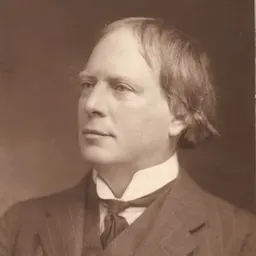


Related people
Same field, nearest in time


Contemporaries
People whose lives overlapped Algernon Blackwood's




Frequently asked questions
Who was Algernon Blackwood?
English short story writer and novelist (1869–1951)
When was Algernon Blackwood born?
Algernon Blackwood was born on 14 March 1869 in Greenwich, London.
When did Algernon Blackwood die?
Algernon Blackwood died on 10 December 1951 in Beckenham, London.
What was Algernon Blackwood's occupation?
Algernon Blackwood was a writer, novelist, journalist, reporter and playwright.
What nationality was Algernon Blackwood?
Algernon Blackwood was British.
Sources & further reading
· Wikipedia: Algernon Blackwood
Cite this page
APA: Biography.guide. (2026). Algernon Blackwood. https://biography.guide/algernon-blackwood/
MLA: "Algernon Blackwood." Biography.guide, https://biography.guide/algernon-blackwood/.
Chicago: "Algernon Blackwood." Biography.guide. https://biography.guide/algernon-blackwood/.
Data last updated: 2026-09-20 · Spot an error? Report a correction.
Page generated 2026-09-27 05:19 UTC