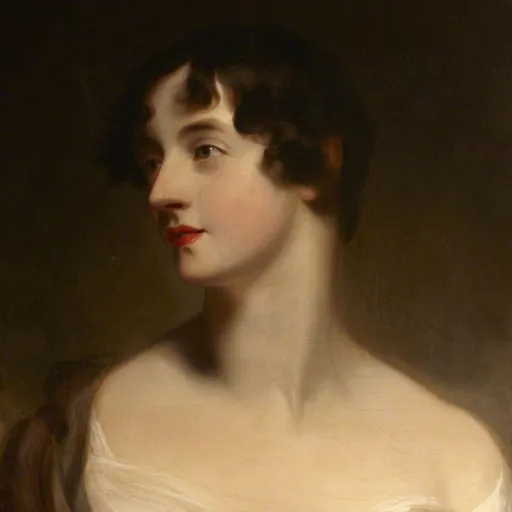
Henrietta Frances de Grey
Anglo-Irish political hostess and philanthropist
About Henrietta Frances de Grey
Lived 1784 – 1848 (aged 64). Henrietta Frances de Grey was an Irish.
Henrietta Frances de Grey, Countess de Grey (née Cole; 22 June 1784 – 2 July 1848) was an Anglo-Irish political hostess and philanthropist.
Early life and family Henrietta Frances de Grey was born Henrietta Frances Cole at Florence Court, County Fermanagh on 22 June 1784. She was the youngest of the ten children of William Cole, 1st Earl of Enniskillen, and his wife Anne, daughter of Galbraith Lowry-Corry. Her maternal uncle was Armar Lowry-Corry, 1st Earl Belmore. From her early letters, it appears that she was well educated. She attended the viceregal court at Dublin Castle from 1802. When her mother fell ill in 1802, her father placed her in charge of the household at Florence Court. She met Thomas Weddell de Grey in September 1803, who was "much struck by her". He proposed to her on 23 June 1805, and they were married on 20 July 1805 at the estate of Henry Luttrell, 2nd Earl of Carhampton, in Cobham, Surrey. They honeymooned at her husband's homes at Putney and the Newby estate.
Public life As her husband did not smoke and Lady de Grey preferred not to retire after dinner to a drawing room, she was deeply engaged with male after-dinner conversations about politics in the library. It was here that she had developed an influence on senior politicians and started a deep, platonic, friendship with Sir Robert Peel. Through their letters he confided in her his frustrations along with religious and political opinions he did not share with his male colleagues. She warned of the oncoming "bedchamber crisis" in 1839 which helped Peel negotiate the situation and led to him forming a government in 1841. She was opposed to Peel's invitations to her husband to become Lord Lieutenant of Ireland, as she did not want to leave their new home at Wrest Park and the wider society in England.
In September 1841, her husband did accept Peel's request, and became Lord Lieutenant of Ireland. As his wife, Lady de Grey was his firm supporter, and the newspapers of the time note how frequently she was at his side. Having attended the Dublin court in her youth, Lady de Grey held in November 1841 the largest viceregal levee in Dublin since King George IV's visit in 1821, continuing to entertain on a grand scale. These events had different motivations, including trying to bring communities together, and attempting to dissuade Protestants from marching in response to the Repeal meetings. Still interested in philanthropy, she suggested public works to boost employment in Ireland that were funded from royal estates, and schemes to encourage native industries in Dublin.
From her letters, it is clear that she did not sympathise with Orange views, and contrary to allegations in the newspapers and biographies of her husband, she did not influence her husband's views towards Orange opinions. When he became ill in 1844, Lady de Grey took over his political correspondence, going on to negotiate his retirement and the selection of William à Court, 1st Baron Heytesbury as his successor. After his retirement, she remained a supporter of Peel, including his policy to increase the Maynooth Grant. She did have great reservations as to whether Ireland would benefit from the repeal of the corn laws, maintaining that the Irish famine was due to a "scarcity of money" rather than a lack of food.
In early 1848, Lady de Grey's health began to decline, and she died at 4 St James's Square, London on 2 July 1848 from cancer. She is buried in the De Grey Mausoleum with a tomb sculpted by Terence Farrell. Portraits of Lady de Grey are held at Florence Court, the National Portrait Gallery, London and the National Gallery of Ireland.
Don’t just read it —
keep it.
Full-length biographies made to live with: read them, listen on the way to work, watch them tonight.
- E-book
- Audio
- Video
Instant download · yours to keep · every purchase keeps this site free
Important facts
People in Henrietta Frances de Grey's life
Named in this biography and alive at the same time



Contemporaries
People whose lives overlapped Henrietta Frances de Grey's



Frequently asked questions
Who was Henrietta Frances de Grey?
Anglo-Irish political hostess and philanthropist (1784-1848)
When was Henrietta Frances de Grey born?
Henrietta Frances de Grey was born on 22 June 1784 in Florence Court.
When did Henrietta Frances de Grey die?
Henrietta Frances de Grey died on 2 July 1848 in London.
What nationality was Henrietta Frances de Grey?
Henrietta Frances de Grey was Irish.
Sources & further reading
· Wikipedia: Henrietta Frances de Grey
· DBpedia: Henrietta Frances de Grey
Cite this page
APA: Biography.guide. (2026). Henrietta Frances de Grey. https://biography.guide/henrietta-frances-de-grey/
MLA: "Henrietta Frances de Grey." Biography.guide, https://biography.guide/henrietta-frances-de-grey/.
Chicago: "Henrietta Frances de Grey." Biography.guide. https://biography.guide/henrietta-frances-de-grey/.
Data last updated: 2026-09-21 · Spot an error? Report a correction.
Portrait: Wikimedia Commons · author & licence
Page generated 2026-09-27 04:59 UTC