
Henric Sanielevici
Romanian journalist and literary critic, also remembered for his work in anthropology, ethnography, sociology and zoology
About Henric Sanielevici
Lived 1875 – 1951 (aged 75). Henric Sanielevici was a Romanian biologist, anthropologist, linguist, historian, philosopher and sociologist.
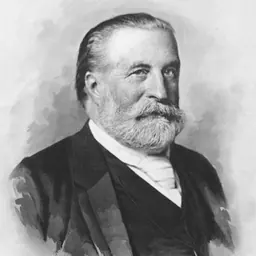
Henric Sanielevici (, first name also Henri, Henry or Enric, last name also Sanielevich; September 21, 1875 – February 19, 1951) was a Romanian journalist and literary critic, also remembered for his work in anthropology, ethnography, sociology and zoology. Initially a militant socialist from the political-philosophical circle of Constantin Dobrogeanu-Gherea, he incorporated other influences and, in 1905, created his own literary review, Curentul Nou ("The New Trend"). Sanielevici and his friend Garabet Ibrăileanu were among the founders of "Poporanism", a peasant-oriented and left-wing movement. However, Sanielevici soon detached himself from both Marxism and agrarianism, criticizing Romanian traditionalist literature, and prophesying a Neoclassicism for the working men. His heated polemic with the rival school of Sămănătorul journal isolated him from the other Poporanists, whom he eventually denounced as "reactionaries". More controversy surrounded his ambiguous attitudes during World War I.
From 1920, Sanielevici was an isolated figure on the left, editing a new version of Curentul Nou and only affiliating with the popular daily Adevărul. He moved away from literary theory and, following his anthropological speculations, revived Lamarckism and scientific racism to formulate his own racial-sociological system. Himself a Jewish Romanian, Sanielevici attempted to undermine the racial assumptions of Nazi ideologists and local fascists.
The author faded into obscurity by the 1940s, when his work was vilified by the governing fascists, then expunged by the communist regime.
Biography
Early years Sanielevici was a native of Botoşani city, in the historical region of Moldavia. His father, officially known as Leon Sanilevici, was a trader, and his mother, Rebeca, a housewife. Both branches descended from prominent Jewish community leaders—Leon's father was a Rabbi of Craiova Jews, in southern Romania, while Rebeca was the daughter of Botoşani's own Rabbi—whose ancestors had settled in the Danubian Principalities to escape pogroms in the Russian Empire.
The family, whom literary historian George Călinescu describes as "utterly assimilated" into Romanian culture, Although a self-declared atheist, Sanielevici later recommended the voluntary mass baptism of Jews. the unfamiliar suffix -ici, chosen by Henric's ancestors, misled some into believing that the family was of Serb origin.
Henric spent most of his childhood between Botoşani and various rural localities in Moldavia, among them Costeşti, Dolhasca and Podriga. The countryside, he was to recall in writing, shaped his vision of human nutrition as the source of physical and cultural differences: "Everywhere there were orchards, one to every homestead, and often with select fruit. [...] Fruit was falling on the ground in piles, without anyone even bothering to turn it into cider, at least. Countryside attics were full of huge piles, white and greenish, of peaches the size of apples [...]. Until fifteen years of age, I can only recall images of myself eating fruit all day long". The setting also inspired his naturalistic observations on poultry (he described Moldavian hens as particularly slender and prone to wade in still water), on wild birds, and even on spiders. He graduated high school in his home town, and took a degree in Letters and Philosophy at the University of Bucharest. Especially after the PSDMR's creation, Henric gave weekly public lectures for the workers at Sotir, where he was known under the pseudonym Hasan. The two brothers were contributors to Adevărul, at the time a socialist daily edited by Gherea's pupil Constantin Mille, and, around 1896, were also writing for its short-lived literary supplements. Henric's articles were also published in other socialist and center-left papers: Lumea Nouă, Munca, Avântul, and the Piteşti literary magazine Povestea Vorbei. The leading Junimist theorist and cultural critic, Titu Maiorescu, issued formal retorts, responding to specific points made by Sanielevici. Nevertheless, the "young socialist" militant also published articles in the Junimea magazine, Convorbiri Literare. the eclectic journal Noua Revistă Română, run by the ex-Junimist philosopher Constantin Rădulescu-Motru. It was there that he began a series of articles in defense of didacticism, with which he established his reputation as a cultural journalist. Noua Revistă Română was also the place where, some years later, Sanielevici met and befriended fellow journalist Constantin Beldie.
In 1901, Sanielevici was in the German Empire, for an academic specialization in the field of Anthropology at the University of Berlin. In 1904, he was in Paris, France, where he spoke at the Société Anthropologique. The topic of his dissertation challenged contemporary assumptions on physical anthropology, primarily the theories of Swedish physician Anton Nyström. Sanielevici spoke out against Nyström's belief that "dolichocephalic" people were abnormal. Arguing that Nyström stood against "all anthropological data", the Romanian suggested that the shape of one's skull was determined by mastication. The Société as a whole found his interpretation strange and unappealing.
Curentul Nou beginnings Back home, Sanielevici found steady employment was as a schoolteacher, and he successively taught French to high school students in Galați, Ploiești, Târgoviște and Bucharest. and Încercări critice ("Critical Essays", 1903). His focus was on questioning the established criteria of literary criticism. In particular, Sanielevici focused on the poem Mioriţa, already recognized as a staple of Romanian folklore, and made sarcastic comments about its subject matter. Together with W. Majerczik, he published a German-language translation of the novella Sărmanul Dionis ("Poor Dionysus"), by Romania's national poet, Mihai Eminescu. It saw print with the Bukarester Tagblatt company, in 1904.
While in Galaţi, Sanielevici made his name as the founder and editor of Curentul Nou, a literary review which appeared from 1905 to 1906. As the PSDMR split into competing factions (1899), he and Garabet Ibrăileanu made some efforts to regroup the scattered socialist clubs around new ideals, with an emphasis on uplifting the peasantry—an ideology that came to be known as "Poporanism". Ibrăileanu was based in the larger city of Iaşi, but Sanielevici found Galaţi more suitable a location for the Poporanist projects. In his view, Iaşi was home to a decaying Moldavian nobility, state-dependent and nationalistic, while his adoptive home was a "citadel of true democracy". In his letters to Ibrăileanu, whereby he invited him and Poporanist theorist Constantin Stere to contribute, Sanielevici acknowledged that his journal was not afraid of radicalism: "I have grown tired of hypocrisy".
With the Curentul Nou project, Sanielevici concentrated his polemical stance on the right-wing, agrarian and conservative publications of the day, and primarily ridiculed the work of writers at Sămănătorul magazine. He candidly informed Ibrăileanu: "We have a grand work to accomplish, a work that will resonate throughout Romanian literary history, the work of bringing down a shameful current that has been clutching the country for these last 5 years". Ibrăileanu approached both Sanielevici and Dobrogeanu-Gherea with offers to head the editorial staff, but both, in turn, refused his invitation. At the time, the other Poporanists were beginning to protest against the Curentul Nou branch: publicist Spiridon Popescu, who was Ibrăileanu's companion, threatened to quit if the "insane" Sanielevici and "the Jewish critic" Gherea were ever on board. Sanielevici only began contributing there in 1908, and, in 1909, was made the editorial secretary. He was still mainly active in Galaţi, where, in early 1909, he joined a fundraising drive to complete a statue of Eminescu.
In his Curentul Nou period, Sanielevici focused his attention on the young novelist Mihail Sadoveanu, whose work he considered the main manifestation of Sămănătorism. To his critic's dismissive remarks, Sadoveanu replied with a violent article in the political gazette Voinţa Naţională: "I promise you a stern comeback, and do let me know if there is any clean spot on your body that may yet receive it." The first fissures between Sanielevici and his Poporanist colleagues began to show at roughly the same time. Emerging as one of the Poporanist ideologues around 1905, Ibrăileanu defended Sadoveanu against Sanielevici's observations. This stance probably helped Sadoveanu to make up his mind about leaving the Sămănătorists and joining the Viața Românească group, while the controversy only increased his exposure. Reportedly, the young critic did not take the matter to heart, and continued to treat Ibrăileanu with a mix of friendliness and superiority.
1910s and World War I controversy After a complicated process which involved a vote in Parliament, Henric Sanieleveci received his naturalization in November 1910. In 1911, he made his return to Germany, where he attended additional lectures in Anthropology the Göttingen University and researched the Sammlung für Völkerkunde collections. He lectured in front of the Göttingen Anthropological Society, where he first aired his assumption that the "Nordic race" traced its origin to Pleistocene-era fishermen, and enlisted negative or ironic responses from his peers. The period however brought success to the other Sanielevici brothers: Simion took over the Chair of Mathematics at Bucharest University; Maximilian, turning to medical sociology, pioneered social epidemiology in Moldavia, and was later administrator of the insurance company Generala. Solomon, who was even employed as an illustrator by the Writers' Society, became a noted presence within the Bucharest Impressionist circle.
Sanielevici was still an active Poporanist by the time of World War I. During Romania's neutrality period (1914–1916), he concentrated on his literary work and, in 1916, published the biographical essay volume Icoane fugare ("Passing Icons", second edition 1921), as well as a new work of literary criticism: Cercetări critice şi filosofice ("Critical and Philosophical Studies"). Among these individual studies, one returned to Sărmanul Dionis, tracing the links between Eminescu (otherwise a textbook Junimist) and the international Romanticism of ca. 1820. Sanielevici himself considered the piece to be his best work, and one of the best essays ever written. He was still courted by the most radical wing of the Germanophiles, represented by Tudor Arghezi of the newspaper Cronica. Eventually, in summer 1916, the Bucharest protocol sealed Romania's alliance with the Entente Powers, but the resulting defeats brought the occupation of southern Romania by the Central Powers. The military clashes impacted on the Sanielevici family: Solomon was killed in combat with the intruding armies. Together with other schoolteachers and academics (Rădulescu-Motru, Dumitru Tilică Burileanu, Gheorghe Oprescu), he was kept in Bulgarian concentration camps, at either Troyan or Etropole. He spent a full year in captivity. A rumor circulated by his nationalist adversaries had it that Sanielevici irritated the occupiers with his critique of German interests in Romania. According to this account, he tried to justify himself to his captors by noting that "only in this [patriotic] way could he create himself a basis for his criticism among the Romanian people." Sanielevici's posthumous biographer, Adrian Jicu, notes the opposite: "Although it may seem hard to believe, on many occasions Sanielevici proved himself more of a patriot than his Romanian national contemporaries."
The accusations, publicized by the antisemitic journal Weltkampf (of the Militant League for German Culture), quoted from an anonymous author. According to them, the "cheeky" Sanielevici, known as V. Podriga, had authored articles against Germany, before taking up assignments as a German agent of influence and proceeding to denounce his literary friends. The same source acknowledged that Sanielevici was imprisoned by the occupiers, but attributed this to his "Jewish pride": according to his accusers, the Poporanist critic gave himself away when passages from the Podriga articles made it into his Germanophile pieces. His articles there, Boia notes, were apolitical, but his correspondence of the time showed that he leaned toward the Germanophile camp. This change occurred in mid 1918, after Romania agreed to a separate peace with the enemy, when he resumed contacts with the Poporanists who had fled to Moldavia. In October 1918, believing that the turn of events had confirmed the Germanophiles' justness, and their leadership position in Romanian culture, Sanielevici began working on a literary supplement for Stere's newspaper.
Adevărul writer In 1920s Greater Romania, Henric Sanielevici continued to publish works of literature and social science. In 1920, Bucharest's Editura Socec issued his Noi studii critice ("New Critical Studies") and Probleme sociale şi psihologice ("Social and Psychological Issues"). In 1919, Sanielevici had turned against his socialist roots. As he wrote, "the West is not heading into socialism, but into a state of equilibrium between the bourgeoisie and the proletariat".
A year later, he announced his break with Poporanism, relaunching Curentul Nou with a distinct cultural platform. Financially supported by Sanielevici, the new edition counted among its contributors the woman writer Constanţa Marino-Moscu and the philologist Giorge Pascu. Sanielevici himself was contributing to Lumea Evree, the Jewish Romanian community bimonthly, put out in Bucharest by philosopher Iosif Brucăr.
1921 deepened Sanielevici's conflict with the Poporanists, after he published at Socec the volume Poporanismul reacţionar ("Reactionary Poporanism"). For Sanielevici, Poporanism and its Peasants' Party successors were glorifying in the peasantry a "viscous" class, and believed that lower-class frustrations needed to be kept in check by the adoption of "limited absolutism". Sanielevici also contributed to the Adevărul publishing company, translating, from the Spanish, Vicente Blasco Ibáñez's Vuelta del mundo de un novelista (as Călătoria unui romancier în jurul lumii). In 1924, the Adevărul group also published Sanielevici's new book of criticism, which, in its title, introduced his reference to "proletarian classicism" (Clasicismul proletariatului). Sanielevici's term referred to self-exiled Romanian writer Panait Istrati, whose socialist-themed novels enjoyed breakthrough success in Western Europe.
The Sanielevicis were heavily involved in supporting the newly emancipated Jewish community of Greater Romania. Iosif Sanielevici was a Jewish member of the Romanian Senate in the 1922 legislature, and noted for his interventions in legislating medical practice. In 1926, Adevărul Literar şi Artistic published Henric Sanielevici's inquiry into the Jewish origins of Vasile Alecsandri, the celebrated founder of 19th-century Moldavian Romanticism. A significant part of Sanielevici's press contributions was dedicated to uncovering the Jewish roots of some eminently Romanian authors: he claimed that all people by the name of Botez (literally, "baptism"), including poet Demostene Botez, were converted Jews.
Sanielevici's other works included the Alte cercetări critice şi filosofice ("Some More Critical and Philosophical Studies", Cartea Românească, 1925) and Probleme politice, literare şi sociale ("Political, Literary and Social Issues", Ancora publishers, ca. 1925). In 1926, he also printed his French-language work of paleoanthropology: La Vie des mammifères et des hommes fossiles déchiffrée à l'aide de l'anatomie ("The Life of Mammals and Fossilized Humans Deciphered Using Anatomy"). The next year, he returned with a work on comparative racialism, Noi probleme literare, politice, sociale ("New Literary, Political, Social Issues").
With his Adevărul articles, Sanielevici continued to participate in the debates animating Romanian society. In March 1929, he wrote with skepticism about the Romanian prohibition lobby, but proposed the introduction of pasteurized grape juice in lieu of Romanian wine. In 1930, Adevărul company published two other titles: Literatură şi ştiinţă ("Literature and Science"), followed in 1935 by the anti-fascist tracts of În slujba Satanei?!... ("In Service to Satan?!...", 2 vols.). Alte orizonturi ("Other Horizons") was another Adevărul-published work by Sanielevici; it does not carry a date, but was presumably published in or around 1930. who had been a sympathetic ear for Sanielevici's theories on race. Also undated are the books Sanielevici issued as part of the Dimineaţa book collection: La Montmorency ("In Montmorency", No. 15 of the series), În tren ("On the Train", No. 40), Familia Lowton ("The Lowton Family"), Civilizaţia ("Civilization").
In December 1930, Viața Românească published his lengthy essay linking the Dacians, modern Romanian food culture and the ecstatic rituals of 20th century sects in Bessarabia. With an article in Adevărul Literar şi Artistic, he discussed the supposed links between the poem Mioriţa and the legendary Dacian prophet Zalmoxis (Mioriţa sau patimile lui Zalmoxis, that is "Mioriţa or the Passion of Zalmoxis"). These ideas were expanded upon in another 1930 volume, Literatură şi ştiinţă ("Literature and Science").
Henric Sanielevici survived World War II, but was exposed to menacing scrutiny by the successive antisemitic and fascist regimes (see Romania in World War II). As early as July 1940, the literary supplement of Universul daily nominated Sanielevici, Dobrogeanu-Gherea and many other Jewish authors as ones "who could never have contributed to our people's spiritual unity", calling for a boycott on their work. At a time when many Jewish authors were officially banned, George Călinescu published his main work of literary history, which, despite reviewing Sanielevici with much irony, The fascist press retorted with aggressive comments, some of which depicted Călinescu as a secret admirer of Sanielevici's.
However, the Ion Antonescu regime was lenient on Sanielevici. In 1943, he was included in a special category of Jews who received, by dispensation, a re-naturalization as Romanians. Henric's brother, Simion, and his nephew, Alexandru, were sacked from academia, but managed to find parallel employment at the unofficial Jewish College.
The end of Antonescu's rule brought a relaxation of antisemitic measures, but, during the build-up to a Romanian communist regime, Sanielevici was again disenfranchised. Shortly after the anti-Nazi coup of August 1944, he was welcomed into the reformed Romanian Writers' Society. Before his 1951 death, scrutiny of his work came from the part of communist censors, who included Poporanismul reacţionar on a list of banned writings. The document's stated agenda was the purge of "fascist" or "Nazi" literature—Sanielevici's inclusion therein, critic Al. Săndulescu notes, showed the ulterior and "aberrant" purpose of the list. At Curentul Nou, the young critic followed the "Gherist" line, to which time added the influence of other historicist or deterministic thinkers, primarily direct borrowings from Hippolyte Taine.
The impact and relevance of such ideas were investigated by several other academics. Adrian Jicu argues that the main influences on the Romanian author were Georg Brandes, Karl Kautsky, Gustave Lanson and Émile Hennequin, in addition to Dobrogeanu-Gherea and Taine.
Sanielevici's public profile and eccentricity created irritation and even scandal in his day, as summarized by writer and scholar Antonio Patraş: "[he was remembered as] an eccentric figure, a lampoonist with diverse preoccupations [...], sometimes perceived as an intelligent and cultured critic, but overall an autodidact with the exorbitant pretensions of an uomo universale and the insufferable airs of a decadent cleric, with a holier-than-thou attitude." While describing himself as the leading cultural factor of the nation, "one of the greatest creators ever produced by mankind", Sanielevici noted that he was struggling against "lightning and hailstorm" launched by his envious peers. He adds: "H. Sanielevici's style, much like his entire personality, suffers from a twofold shift in balance: firstly in the verbal violence and then in the morbid self-awareness." In his own retrospective work, Călinescu also proposed that Sanielevici was an essayist more than an actual critic, praising his texts as evidences of "great literary skill" ("gracious" works, with charmingly "voluptuous poetry", but also "bizarre" in content). he notes however that Sanielevici was "haughty beyond measure", and all too imaginative. In defining what he meant by "Classicism", Sanielevici continued to borrow from Maiorescu's ideal of "formal purity", but expanded it to mean narratives so restrained and so immersing "that we don't even pay attention to the words". In his memoirs, Sanielevici ventured to state that his own writing was generally "more elegant" than Maiorescu's, and "precise" in the manner of 18th-century literati. However, in discussing the delayed Romanticism of Mihai Eminescu's work, Sanielevici spoke of "genius", and boasted having been the first to describe Eminescu as a poet of European proportions. He described the liberal program of modernization as "the bitter fruits" of 1848, and suggested that Romanian conservatism was a complex, sometimes positive, phenomenon, "the harsh chiding of a parent saddened to see his child taking the wrong path".
Polemic with Sămănătorul Sanielevici's early attacks focused on the literary school which promoted ethnic nationalism as the source of artistic truth, namely the magazine Sămănătorul and its editor Nicolae Iorga. Călinescu summarized the resulting conflict as follows: "It was against the nationalist tendentiousness that the intelligent Jewish man H. Sanielevici sought to promote a sort of Classicism, with his Curentul Nou magazine". He also rejected the heroic portrayals of hajduks and ancient warlords, as a glorification of the "barbaric past". Writing from within this trend, Simionescu-Râmniceanu ridiculed Sanielevici's moral agenda, and especially the advocacy of universal suffrage by literary means: "why not also for reforming municipal services in provincial towns, or for introducing soybean cultures in the villages?" Lovinescu describes Sanielevici as primarily a Poporanist ("albeit with intermittent enmities"), rating him the third figure of importance after "prophet" Constantin Stere and militant Ibrăileanu. Early in the 20th century, he notes, Sanielevici was also the editorial voice of Viaţa Românească in its lengthy press debate with Junimist author Duiliu Zamfirescu.
However, in the 1920s, Sanielevici was rekindling Dobrogeanu-Gherea's polemic with his "reactionary" Poporanist students, and, according to Lovinescu, was right to do so. With Lovinescu, Zeletin, Vintilă Brătianu and some of the younger intellectuals, Sanielevici represented the minority current which supported and justified industrialization and Westernization, against the self-preservation of agrarian lifestyles. As summarized by Jicu: "The Curentul Nou editor [believed] that, after the war, the Romanian milieu had entered the era of those social changes that Poporanism was hindering. Hence the logical necessity of discrediting it." Vianu also parted with Sanielevici's comments about the supposedly classical quietude and political reformism of Istrati and his protagonists: "Their moral is not social, because they are not sheltered by it and because they seek to escape its sanctions. [...] That Mr. H. Sanielevici was able to detect in this the representatives of qualified, almost bourgeois, workers is by now only an instructive example of how systemic prejudice may lead astray any particular judgment."
As Istrati's apologete, Henric Sanielevici hoped to rescue proletarian works from the concentrated attacks of nationalists and traditionalists. According to writer Ioan Lascu, Iorga and Octavian Goga had thrown Istrati's novels into "the tough mixer of nationalist passions", while Sanielevici, "for all his critical servitude", was agitating for cultural openness. The nationalist reviewer Ion Gorun reacted strongly against "heimatlos" Istrati's promotion from the left, denouncing Sanielevici as one of "our recent guests", the purveyor of "spiritual anarchy" and of "trumped-up critical nonsense".
Sanielevici's novel ideas on politics made it into his other essays. Besides its overall anti-fascism, În slujba Satanei?!... features his criticism of other public figures, mainly agrarian and Poporanist politicians. The language, Călinescu notes, is "inimitable". Using Messianic language (provocatively so, according to Jicu), he stated: "I am he whom you announce is to come down through the ages. I created the science that is real, cleansed of all conventional lies: the science of causal reports and of laws that coordinate things occurring." Following Jean-Baptiste Lamarck's ideas about the inheritance of habits, Sanielevici deduced anthropology from zoology. According to him, Lamarckism was the only credible school of evolutionary thought; Darwinism, Weismannism, Mutationism and the Vitalism of H. Driesch were all sterile and irrelevant. In addition to criticizing Anton Nyström, the Romanian anthropologist reacted strongly against the anatomical theories put forth by Australia's Grafton Elliot Smith, whom he "damned to hell", He later came to the conclusion that the very evolution of mammals was made possible by the abundance or scarcity of food: the ancestors of such animals were arboreal and viviparous reptiles, who evolved into lighter and more agile species while continuously searching for food sources; an exception was the proverbially slow-moving sloth, whose feed, the slugs, was in abundance. Sanielevici explained hair growth on mammals (humans included) as an adaptation to humidity, while differences in skin pigmentation reflected exclusively the nature of the soil and the specimen's own blood circulation.
Such contributions were received with astonishment or derision by the scientific community, although, Călinescu writes, his "extravagances" show "incontestable intelligence and erudition." According to Lucian Boia, he was "an erudite and a dreamer", with "a very personal approach" to social science,
Nutrition and human races
Sanielevici's interest in the subject of race is steeped in his work as a literary critic, and expands on the theses of more mainstream determinism. This happened once Sanielevici discarded Gherea's Marxism and looked into environmental determinism to record "the laws that have governed the birth of literary production", explaining: "literary criticism led me to study anthropology. The path is, contrary to how one might think, short and straight." In La Vie des mammifères..., Sanielevici postulated that racial clusters had emerged around staple foods, corresponding to regional patterns in the Stone Age diet. In his account, a European megaflood had pushed Dryopithecus out of the canopy, replacing its diet with nuts, pushing it toward bipedalism, and then turning it into modern man. The Romanian author distinguished five basic racial and dietary types, based on the archeological cultures and each created by its own foodstuff: Aurignacian (allium plants, beans), Chellean (nuts), Magdalenian (fish), Mousterian (snails, fruit) and Solutrean (meat, horses). These types corresponded to the environmental divisions, respectively: warm steppe, warm woods, tundra, cool woods, cold steppe.
Sanielevici's grid rated the Tungusic peoples as Solutrean, and the modern-day Italian people as "grass"-eaters, proposing that the "impulsive" behavior of Jews was owed to a high nitrogen intake, from beans. By 1916, Sanielevici's racial perspectives had incorporated definitions of race popular in early 20th-century scholarship. In this context, he argued that the "Nordic race" had created Classicism and epic poetry, that didactic realism was an "Alpine" feature, and that "Mediterraneans" were at the source of Romanticism.
The book and theory were reviewed with much skepticism by the foreign scholars to whom they were addressed. L'Année Psychologique journal, which noted that Sanielevici was reviving the ideas of Napoleonic era naturalist Georges Cuvier, concluded with irony: "One evidently needs a rich imagination such as [Sanielevici's] to pierce through the mysteries of paleontological life for animals and humans that have vanished for so long. The author, who has full confidence in his intuition to guide him, has no doubt as to the certitude of his convictions." Jean Piveteau, the vertebrate paleontologist, wrote: "To me, it does not seem worth discussing this new biological theory at length. For sure [...] the reader will identify in it quite a few Lamarckian reminiscences; but [these] will be precisely the most annoying passages from Lamarck". Biologist Georges Bohn also asked rhetorically: "[Sanielevici's] excessive imagination, might it not also be the result of spiritual intoxication from the plants and the soil?"
Racialism Purported "Jewish types". Popular Science illustration, 1898 The Romanian scholar sought to redefine the concept of a "Semitic race", which he described as fluid and independent of Jewishness. Overall, he found "Semitism" in any sexually driven, "Dionysian", culture, and concluded that the "Mediterranean race" as a whole was Semitic. The Semitic trait was, in his definition, the purest modern stage of the Aurignacian man. In 1930, after reading French archeologist Fernand Benoit, Sanielevici concluded that the Aurignacian-Semitic-Dionysian connection was unaltered among the Berber people of North Africa.
With În slujba Satanei?!..., Sanielevici reacted against Nazism, discussing Germany's racial antisemitism, Aryan race doctrine and racial policies. The text suggested that Adolf Hitler was an Antichrist, Expanding on his own interpretation of "Semitic race" concepts, Sanielevici distinguished between the Jews, who belonged to several races, and the Semites, only some of whom were Jewish. The racial traits, he suggested, were hidden, recurrent and vague: the recessive characteristics made races divisible into "classes" and "subclasses".
Sanielevici illustrated his point with craniometry, publishing comparative photographs of Jews and ethnically unrelated people (Russians, Frenchmen, Germans), concluding that their physical measurements were nearly identical. As a supporter of Semitic race theories, Călinescu also wrote that the photographic evidence was inconclusive, since a "Hebrew note" of character still set the Jews apart in all samples, including wherever Sanielevici referred to his family. He considers Sanielevici's a "bizarre" racist discourse, like those of Alexandru Randa or Iordache Făcăoaru, but separated from them by an enduring belief in democracy, and "less quoted because of [his Jewish] origin".
In his tracts, Sanielevici suggests that the Romanian ethnicity and the Romanian Jewry are both racial conglomerates, not racial entities. He speaks about fundamental differences occurring between people from the distinct Romanian historical regions—Moldavia, Wallachia, Transylvania etc.—with many hybrid individuals straddling the supposed divides. He also claimed that the "Dinaric" and "Alpine" subsets, well represented in Romania, ranked better than the "Nordic" people, if lower than the "Dalic". Sanielevici further argued that the fertility rites and chthonic traditions shared between these religious cultures were polar opposites of "Nordic" beliefs in the sky gods, and came from the intoxicating properties of the Aurignacian diet.
In 1930, basing himself on press reports, Henric Sanielevici turned his attention to the Messianic movements of Bessarabia, and in particular the Inochentist church. The latter had recently broken up with Russian Orthodoxy, forming a Charismatic group with its own version of Christian lore. The Inochentists allegedly preached mortification and sacred prostitution, reminding Sanielevici of the Orthodox sectarian activity depicted by Dmitry Merezhkovsky in his philosophical novels, and reviewed by him as a northernmost afterthought of Semitic-Dionysian religions.
The period also witnessed Sanielevici's interest in Paleo-Balkan mythology and the origin of the Romanians, the ancient Dacians, and the supposed Dacian cult leader Zalmoxis. He traced a continuous "Dionysian"-type religious practice leading back to the Cucuteni-Trypillian culture (30th century BC), and suggested that there was a connection between Cucuteni pottery markings and the geometric abstraction of modern folk art. In his interpretation, the latter was at once a local variant of Dionysus and the founder of Romanian hesychasm. Around 1901, he had dismissed Mioriţa as a crude and absurd poem, noting that its protagonists displayed a suicidal indifference to murder, "instead of calling the police". Literary historian Alex. Ştefănescu describes Sanielevici's comment as mere reification, "as if someone were to ask why King Lear won't book himself a hotel room". and despite the pains Sanielevici took to make himself memorable as a "Dinaric" racial specimen. According to Eliade, he shared this passion with his high school teacher, the philosopher and socialist theorist Alexandru Claudian, who described Sanielevici as an anthropologist "of genius". By then, another young author, Petre Pandrea, was shedding light on Sanielevici's Marxist roots, and declaring himself inspired by the critique of "reactionary" Poporanism,
Totalitarian censorship was reversed later during communism, with a spell of relative liberalization. Constantin Ciopraga inaugurated this recovery in 1964, when Luceafărul published his study of Sanielevici's literary essays. Ornea (according to Jicu, the "most important" of Sanielevici revivalists) also wrote a Sanielevici monograph, part of the volume Trei esteticieni ("Three Aestheticians").
After the 1989 Revolution, new steps were taken to reclaim and reassess the less debated aspects of Sanielevici's contribution to culture. In 2009, Jicu published with Cartea Românească a new monograph, widely considered an attempt to rekindle interest in the critic-anthropologist: Dinastia Sanielevici. Prinţul Henric, între uitare şi reabilitare ("The Sanielevici Dynasty. Prince Henric, in between Oblivion and Rehabilitation"). However, according to Jicu, there are few other 21st-century works dealing with Sanielevici's contribution. Mironescu argues that Jicu's own effort missed the mark: Sanielevici, he argues, was "compromised" and "defeated" by his own "tastelessness" and "over-the-top verbal violence".
Don’t just read it —
keep it.
Full-length biographies made to live with: read them, listen on the way to work, watch them tonight.
- E-book
- Audio
- Video
Instant download · yours to keep · every purchase keeps this site free
Important facts
People in Henric Sanielevici's life
Named in this biography and alive at the same time



Related people
Same field, nearest in time



Contemporaries
People whose lives overlapped Henric Sanielevici's

Frequently asked questions
Who was Henric Sanielevici?
Romanian journalist and literary critic, also remembered for his work in anthropology, ethnography, sociology and zoology (1875-1951)
When was Henric Sanielevici born?
Henric Sanielevici was born on 21 September 1875 in Botoșani.
When did Henric Sanielevici die?
Henric Sanielevici died on 19 February 1951 in Bucharest.
What was Henric Sanielevici's occupation?
Henric Sanielevici was a biologist, anthropologist, linguist, historian, philosopher and sociologist.
What nationality was Henric Sanielevici?
Henric Sanielevici was Romanian.
Sources & further reading
· Wikipedia: Henric Sanielevici
Cite this page
APA: Biography.guide. (2026). Henric Sanielevici. https://biography.guide/henric-sanielevici/
MLA: "Henric Sanielevici." Biography.guide, https://biography.guide/henric-sanielevici/.
Chicago: "Henric Sanielevici." Biography.guide. https://biography.guide/henric-sanielevici/.
Data last updated: 2026-09-26 · Spot an error? Report a correction.
Page generated 2026-09-27 05:15 UTC