
About Henri Reynders
Lived 1904 – 1981 (aged 77). Henri Reynders was a Belgian linguist.
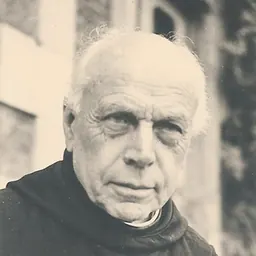
Henri Reynders (Dom Bruno) (24 October 1903 – 26 October 1981) was a Belgian priest credited with saving 400 Jews during the Holocaust.
Early life and study Henri Reynders was the fifth of eight children of an upper-middle-class, deeply religious Catholic family. At the age of seventeen, having completed classical Greek and Latin studies at a Catholic school, he was accepted as a postulant at the Benedictine Mont-César Abbey (now known as Keizersberg Abbey) in Leuven, Belgium. After the successful completion of the noviciate in 1922, Henri Reynders was given the name of Dom Bruno.
The next three years were devoted to studying theology and philosophy at the Catholic University of Leuven and at Saint Anselm Athenaeum in Rome. Dom Bruno took the Benedictine vows in Rome in 1925, binding himself to a monastic life at Mont-César and obedience to its abbot. Mont-César was known as an "intellectual abbey" and Dom Bruno was allowed to complete his studies concentrating on the writings of Saint Irenaeus, a second-century Father of the Church. He was ordained a priest in 1928 in Leuven, Eventually, Dom Bruno resumed teaching at his monastery and contributed articles to publications devoted to ancient and medieval theology.
With the abbot's approval, he travelled extensively within and outside Belgium, visiting Catholic institutions to lecture and exchange views. During a stay in Hitler's Germany lecturing Catholic youths, he first witnessed what he would later characterise as the "shocking, revolting and nauseating" injustice and brutality of Nazi anti-Semitism.
During his studies in Rome, Dom Bruno met and became an enthusiastic supporter of the controversial Dom Lambert Beauduin, founder and prior of the Benedictine Amay Priory (later transferred to Chevetogne), Belgium. Dom Lambert promoted the unification of all Christian churches as well as liturgical reforms, ideas that were later favoured in Vatican II but were not fully accepted by the Catholic Church at the time. Consequently, Dom Bruno was advised to discontinue contacts with Chevetogne.
World War II
In the wake of the 1939 German invasion of Poland, which sparked World War II, Belgium mobilised and Dom Bruno was assigned to be the chaplain of the 41st Artillery Regiment. In May of the following year, German troops overran Belgium. In the course of the campaign, he sustained a leg injury and spent the next six months in prisoner-of-war camps at Wolfsburg and Doessel, Germany, where he continued to provide religious and moral support to fellow prisoners.
After World War II
Following the liberation of Belgium in September 1944, Dom Bruno assisted in reuniting the children with their parents or other members of their immediate family. Problems arose when representatives of the Jewish community opposed attempts by some Christians to adopt orphaned Jewish children, especially since many of these children requested baptism as a result of their Catholic experience. During the Nazi occupation, Dom Bruno opposed the active conversion of his charges, but afterwards took the position that each case should be evaluated individually, with the best interest of the child being the deciding factor.
As the war against Germany was still in progress, Dom Bruno rejoined the Belgian armed forces as a chaplain. At the war's end, he briefly returned to Mont-César, but was reassigned by his order to perform pastoral and educational work at other locations in Belgium, France and Rome. No longer burdened by his wartime self-imposed rescue mission, Dom Bruno resumed his studies of Saint Irenaeus' legacy and in 1954 published the definitive lexicon on the subject.
Attracted by the ecumenical spirit of Chevetogne Abbey, where, as a young priest, he had become a disciple of Dom Lambert Beauduin, Dom Bruno had, over the years, requested a release from the Mont-César community in order to join the monks at Chevetogne. That request had been repeatedly denied by his abbot. Finally, in 1968, his wish was granted. His final active assignment was as vicar in the town of Ottignies near Louvain, where he ministered to the aged, the sick, and the handicapped.
In 1964, the state of Israel proclaimed Dom Bruno Reynders one of the "Righteous Among the Nations", an honour bestowed on gentiles who risked their lives to help Jews during the Holocaust. He was invited to Jerusalem to witness the planting of a tree in his honour at Yad Vashem (Alley of the Righteous). Gradually worsening Parkinson's disease forced Dom Bruno to retire to a nursing home in 1975. Six years later, he sustained a severe bone fracture and did not survive surgery. He was buried at his beloved Abbey of Chevetogne.
Ten years after Father Bruno's death, a square in the city of Ottignies was named in his honour. A stele was erected which reads: Father Bruno Reynders, Benedictine (1903-1981). Hero of the resistance. At the risk of his life saved some 400 Jews from Nazi barbarism
Don’t just read it —
keep it.
Full-length biographies made to live with: read them, listen on the way to work, watch them tonight.
- E-book
- Audio
- Video
Instant download · yours to keep · every purchase keeps this site free
Important facts
People in Henri Reynders's life
Named in this biography and alive at the same time

Related people
Same field, nearest in time


Contemporaries
People whose lives overlapped Henri Reynders's





Frequently asked questions
Who was Henri Reynders?
priest (1903–1981)
When was Henri Reynders born?
Henri Reynders was born on 24 October 1904 in Brussels.
When did Henri Reynders die?
Henri Reynders died on 26 October 1981.
What was Henri Reynders's occupation?
Henri Reynders was a linguist.
What nationality was Henri Reynders?
Henri Reynders was Belgian.
Sources & further reading
Cite this page
APA: Biography.guide. (2026). Henri Reynders. https://biography.guide/henri-reynders/
MLA: "Henri Reynders." Biography.guide, https://biography.guide/henri-reynders/.
Chicago: "Henri Reynders." Biography.guide. https://biography.guide/henri-reynders/.
Data last updated: 2026-09-20 · Spot an error? Report a correction.
Page generated 2026-09-27 05:14 UTC