
About Henri Hubert
Lived 1872 – 1927 (aged 54). Henri Hubert was a French anthropologist, sociologist, archaeologist, curator, professor and historian.
Henri Hubert (23 June 1872 – 25 May 1927) was a French archaeologist and sociologist of comparative religion who is best known for his work on the Celts and his collaboration with Marcel Mauss and other members of the Année Sociologique.
Life and work A synthesis which made date. First posthumous edition by Marcel Mauss in the series of Henri Berr Hubert was born and raised in Paris, where he attended Lycée Louis-le-Grand. There he was influenced by the school chaplain, Abbé Quentin, who instilled in him an interest in religion and in particular in religion amongst Assyrians. He entered the École Normale Supérieure. He began to study the history of Christianity. He passed the agrégation in history in 1895 after studying the Eastern Orthodox Church, the Byzantine Empire, and iconoclasm. His doctoral thesis focused on pre-Christian religion in Asia Minor.
Unlike most French academics, Hubert focused on research rather than teaching after graduation. He took a position at the École Pratique des Hautes Études and in 1898 he also took up a position at the Musée des Antiquités. It was at this time that he grew increasingly interested in Celtic history and culture.
It was also in 1898 that Hubert became a close friend of Marcel Mauss and began collaborating on the Année Sociologique of Émile Durkheim, where he eventually became responsible for the section on the 'sociology of religion'. Hubert and Mauss were to collaborate on several important works in the future, including an "Sacrifice: Its Nature and Function" (1899) and their Outline of a General Theory of Magic (1904).
By 1906 Mauss was thoroughly ensconced at the Ecole Pratique, where he would remain until his death. It was also this time that he took up a post at the École du Louvre where he lectured on the ethnographic prehistory of Europe. Throughout the first two decades of the twentieth century Hubert continued to publish on both Asia and the Celts as well as more general topics. Works from this period include (in English translation) The Rise of the Celts and The Greatness and Decline of the Celts, both available in a single volume entitled The History of the Celtic People (London: Kegan Paul, Trench, Trubner 1934; reprint Bracken 1993). His follow-up work on the Germanic peoples, entitled Les Germains and published posthumously in 1952, has yet to be translated to English. Also from this period is Essay on Time: A Brief Study of the Representation of Time in Religion and Magic.
Durkheim's death in 1917 affected Hubert greatly, as did the death of his wife in childbirth in 1924.
Don’t just read it —
keep it.
Full-length biographies made to live with: read them, listen on the way to work, watch them tonight.
- E-book
- Audio
- Video
Instant download · yours to keep · every purchase keeps this site free
Important facts
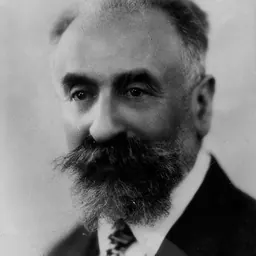
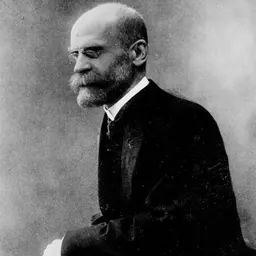
People in Henri Hubert's life
Named in this biography and alive at the same time

Related people
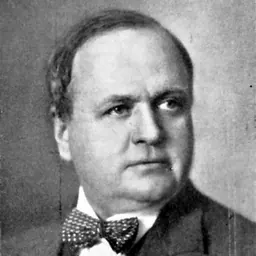
Same field, nearest in time




Contemporaries
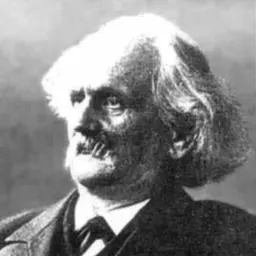
People whose lives overlapped Henri Hubert's



Frequently asked questions
Who was Henri Hubert?
French sociologist (1872–1927)
When was Henri Hubert born?
Henri Hubert was born on 23 June 1872 in 6th arrondissement of Paris.
When did Henri Hubert die?
Henri Hubert died on 25 May 1927 in Chatou.
What was Henri Hubert's occupation?
Henri Hubert was an anthropologist, sociologist, archaeologist, curator, professor and historian.
What nationality was Henri Hubert?
Henri Hubert was French.
Sources & further reading
Cite this page
APA: Biography.guide. (2026). Henri Hubert. https://biography.guide/henri-hubert/
MLA: "Henri Hubert." Biography.guide, https://biography.guide/henri-hubert/.
Chicago: "Henri Hubert." Biography.guide. https://biography.guide/henri-hubert/.
Data last updated: 2026-09-20 · Spot an error? Report a correction.
Page generated 2026-09-27 05:22 UTC