
Henri de Toulouse-Lautrec
French painter and illustrator
About Henri de Toulouse-Lautrec
Lived 1864 – 1901 (aged 36). Henri de Toulouse-Lautrec was a French poster artist, lithographer, painter, graphic artist, printmaker and architectural drafter.
Comte Henri Marie Raymond de Toulouse-Lautrec-Montfa (24 November 1864 – 9 September 1901), known as Toulouse-Lautrec , was a French painter, printmaker, draughtsman, caricaturist, and illustrator. His immersion in the colourful and theatrical life of Paris's Belle Époque in the late 19th century allowed him to produce popular works of art from decadent affairs.
Born into the aristocracy, Toulouse-Lautrec broke both his legs during adolescence, leaving him with a stunted appearance. In later life, he developed an affinity for brothels and prostitutes that directed the subject matter for many of his works, which record details of the late-19th-century bohemian lifestyle in Paris. He is among the painters described as Post-Impressionists, with Paul Cézanne, Vincent van Gogh, Paul Gauguin, and Georges Seurat also commonly considered as belonging in this loose group.
Early life Henri Marie Raymond de Toulouse-Lautrec-Montfa was born at Demoiselles d'Imbert du Bosc (his great-aunts) home at rue de l'École Mage (presently 14, rue Henri de Toulouse Lautrec), Albi, in the south of France, the firstborn child of Count Alphonse de Toulouse-Lautrec Montfa (1838–1913) and Adèle Zoë Tapié de Celeyran (1841–1930). He was a member of an aristocratic family (descended from both the Counts of Toulouse and Odet de Foix, Vicomte de Lautrec, as well as the Viscounts of Montfa). His younger brother was born in 1867 but died the following year. Both sons enjoyed the titres de courtoisie of Comte. If Toulouse-Lautrec had outlived his father, he would have inherited the family title of Comte de Toulouse-Lautrec.
After the death of his brother, Toulouse-Lautrec's parents separated, and a nanny cared for him. At the age of eight, Toulouse-Lautrec lived with his mother in Paris, where he drew sketches and caricatures in his exercise workbooks. A friend of his father, René Princeteau, sometimes visited to give informal lessons. Some of Toulouse-Lautrec's early paintings are of horses, a speciality of Princeteau's and a subject Toulouse-Lautrec later revisited in his "Circus Paintings".
In 1875, Toulouse-Lautrec returned to Albi because his mother had concerns about his health. He took thermal baths at Amélie-les-Bains, and his mother consulted doctors in the hope of finding a way to improve her son's growth and development. and his congenital health conditions have often been attributed to a family history of inbreeding.
At the age of 13, Toulouse-Lautrec fractured his right femur, and at age 14, he fractured his left femur. The breaks did not heal properly. Modern physicians attribute this to an unknown genetic disorder, possibly pycnodysostosis (sometimes known as 'Toulouse-Lautrec Syndrome'), or a variant disorder along the lines of osteopetrosis, achondroplasia, or osteogenesis imperfecta. Toulouse-Lautrec's legs ceased to grow when he reached . He developed an adult torso while retaining his child-sized legs.
Paris
During a stay in Nice on the French Riviera, his progress in painting and drawing impressed Princeteau, who persuaded Toulouse-Lautrec's parents to allow him to return to Paris and study under the portrait painter Léon Bonnat. He returned to Paris in 1882. Toulouse-Lautrec's mother had high ambitions and, with the aim of her son becoming a fashionable and respected painter, used their family's influence to gain him entry to Bonnat's studio.
With his studies finished, Toulouse-Lautrec participated in an exposition in 1887 in Toulouse using the pseudonym "Tréclau", the verlan of the family name "Lautrec". He later exhibited in Paris with Van Gogh and Louis Anquetin.
Rise to recognition In 1888, the Belgian critic Octave Maus invited Lautrec to present eleven pieces at the Les XX (the 'Twenties') exhibition in Brussels in February. Theo van Gogh, the brother of Vincent van Gogh, bought Poudre de Riz ('Rice Powder') for 150 francs for the Goupil & Cie gallery. From 1889 to 1894, Toulouse-Lautrec took part in the Salon des Indépendants regularly. He made several landscapes of Montmartre.
Toulouse-Lautrec contributed several illustrations to the magazine Le Rire during the mid-1890s.
Interactions with women In addition to his growing alcoholism, Toulouse-Lautrec also visited prostitutes. Fellow painter Édouard Vuillard later said that while Toulouse-Lautrec did engage in sex with prostitutes, "the real reasons for his behaviour were moral ones ... Lautrec was too proud to submit to his lot, as a physical freak, an aristocrat cut off from his kind by his grotesque appearance. He found an affinity between his condition and the moral penury of the prostitute."
The prostitutes inspired Toulouse-Lautrec. He would frequently visit a brothel located in Rue d'Amboise, where he had a favourite called Mireille. He created about a hundred drawings and fifty paintings inspired by the life of these women. In 1892 and 1893, he created a series of two women in bed together called Le Lit, and in 1894 he painted from memory in his studio. The cabaret reserved a seat for him and displayed his paintings. Among the works that he painted for the Moulin Rouge and other Parisian nightclubs are depictions of the singer Yvette Guilbert; the dancer Louise Weber, better known as La Goulue ('The Glutton'); and the much subtler dancer Jane Avril.
Other café-concerts also commissioned posters from Toulouse-Lautrec, such as the Café des Ambassadeurs, for which he made the now iconic poster of his friend Aristide Bruant, when he moved there in 1892.
London
Toulouse-Lautrec's family were Anglophiles, and though he was not as fluent as he pretended to be, he spoke English well enough. and the bicycle advert La Chaîne Simpson.
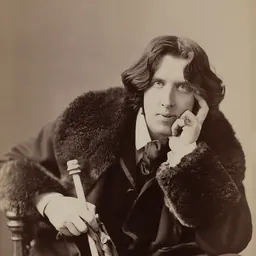
While in London, Toulouse-Lautrec met and befriended Oscar Wilde.
Lifestyle Alcoholism
Toulouse-Lautrec was mocked for his short stature and physical appearance, which some biographers theorise may have contributed to his alcoholism.
Initially, Toulouse-Lautrec only drank beer and wine, but his tastes expanded into spirits, namely absinthe. The "Earthquake Cocktail" (Tremblement de Terre) is attributed to Toulouse-Lautrec: a potent mixture containing half absinthe and half cognac in a wine goblet. Because of his underdeveloped legs, he walked with the aid of a cane, which he hollowed out and kept filled with liquor.
Cooking skills Like Claude Monet, Lautrec was known for his cooking. Culinary historian Alexandra Leaf highlights Monet and Lautrec as the two "most serious gourmets" among their peers. Lautrec's love for cooking stemmed from his family upbringing and early childhood, where he first learned culinary values. Before he became widely known as a painter, he was called "Henri the cook" by his cousins.
Lautrec's penchant for art and cooking eventually led him to combine the visual and culinary arts, usually as a formal celebration of the release of new artworks, resulting in noteworthy parties for which he designed the menu (which were often artworks in themselves), bought and prepared the food, and created new cocktails. Lautrec's most famous party, held at the Natansons' Paris house in February 1895, is often regarded as one of the most notorious parties in art history. Three hundred guests were invited, with a claimed 2,000 cocktails served, all accompanied by side dishes of gourmet food, with Lautrec working diligently as the sole chef and bartender, dressed in a white linen jacket, complete with a freshly shaved bald head and no beard. Ironically, by the end of the night, Lautrec appeared to be the only one still awake and sober. After Lautrec's death, his close friend Maurice Joyant published Lautrec's collection of recipessome original, some adaptedin the book La Cuisine de Monsieur Momo, Célibataire (1930), along with a colour book frontispiece of Toulouse Lautrec Cooking by Vuillard. It was revised in 1966 as L'art de la cuisine. The cookbook features 150 recipes, many of which were Lautrec's signature dishes, such as "Catalan salad". Art historian Charles Stuckey describes it as the first cookbook ever published by an artist, albeit posthumously. An English translation, The Art of Cuisine, was published in 1966.
End of life
By February 1899, Toulouse-Lautrec's alcoholism began to take its toll, and he collapsed from exhaustion. His family had him committed to Folie Saint James, a sanatorium in Neuilly-sur-Seine for three months. While committed, he drew 39 circus portraits. After his release, he returned to the Paris studio and travelled throughout France. Both his physical and mental health began to decline due to alcoholism and syphilis.
In March 1901, a stroke left Lautrec paralysed from the legs down and confined him to a wheelchair. On 15 August 1901, whilst in Taussat, he suffered a stroke which left him hemiplegic. On 9 September 1901, at the age of 36, Toulouse-Lautrec died from complications due to alcoholism and syphilis at his mother's estate, Château Malromé, in Saint-André-du-Bois. He is buried in Verdelais Cemetery, Gironde, a few kilometres from the estate. Toulouse-Lautrec's last words reportedly were "Le vieux con!" ("The old fool!"), his goodbye to his father, who was killing a fly over his son's deathbed. number of lost works
Toulouse-Lautrec excelled at depicting people in their working environments, with the colour and movement of the gaudy nightlife present but the glamour stripped away. He was a master at painting crowd scenes where each figure was highly individualised. At the time they were painted, the individual figures in his larger paintings could be identified by silhouette alone, and the names of many of these characters have been recorded. His treatment of his subject matter, whether as portraits, in scenes of Parisian nightlife, or as intimate studies, has been described as alternately "sympathetic" and "dispassionate".
Toulouse-Lautrec's skilled depiction of people relied on his highly linear approach emphasising contours. He often applied paint in long, thin brushstrokes leaving much of the board visible. Many of his works may be best described as "drawings in coloured paint."
Selected works See also :Category:Paintings by Henri de Toulouse-Lautrec.
Paintings
Posters
Other
Photos of Toulouse-Lautrec
Auction sales In a 2005 auction at Christie's auction house, La Blanchisseuse, Toulouse-Lautrec's early painting of a young laundress, sold for US$22.4 million, setting a new record for the artist for a price at auction.
Media On 20 August 2018, Toulouse-Lautrec was the featured artist on the BBC television programme Fake or Fortune?. Researchers attempted to discover whether he had created two newly discovered sketchbooks.
Films Moulin Rouge (1952): A film about the artist, portrayed by José Ferrer Moulin Rouge! (2001): A jukebox musical about artists who haunt the famous cabaret, portrayed by John Leguizamo Midnight in Paris (2011): A Woody Allen time travel film about Paris in the 20th century, portrayed by Vincent Menjou Cortes Lautrec (1998): A French biographical film directed by Roger Planchon
Literature Sacré Bleu: A Comedy d'Art, by Christopher Moore, in which the bon vivant artist plays the role of co-detective with the fictional lead, Lucien Lessard, in trying to unravel the death of mutual friend Vincent van Gogh. , by Pierre La Mure (1950), historical novel based on the life of Henri de Toulouse-Lautrec. The historical fiction novel, The Dream Collector, "Sabrine & Vincent van Gogh" (Historium Press 2024) by R.w. Meek explores Toulouse Lautrec's relationship with Vincent van Gogh and their mutual problems with alcohol. Jonathan Trigell's novel Genus transposes Toulouse Lautrec and his Montmartre world into a dystopian near-future London.
Don’t just read it —
keep it.
Full-length biographies made to live with: read them, listen on the way to work, watch them tonight.
- E-book
- Audio
- Video
Instant download · yours to keep · every purchase keeps this site free
Important facts
more
Lautrec, toulouse lautrec, Henri De Toulouse-Lautrec, De Lautrec, Henri-Marie-Raymond de Toulouse-Lautrec Montfa, Henri-Marie-Raymond de Toulouse-Lautrec, H. de Toulouse Lautrev, Toulouse-Lautrec, henri de toulouse lauterec, lautrec toulouse, Henry Toulouse-Lautrec, Henri de Toulouse Lautrec, h. toulouse lautrec, HPeople in Henri de Toulouse-Lautrec's life
Named in this biography and alive at the same time



Related people
Same field, nearest in time

Contemporaries
People whose lives overlapped Henri de Toulouse-Lautrec's




Frequently asked questions
Who was Henri de Toulouse-Lautrec?
French painter and illustrator (1864–1901)
When was Henri de Toulouse-Lautrec born?
Henri de Toulouse-Lautrec was born on 24 November 1864 in Albi.
When did Henri de Toulouse-Lautrec die?
Henri de Toulouse-Lautrec died on 9 September 1901 in Saint-André-du-Bois, Château Malromé.
What was Henri de Toulouse-Lautrec's occupation?
Henri de Toulouse-Lautrec was a poster artist, lithographer, painter, graphic artist, printmaker and architectural drafter.
What nationality was Henri de Toulouse-Lautrec?
Henri de Toulouse-Lautrec was French.
Sources & further reading
· Wikipedia: Henri de Toulouse-Lautrec
· DBpedia: Henri de Toulouse-Lautrec
Cite this page
APA: Biography.guide. (2026). Henri de Toulouse-Lautrec. https://biography.guide/henri-de-toulouse-lautrec/
MLA: "Henri de Toulouse-Lautrec." Biography.guide, https://biography.guide/henri-de-toulouse-lautrec/.
Chicago: "Henri de Toulouse-Lautrec." Biography.guide. https://biography.guide/henri-de-toulouse-lautrec/.
Data last updated: 2026-09-20 · Spot an error? Report a correction.
Page generated 2026-09-27 05:29 UTC