About Heneage Finch, 7th Earl of Aylesford
Lived 1849 – 1885 (aged 35). Heneage Finch, 7th Earl of Aylesford was a British politician.
Heneage Finch, 7th Earl of Aylesford (21 February 1849 – 13 January 1885), styled Lord Guernsey until 1871, and also known as Joseph Heneage Finch, was a British aristocrat and friend of the Prince of Wales (later King Edward VII). Finch enjoyed many outdoor pursuits, and in his social circle was nicknamed "Sporting Joe."
The Aylesford Scandal, a British society scandal of 1876, as well as financial difficulties, led to Finch leaving the United Kingdom to become a cattle rancher in Big Spring, Texas.
Family
Finch's parents were Heneage Finch, 6th Earl of Aylesford, and Jane Wightwick Knightley, the only daughter of John Wightwick Knightley of Offchurch Bury: they were married on 7 May 1846. Finch's family had a residence in Upper Brook Street, Mayfair, and he was born in St George Hanover Square, a historical parish that included the Mayfair district, on 21 February 1849. He was educated at Eton.
On the death of his father on 10 January 1871, Finch succeeded to the title of Earl of Aylesford. Edith was the third daughter of Thomas Peers Williams and his wife Emily (née Bacon). who married Malcolm Donald Murray, and Alexandra Louise Minna (1875–1959) who married Philip Samuel Danby, was widowed and later married Robert Emmet.
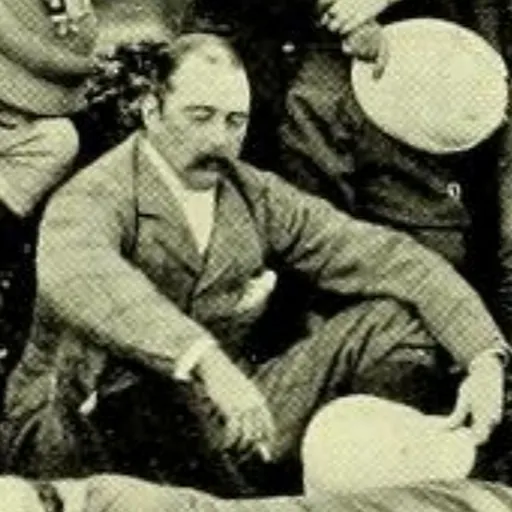
"Sporting Joe" Albert Edward, Prince of Wales (back row, second from left) and his hunting party in India in 1875, with the first tiger killed by the Prince. Lord Aylesford is seated on the ground in the middle of the front row
Despite his public position, Finch did not participate in politics to any major extent. In the 14 years in which he was a member of the House of Lords, Hansard does not record Finch as contributing to any debates. Hansard did not have comprehensive coverage before 1909. Finch was a captain of the Warwickshire Yeomanry Cavalry. He was also a county magistrate, but rarely presided over cases. and athletic feats such as challenging local tradesmen in Warwickshire to running races, sometimes giving the winnings to charity: Finch was once described as "as fine a specimen of manhood as one often encounters," a well built man, standing 6 feet 2 inches tall in his stockings. Finch was skilled at boxing, and was particularly interested in horse racing and breeding.
Boxing Finch had received boxing training from a retired pugilist and he reportedly boasted that he could "handle the daddles". On an occasion at the Packington Steeplechases a gang of thieves attempted to steal some ancestral silver tableware from Finch's tent, and he fought them off largely single handed. Some well-known horses that were at one time owned by Finch include Acropolis, Chausseur, Colonel Crockett, Lady Hilda, after passing out of Finch's ownership),
Finch reportedly wished to witness an execution and petitioned the Governor of Warwick Prison to be allowed to attend one, but was refused, the Governor saying that an exception could not be made even for an Earl The Birmingham Daily Post reported that while Queen Victoria's train had been waiting at Leamington station on Wednesday 20 May 1874, Finch had arrived with his local Yeomanry Company to give the Queen an Honour Guard. The Company arrived at Leamington station at around 10 p.m., and Finch had been refused entry by station porters due to the Queen's wish for privacy. Finch had dismounted his horse to try to gain admittance and 'an unseemly hand to hand struggle ensued.' The incident was discussed In the House of Commons on 4 June 1874: MP Lewis Dillwyn raised a question about reports of the event. The Minister of War Gathorne Gathorne-Hardy explained that enquiries had been made of the parties concerned, and that Finch's Yeomanry had waited 'perfectly quiet' outside the station while Finch had tried to gain admittance, but Finch had resisted when physically restrained by station staff. Finch had extricated himself, and then spoke with the Queen's Private Secretary General Ponsonby though the station's railings, who told him: "Her Majesty did not wish to hurt his feelings at all, but wished that her stay in the station should be quite private," after which Finch and his company had withdrawn. ].
In January 1879 Finch appeared at Bow Street Police Court charged with assaulting two officials named Richards and Campbell at the Royal Italian Opera House, Covent Garden, when the officials would not admit him to his box without a ticket. Finch had pushed Campbell to the ground; Richards escaped serious injury as Finch had knocked off his hat rather than directly striking his head. Finch was fined £5 for assaulting each man (£10 total).
In June 1879 Finch was summoned to Police Court at Ascot Heath for 'a jocose attempt' to hit a police officer on the helmet from his barouche carriage on the way out of Ascot Races: Finch had missed his aim and struck the officer on the cheek. As Finch had not intended injury, the summons was withdrawn.
On a brief return to England from Texas, on 28 May 1884, Finch attended the Epsom Derby and broke a leg on his railway journey back to London Bridge. Accounts as to exactly what happened vary: St Louis Post Dispatch reported that Finch had assaulted a railway porter by striking the porter on the head with his cane when asked to show his ticket, the altercation leading to a fall and Finch's leg being broken in two places. The Yorkshire Post gave an account from London Bridge railway station officials: that a man travelling on the 11.40 p.m. train from Epsom had refused to show his ticket, and had instead attempted twice to strike a Ticket Inspector on the head; the Inspector had warded off the passenger's blows and pushed him down, after which the injured man was assisted to a Cab and had given the name 'Lord Aylesford' which they had thought at the time was an assumed name. Alternatively, Finch had perhaps fallen asleep on the train and his unconscious frame had blocked a female passenger's exit from their carriage: in that version of events Finch met his accident while a porter tried to help the woman get out of the train. Finch contended that he had been assaulted by a railway official, and through his solicitor appealed for witnesses. Finch was attended by Dr Alfred Cooper while he recovered. In 1873 Finch went to the Lord Chancellor's Court seeking legal assistance concerning an unfavourable loan agreement he had made before reaching the age of 21, with a money-lender named Morris: Finch had borrowed £8,000, partly to repay a £4,000 debt which he owed to a solicitor named Mr. Graham. Finch's debt had subsequently increased to £11,000. Finch had concealed his debt problems from his father due to his father's terminal illness, and he found he could not make any further promises against future income from family estates without alerting the family solicitor who held the title deeds. The Court decided that Finch should still repay the debt, but at an interest rate of 4% rather than Morris' previous interest rate of 60%.
Towards the end of his life Finch was described as 'financially embarrassed' and a Private Act was passed to settle his affairs. In 1874 Edward, Prince of Wales and Princess Alexandra visited Packington Hall and were lavishly entertained.
Finch was selected to accompany Prince Edward on a goodwill visit to India in 1875–1876, and was listed in a contemporary publication by Sir William Howard Russell as acting as an Equerry to the Prince. Prince Edward regularly hunted while he was in India, and Russell implied the presence of Finch and Charles Wynn-Carington, as competent huntsmen, would have added a degree of protection for Edward: "to the anticipation of similar enjoyment in the chase Lord Aylesford and Lord Carington had superadded a task imposed by their personal attachment, which happily had no need for its exercise." who was also already married. Finch telegraphed his mother Jane the dowager Countess of Aylesford to remove his and Edith's daughters from Edith's care: "send for the children and keep them until my return: a great misfortune has happened".
Edith wrote to her mother-in-law in March 1876 to explain why she had left home: "I do not attempt to say a word in self-defence, but you can imagine I have suffered much before I could have taken such a step: how much it would be impossible to tell you, but it is the only reparation I can make to Guernsey, and he will now have the opportunity of getting rid of one he has long ceased to care for." The Dowager Countess was reluctant to remove her grandchildren from their mother before receiving the full facts of the situation. but afterwards took Hilda and Alexandra to live with her, and they were not permitted to see Edith again. In 1885 Jane said: "they have never seen their mother since then, and they do not know that she is alive." although the Queen had a poor opinion of Edith's family. Finch was also accused of compromising his marriage vows early in his union with Edith, by going to the Alhambra or Cremorne Gardens and "supping there with loose women or forming vulgar amours with them." - indeed the couple may have cohabited to create public evidence for a divorce was christened on 29 June 1883 in London as Guy Bertram Finch, however despite being baptised as a child of the Earl of Aylesford, Edith had confided in her baby nurse Mrs Brittain that she had suffered physical difficulties from 'mysterious pain' after the birth of Guy Bertrand. and died in Welbeck Street, London on 24 June 1897 after a short illness.
New career in the United States After Finch and Edith had separated, Finch began a new life in the United States as a rancher in Texas. Finch purchased land and a cattle interest for $75,000 at Wild Horse Creek, about ten miles from the town of Big Spring. Finch initially traveled to Texas with his brothers Daniel and Clement, and although Clement returned to England fairly quickly, Daniel stayed to help Finch in his new vocation. Newspapers with stories of Countess Edith and her son Guy Bertrand had reached as far as Big Spring by April 1884, but Finch did not read them. with a later brick frontage, at South Main Street, and it was given a commemorative plaque from the Howard County Historical Commission. The plaque details how Finch was remembered for being very particular about how his meat was prepared, travelling with his own personal butcher named Von Paussen, and being a big fan of mutton.
In April 1884 Finch's ranch house at Big Spring burned to the ground in a fire that had begun as a result of a servant mishandling kerosene. Finch and his brother Daniel escaped the house without injury, but Finch regretted the loss of 20 guns in the fire, including one that had been gifted to him by the Prince of Wales. Finch rode into Big Spring town the next day and obtained permission to occupy the empty property belonging to his neighbour Denmark, until a new cabin could be built for him. An unnamed neighbouring rancher, feeling sorry for the Englishmen, helped with efforts to rebuild their home. Later, Finch purchased and lived in the Cosmopolitan Hotel.
The Texas Historical Commission set a plaque in 1980 on a building on East 3rd Street in Big Spring, at the former site of the Cosmopolitan Hotel, to commemorate Finch's purchase of the hotel and his contribution to the City's history. .In all Finch spent about three years in Texas. His cause of death was described variously as dropsy (edema) and hardening or cirrhosis of the liver, inflammation of the bowels, and a rumour circulated in America that he might have faked his death; Finch's funeral took place on 3 February 1885. Finch's funeral cortege was headed by 200 of his estate tenants, and he was buried in a private ceremony attended by his family at St James' Church, Great Packington. The Prince of Wales sent a representative, William Molyneux, Lord Sefton, to the service.
Finch's younger brother Charles Wightwick Finch succeeded to the Earldom.
Don’t just read it —
keep it.
Full-length biographies made to live with: read them, listen on the way to work, watch them tonight.
- E-book
- Audio
- Video
Instant download · yours to keep · every purchase keeps this site free
Important facts
People in Heneage Finch, 7th Earl of Aylesford's life
Named in this biography and alive at the same time



Related people
Same field, nearest in time



Contemporaries
People whose lives overlapped Heneage Finch, 7th Earl of Aylesford's

Frequently asked questions
Who was Heneage Finch, 7th Earl of Aylesford?
peer
When was Heneage Finch, 7th Earl of Aylesford born?
Heneage Finch, 7th Earl of Aylesford was born on 21 February 1849 in London.
When did Heneage Finch, 7th Earl of Aylesford die?
Heneage Finch, 7th Earl of Aylesford died on 13 January 1885 in Big Spring.
What was Heneage Finch, 7th Earl of Aylesford's occupation?
Heneage Finch, 7th Earl of Aylesford was a politician.
What nationality was Heneage Finch, 7th Earl of Aylesford?
Heneage Finch, 7th Earl of Aylesford was British.
Sources & further reading
· Wikipedia: Heneage Finch, 7th Earl of Aylesford
· DBpedia: Heneage Finch, 7th Earl of Aylesford
Cite this page
APA: Biography.guide. (2026). Heneage Finch, 7th Earl of Aylesford. https://biography.guide/heneage-finch-7th-earl-of-aylesford/
MLA: "Heneage Finch, 7th Earl of Aylesford." Biography.guide, https://biography.guide/heneage-finch-7th-earl-of-aylesford/.
Chicago: "Heneage Finch, 7th Earl of Aylesford." Biography.guide. https://biography.guide/heneage-finch-7th-earl-of-aylesford/.
Data last updated: 2026-09-30 · Spot an error? Report a correction.
Portrait: Wikimedia Commons · author & licence
Page generated 2026-10-05 02:43 UTC