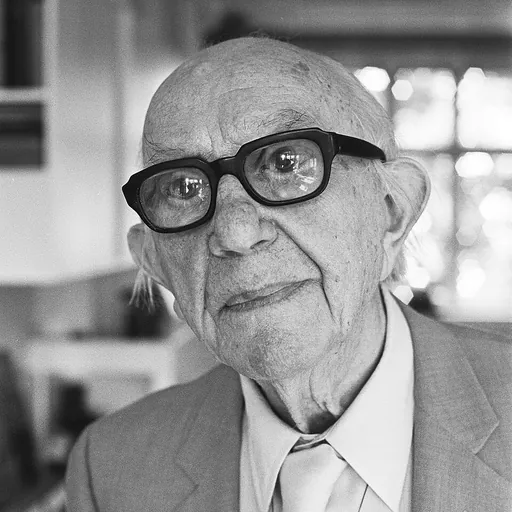
Hendrik Wijdeveld
Dutch architect and graphic designer
About Hendrik Wijdeveld
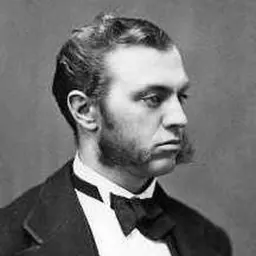
Lived 1885 – 1987 (aged 101). Hendrik Wijdeveld was a Dutch architect, graphic designer, draftsperson, designer, graphic artist and scenographer.
Hendricus Theodorus Wijdeveld (The Hague, 4 October 1885 – Nijmegen, 20 February 1987) was a Dutch architect and graphic designer. He was an important figure of the Amsterdam School and is known for his work as editor-in-chief for the Wendingen magazine.
Life and work Wijdeveld started his career at the architectural firm of Jacques van Straaten and the studio of Pierre Cuypers. He then worked in France as an assistant to the architect Louis Cordonnier. He returned to Amsterdam in 1914. From 1914 to 1940, he completed his main designs:
1920–1921: Bendien Residence 1922–1927: Villa De Wachter 1927: Plan West Amsterdam 1928: Villa de Bouw 1936: Tilburg villa
alt=Plan West Amsterdam 1922–1927. Hoofdweg / Jan van Galenstraat. Urban ensemble and architecture by H.Th. Wijdeveld (1885–1987). Plan West Amsterdam 1922–1927. Hoofdweg / Jan van Galenstraat. Urban ensemble and architecture by H.Th. Wijdeveld (1885–1987). He is also known for his futuristic projects:
1918: A vagina-shaped building for the Volkstheater ("People's Theater") A reforestation project for Amsterdam The 'Plan the impossible' project
Editor for Wendingen From 1918 to 1932, Wijdeveld was the editor-in-chief of the magazine Wendingen, a publication for the architecture association Architectura et Amicitia. The magazine was known for its groundbreaking architectural approach to typography. It also was an important platform for several modernist movements in the Netherlands.
War period Wijdeveld published a book titled De Nieuwe Orde ("The New Order") in 1940, suggesting his sympathy for the German occupation. As a result, he fell out of public favor, but appears to have been rehabilitated after the war since the Stedelijk Museum, a major national museum in Amsterdam, dedicated a major retrospective to him in 1953. In 1949–1950, he was a visiting professor at NC State College's School of Design.
Family Wijdeveld was married to the cellist Ellen Philippine Kohn, then to the actress Charlotte Köhler. He has one daughter, illustrator Ruscha Wijdeveld, and two sons, Wolfgang Wijdeveld and Roland Matthijs Wijdeveld.
Don’t just read it —
keep it.
Full-length biographies made to live with: read them, listen on the way to work, watch them tonight.
- E-book
- Audio
- Video
Instant download · yours to keep · every purchase keeps this site free
Important facts
more
H. T. Wijdeveld, Hendrik T. Wijdeveld, Hendric Theodor Wijdeveld, Hendrikus Theodorus Wijdeveld, Henk WijdeveldPeople in Hendrik Wijdeveld's life
Named in this biography and alive at the same time
Related people
Same field, nearest in time


Contemporaries
People whose lives overlapped Hendrik Wijdeveld's


Frequently asked questions
Who was Hendrik Wijdeveld?
Dutch architect and graphic designer (1885-1987)
When was Hendrik Wijdeveld born?
Hendrik Wijdeveld was born on 4 October 1885 in The Hague.
When did Hendrik Wijdeveld die?
Hendrik Wijdeveld died on 20 February 1987 in Nijmegen.
What was Hendrik Wijdeveld's occupation?
Hendrik Wijdeveld was an architect, graphic designer, draftsperson, designer, graphic artist and scenographer.
What nationality was Hendrik Wijdeveld?
Hendrik Wijdeveld was Dutch.
Sources & further reading
· Wikipedia: Hendrik Wijdeveld
Cite this page
APA: Biography.guide. (2026). Hendrik Wijdeveld. https://biography.guide/hendrik-wijdeveld/
MLA: "Hendrik Wijdeveld." Biography.guide, https://biography.guide/hendrik-wijdeveld/.
Chicago: "Hendrik Wijdeveld." Biography.guide. https://biography.guide/hendrik-wijdeveld/.
Data last updated: 2026-09-22 · Spot an error? Report a correction.
Portrait: Wikimedia Commons · author & licence
Page generated 2026-09-27 05:02 UTC