
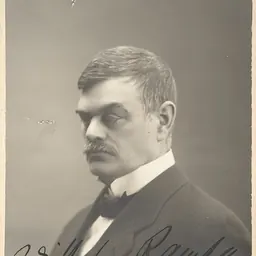
Hendrik Wade Bode
American engineer, researcher, and inventor
About Hendrik Wade Bode
Lived 1905 – 1982 (aged 76). Hendrik Wade Bode was an American mathematician, physicist, inventor, university teacher, electrical engineer and engineer, known for Bode plot, Bode's sensitivity integral and Composite image filter.
Hendrik Wade Bode ( , ; December 24, 1905 – June 21, 1982) Long respected in academic circles worldwide, he is also widely known to modern engineering students, mainly for developing the asymptotic magnitude and phase plot that bears his name, the Bode plot.
His research contributions in particular were not only multidimensional but also far reaching, extending as far as the U.S. space program.
Education Bode was born in Madison, Wisconsin. His father was a professor of education, and a faculty member at the University of Illinois at Urbana-Champaign by the time young Hendrik was ready for elementary school. He entered Leal Elementary School and rapidly advanced through the Urbana school system to graduate from high school at the age of 14.
Immediately after graduation from high school he applied for admission to the University of Illinois but was denied because of his age. Decades later, in 1977, the same university would grant him an honorary Sc.D. degree. After receiving his M.A. he remained at his alma mater, working as a teaching assistant, for an additional year. Subsequently, in 1929, he was assigned to the Mathematical Research Group, where he excelled in research related to electronic networks theory and its application to telecommunications. Sponsored by Bell Laboratories he reentered graduate school, this time at Columbia University, and he successfully completed his PhD in physics in 1935.
In 1938, In essence, his method made stability transparent to both the time and frequency domains and, furthermore, his frequency-domain-based analysis was much faster and simpler than the traditional time-domain-based method. This provided engineers with a fast and intuitive stability analysis and system design tool that remains widely used today. He, along with Harry Nyquist, also developed the theoretical conditions applicable to the stability of amplifier circuits. (funded by National Defense Research Committee (NDRC) Section D-2), developing automatic anti-aircraft control systems, whereby radar information was used to provide data about the location of the enemy aircraft, which was then fed back to the anti-aircraft artillery servomechanisms, enabling automatic, radar-augmented enemy aircraft ballistic tracking, in other words, automatic shooting down of enemy aircraft with the help of radar. The servomotors used were both electrically and hydraulically powered, the latter being used mainly for positioning the heavy anti-aircraft guns. Statistical analysis was also employed to aid in the computation of the exact position of the enemy aircraft and to smooth the data acquired from the target due to signal fluctuations and noise effects.
"Shotgun marriage" Bode therefore realized the first wireless data feedback loop in the history of automatic control systems by combining wireless data communications, electrical computers, statistics principles and feedback control systems theory. He showed his dry sense of humour by calling this multidisciplinary linkage a shotgun marriage, referring to the antiaircraft artillery origins of his historic invention, saying: "This, I said, was a sort of shotgun marriage forced upon us by the pressures of military problems in World War II." He also described it further as "a sort of 'shotgun marriage' between two incompatible personalities" and characterised the product of that linkage as a "son of shotgun marriage".
The product of this "marriage", i.e. the automated artillery gun, can also be considered as a robot weapon. Its function required to process data that was wirelessly transmitted to its sensors and make a decision based on the data received using its onboard computer about its output defined as its angular position and the timing of its firing mechanism. In this model we can see all the elements of later concepts such as data processing, automation, artificial intelligence, cybernetics, robotics etc.
Working on director studies Bode, in addition, applied his extensive skills with feedback amplifiers to design the target data smoothing and position predictor networks of an improved model of director T-10, called the director T-15. The work on director T-15 was undertaken under a new project at Bell Labs called Fundamental Director Studies in cooperation with the NDRC under the directorship of Walter McNair.
His NDRC-funded research at Bell Labs under the section D-2 (Control Systems section) contract eventually led to other important developments in related fields and laid the cornerstone for many present-day inventions. In the field of control theory, for example, it aided in the further development of servomechanism design and control, a crucial component of modern robotics. The development of wireless data communications theory by Bode led to later inventions such as mobile phones and wireless networking.
The reason for the new project was that director T-10 encountered difficulties in calculating the target velocity by differentiating the target position. Due to discontinuities, variations and noise in the radar signal, the position derivatives sometimes fluctuated wildly, and this caused erratic motion in the servomechanisms of the gun because their control signal was based on the value of the derivatives. In addition, the director T-15 operated only in rectangular coordinates, thus eliminating coordinate-transformation-based errors. These design innovations paid performance dividends, and the director T-15 was twice as accurate as its predecessor and converged on a target twice as fast. the operational amplifier based alternative of today's digital computers.
Inventions such as these, despite their military research origins, have had a profound and lasting impact in the civilian domain.
Military uses
Anzio and Normandy The automated anti-aircraft guns that Bode helped develop were successfully used in numerous instances during the war. In February 1944, an automated fire control system based on the earlier version of the director T-15, called the director T-10 by Bell Labs or director M-9 by the military, saw action for the first time in Anzio, Italy, where it helped down over one hundred enemy aircraft. On D-day 39 units were deployed in Normandy to protect the allied invading force against Hitler's Luftwaffe. Its flight specifications almost perfectly suited the target design criteria of director T-10, that of an aircraft flying straight and level at constant velocity,
His work on electronic communications, especially on filter and equalizer design, continued during this time. In 1945 it culminated in the publication of his book under the title of Network Analysis and Feedback Amplifier Design, which is considered a classic in the field of electronic telecommunications and was extensively used as a textbook for many graduate programs at various universities, as well as for internal training courses at Bell Labs. He was also the prolific author of many research papers that were published in prestigious scientific and technical journals.
In 1948, President Harry S. Truman awarded him the President's Certificate of Merit, in recognition of his remarkable scientific contributions to the war effort and to the United States of America.
Peacetime contributions
Change of focus As the war came to an end, his research focus shifted to include not only military but civilian research projects as well. On the military side he continued pursuing ballistic missile research, including research on antiballistic missile defence and associated computing algorithms, and in the civilian domain he concentrated on modern communication theory. On the post-war military research front he worked on the Nike Zeus missile project as part of a team with Douglas Aircraft,
Retirement from Bell Labs In 1952, he was promoted to the level of director of mathematical research at Bell Labs. In 1955, he became director of research in the physical sciences, and remained there until 1958, when he was promoted again to become one of the two vice presidents in charge of military development and systems engineering, a position he held up to his retirement.
During his tenure there, he pursued research on military decision making algorithms and optimization techniques based on stochastic processes that are considered a precursor of modern fuzzy logic. He also studied the effects of technology on modern society and taught courses on the same subject at Harvard's Science and Public Policy Seminar, while supervising and teaching undergraduate and graduate students at the same time in the division of Engineering and Applied Physics. Using terms easily accessible even to laymen, he analyzed and expanded on technical and philosophical aspects of systems engineering as practised at Bell Labs. As it is clear from the title of the book as well as its contents, he became one of the early exponents of technological convergence, infometrics and information processing before the terms even existed.
In 1974, he retired for the second time and Harvard awarded him the honorary position of professor emeritus. He, nevertheless, kept his office at Harvard and continued working from there, mainly as an advisor to government on policy matters.
In 1969, IEEE awarded him the renowned Edison Medal for "fundamental contributions to the arts of communication, computation and control; for leadership in bringing mathematical science to bear on engineering problems; and for guidance and creative counsel in systems engineering",
In 1979, he became the first recipient of the Richard E. Bellman Control Heritage Award from the American Automatic Control Council. The award is given to researchers with "distinguished career contributions to the theory or applications of automatic control", and "it is the highest recognition of professional achievement for US control systems engineers and scientists".
Posthumously, in 1989, the IEEE Control Systems Society established the Hendrik W. Bode Lecture Prize in order to: recognize distinguished contributions to control systems science or engineering.
Memberships to academic organizations and government committees He was also a member or fellow in a number of scientific and engineering societies such as the IEEE, American Physical Society, Society for Industrial and Applied Mathematics and the American Academy of Arts and Sciences, an independent American Academy, that is not part of the U.S. National Academies.
In 1957, he was elected member to the National Academy of Sciences,
Hobbies and family life Bode was an avid reader in his spare time. Bode also enjoyed boating. Early on in his career, while working for Bell Labs in New York, he sailed a boat on Long Island Sound. and was among its founding members when it was created in December 1964, the second U.S. National Academy since the inception of the National Academy of Sciences 101 years before. The National Academy of Engineering is now part of the United States National Academies.
Hendrik Wade Bode died at the age of 76, at his home in Cambridge, Massachusetts.
Publications Network Analysis and Feedback Amplifier Design (1945) Synergy: Technical Integration and Technological Innovation in the Bell System (1971) Counting house (Fiction) Hendrik W. (Hendrik Wade) Bode and Barbara Bode Harper's Magazine The Lion's mouth dept. pp. 326–329, August 1936
Research papers at Bell Labs H. W. Bode A Method of Impedance Correction Bell System Technical Journal, v9: 1930 H. W. Bode A General Theory of Electric Wave Filters Bell System Technical Journal, v14: 1935 H. W. Bode and R. L. Dietzold Ideal Wave Filters Bell System Technical Journal, v14: 1935 H. W. Bode Variable Equalizers Bell System Technical Journal, v17: 1938 H. W. Bode Relations Between Attenuation and Phase in Feedback Amplifier Design Bell System Technical Journal, v19: 1940
US patents granted
Twenty five patents were issued by the U.S. Patent Office to Bode for his inventions. The patents covered areas such as data transmission networks, electronic filters, amplifiers, averaging mechanisms, data smoothing networks and artillery computers.
Don’t just read it —
keep it.
Full-length biographies made to live with: read them, listen on the way to work, watch them tonight.
- E-book
- Audio
- Video
Instant download · yours to keep · every purchase keeps this site free
Important facts
more
TelecommunicationsPeople in Hendrik Wade Bode's life
Named in this biography and alive at the same time

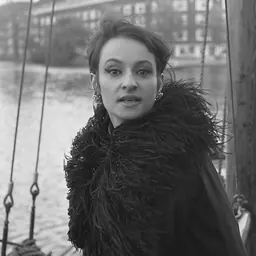
Related people
Same field, nearest in time

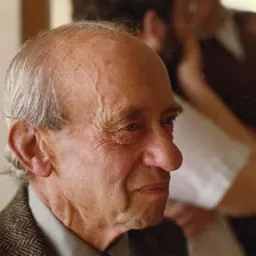
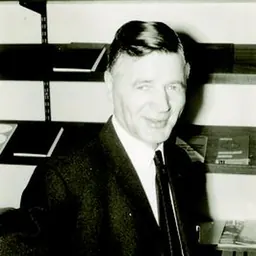
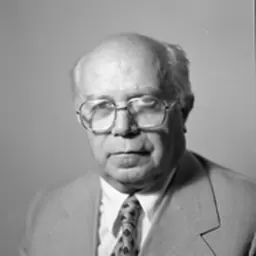
Contemporaries
People whose lives overlapped Hendrik Wade Bode's





Frequently asked questions
Who was Hendrik Wade Bode?
American engineer, researcher, and inventor (1905–1982)
When was Hendrik Wade Bode born?
Hendrik Wade Bode was born on 24 December 1905 in Madison.
When did Hendrik Wade Bode die?
Hendrik Wade Bode died on 21 June 1982 in Cambridge.
What was Hendrik Wade Bode's occupation?
Hendrik Wade Bode was a mathematician, physicist, inventor, university teacher, electrical engineer and engineer.
What was Hendrik Wade Bode known for?
Hendrik Wade Bode was known for Bode plot, Bode's sensitivity integral, Composite image filter, Control theory, Electronic engineering and Kramers–Kronig relations.
What nationality was Hendrik Wade Bode?
Hendrik Wade Bode was American.
Sources & further reading
· Wikipedia: Hendrik Wade Bode
Cite this page
APA: Biography.guide. (2026). Hendrik Wade Bode. https://biography.guide/hendrik-wade-bode/
MLA: "Hendrik Wade Bode." Biography.guide, https://biography.guide/hendrik-wade-bode/.
Chicago: "Hendrik Wade Bode." Biography.guide. https://biography.guide/hendrik-wade-bode/.
Data last updated: 2026-09-24 · Spot an error? Report a correction.
Page generated 2026-09-27 05:05 UTC