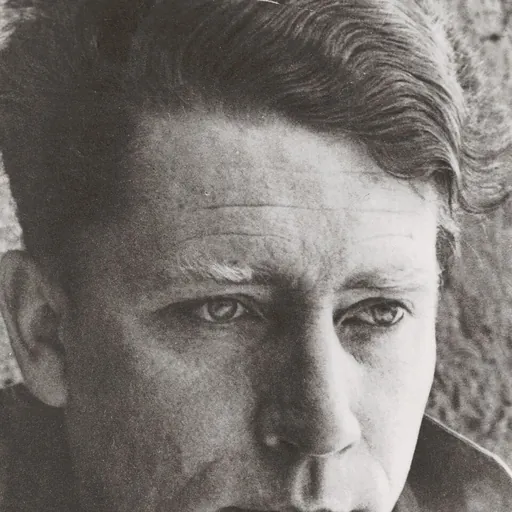
About Hendrik Marsman
Lived 1899 – 1940 (aged 40). Hendrik Marsman was a Dutch poet, linguist, writer, lawyer and translator.
Hendrik Marsman (30 September 1899 – 21 June 1940) was a Dutch poet and writer. He died while escaping to Great Britain, when the ship he was sailing on, the , either suffered a fatal engine-room explosion, or was torpedoed by a German submarine which mistook Berenice for another vessel.
Biography
Marsman studied law and practised in Utrecht, but after 1933 he travelled in Europe and devoted himself to literature. Under the influence of the German Expressionists, Marsman made his literary debut about 1920 with rhythmic free verse, which attracted notice for its aggressive independence.
In the biography of Hendrik Marsman on the website of the Charley Toorop is mentioned as one of the women who had a relationship with Marsman before he married in 1929 his wife Rien Barendregt.
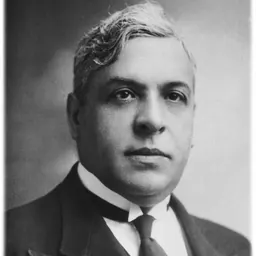
The collection Verzen (1923; "Verses") expresses an antihumanist, anti-intellectual rebelliousness, which the poet called "vitalism." As editor of the periodical De Vrije bladen ("The Free Press"), he became in 1925 the foremost critic of the younger generation. His next collection of verse appeared in 1927 with the English title Paradise Regained and was greeted as a major artistic achievement. Another cycle, Porta Nigra, dominated by the idea of death, appeared in 1934. His last book of verse, Tempel en kruis (1940; "Temple and Cross"), an autobiographical account of the poet's development, reaffirms humanistic ideals. After obtaining a Portuguese visa in Bordeaux, France, on June 18, 1940 from the Consul-General Aristides de Sousa Mendes, Marsman boarded a ship bound for England. He drowned three days later when the ship sunk after an explosion in the English Channel. His wife survived as the only passenger.
His poetry is vitalistic and expressionistic, and (fear of) death, as a metaphor for defeat in life, is a recurring theme. His "Herinnering aan Holland" (Remembrance of Holland): "" ("Thinking about Holland, I see broad rivers slowly moving through endless lowlands"). In 2000, the Dutch people chose this as the "Dutch Poem of the Century."
Awards 1927 - (Amsterdam Award) for Paradise regained 1936 - for Porta Nigra
Death Hendrik Marsman died on board the ship S.S. Berenice that sunk in the Bay of Biscay in the early morning of 21 June 1940.
The ship had set sailing from Bordeaux and sank in the North Sea. Different accounts exist on what might have sunk the S.S. Berenice.
The narrative according to the National Library of the Netherlands, that keeps an archive on Hendrik Marsman, goes like this: is detailed to the minute, although with some leeway for controversy: the U-boat might have accidentally; due to fog; attacked the S.S. Berenice confusing it with another ship: the "Champlain".
"According to the [log] of U-65, they sighted a big steamer, identified as Champlain (28.124 grt), at 5.45 hours, which was shadowed until 7.35 hours, when the U-boat lost contact in fog. A short time later the ship was sighted again and attacked with a spread of three torpedoes at 8.17 hours. Allied sources reports that the Champlain went to the bottom after being damaged by an air laid magnetic mine off La Pallice at 09.30 hours on 17 June. In knowledge of these sources, the torpedo report of U-65 claims the Champlain as his own success, but date, time and position are well fitting with the loss of the Berenice." According to the biography of the poet Marsman by Jaap Goedegebuure [...] it took Dutch historians 45 years to establish that the Berenice was not hit by a torpedo from the U65. An attack one day later was confused with the explosion on the Berenice. Source for the biography on this matter was a 1986 history of Dutch merchant shipping by historian Karel Bezemer . In Holland the U-boat-attack on the Berenice is considered to be a persistent myth, stimulated by his widow and admirers of the poet who wanted his death to be more heroic.The only surviving passenger was Marsman's wife Rien Barendregt. She was saved because at the time of the explosion she was on deck serving breakfast while wearing a life jacket and the explosion threw her overboard. She told captain Groenhof of the boat ("Nettie") that picked her and the few survivors up about her husband [that] "He could no longer hold on". The article in the Dutch newspaper Trouw that covers the history of the boat "Nettie" goes under the suggestive title "Marsman kon niet meer op ms 'Nettie' wachten" which translates as "Marsman could no longer wait for the ship 'Nettie'". According to the same article (in Dutch) no manuscript or body was recovered after the explosion.
In poems including "Vrees" ('Fear'), describing "the moment that the bullet won't miss", "Zinkend ship" ('Sinking ship'), "De Overtocht" (The Passage [by boat]) some see signs of Henrik Marsman predicting his own moment of dying and his fear "dat de dood het einde niet is" ('that dead is not the end'). In "Verzet" ('Resistance') Marsman pictures the last moments of a dying man using his last grain of energy to fight off a priest holding a crucifix in front of him with the kick and the scream "Mijn zonden gaan mee in Mijn graf" ('My sins go with me in My grave').
An on-line published biography (in Dutch) mentions six poems that seem to predict the way Marsman died. Only a verse of the poem "Maannacht" ('Moon Night') is used there as illustration. Paul F. Vincent: Translation of 'Herinnering aan Holland'. Utrecht, Bucheliuspers, 2007. No ISBN James Dickey: The Zodiac. Garden City, N.Y., Doubleday, 1976. (Based on the poem 'The zodiac' by H. Marsman). No ISBN H. Marsman: 'Poetry'. In: The literary review, vol. 5 (1961), no. 2, pag. 193
in Dutch
1923 - Verzen (poems) 1925 - Penthesileia (poems) 1926 - De anatomische les (essay) 1927 - De vliegende Hollander 1927 - Gerard Bruning. Nagelaten werk 1927 - Nagelaten werk (essay) 1927 - Paradise Regained 1928 - De lamp van Diogenes 1929 - De vijf vingers 1930 - Witte vrouwen (poems) 1931 - Kort geding (essay) 1931 - Voorpost (poems) 1933 - De dood van Angèle Degroux (novel) 1933 - Tegenonderzoek 1934 - Porta Nigra (poems) 1935 - De immoralist (of André Gide) (translation) 1936 - Heden ik, morgen gij (with Simon Vestdijk) (novel) 1937 - Herman Gorter (essay) 1938 - Critisch proza 1938-1947 - Verzameld werk (collected works) 1939 - Menno ter Braak (essay) 1939 - Hieronymus, de dichter der vriendschap (of Teixeira de Pascoaes) (translation, with Albert Vigoleis Thelen) 1939 - Paulus de dichter Gods (of Teixeira de Pascoaes) (translation, with Albert Vigoleis Thelen) 1940 - Tempel en kruis (poems) 1941 - Aldus sprak Zarathoestra (of Friedrich Nietzsche) (translation, with Ed Coenraards) 1945 - Brieven over literatuur (with Simon Vestdijk) 1946 - Verbum obscurum (of Teixeira de Pascoaes) (translation, with Albert Vigoleis Thelen)
Poem Berlijn (1922)
Marsman's poem "Berlijn" is painted on an exterior wall of the Dutch Embassy in Berlin, both in the original Dutch and in German translation (a further English translation is supplied below):
een bladzij met een ezelsoor een vlek
de stad een half ontverfde vrouw
maar schokkend steigert zij den hemel in als een blauw paard van Marc in 't luchtgareel
Berlijn
de zon is geel Der Morgen ist ein besudeltes Kleid eine Seite mit einem Eselsohr ein Klecks
die Stadt eine halb abgeschminkte Frau
doch zuckend bäumt sie sich in den Himmel wie ein blaues Pferd von Marc im Luftgeschirr
Berlin
die Sonne gelb The morning is a stained dress a dog-eared page a stain
the city a woman with makeup half-off
but startling she rears into the sky like a blue horse by Marc in a harness of air
Berlin
the sun is yellow
Don’t just read it —
keep it.
Full-length biographies made to live with: read them, listen on the way to work, watch them tonight.
- E-book
- Audio
- Video
Instant download · yours to keep · every purchase keeps this site free
Important facts
People in Hendrik Marsman's life
Named in this biography and alive at the same time






Related people
Same field, nearest in time
Contemporaries
People whose lives overlapped Hendrik Marsman's

Frequently asked questions
Who was Hendrik Marsman?
Dutch writer (1899–1940)
When was Hendrik Marsman born?
Hendrik Marsman was born on 30 September 1899 in Zeist.
When did Hendrik Marsman die?
Hendrik Marsman died on 21 June 1940 in Bay of Biscay.
What was Hendrik Marsman's occupation?
Hendrik Marsman was a poet, linguist, writer, lawyer and translator.
What nationality was Hendrik Marsman?
Hendrik Marsman was Dutch.
Sources & further reading
Cite this page
APA: Biography.guide. (2026). Hendrik Marsman. https://biography.guide/hendrik-marsman/
MLA: "Hendrik Marsman." Biography.guide, https://biography.guide/hendrik-marsman/.
Chicago: "Hendrik Marsman." Biography.guide. https://biography.guide/hendrik-marsman/.
Data last updated: 2026-09-23 · Spot an error? Report a correction.
Portrait: Wikimedia Commons · author & licence
Page generated 2026-09-27 05:07 UTC