
Hendrik George de Perponcher Sedlnitsky
Dutch diplomat and general
About Hendrik George de Perponcher Sedlnitsky
Lived 1771 – 1856 (aged 85). Hendrik George de Perponcher Sedlnitsky was a Dutch military officer, politician and diplomat.
Hendrik George, Count de Perponcher Sedlnitsky (also Sedlnitzky; 19 May 1771 – 29 November 1856) was a Dutch general and diplomat. He commanded the 2nd Netherlands Division at the Battle of Quatre Bras and the Battle of Waterloo.
Biography
Family life Perponcher was the son of Cornelis, baron de Perponcher Sedlnitsky, (scion of an old Huguenot Dutch family and of old Bohemian noble family that had fled Bohemia after the 1621 Battle of White Mountain), a justice in the Hof van Holland (the high court of the province of Holland), and Jonkvrouwe Johanna Maria van Tuyll van Serooskerke. Though the family was not part of the Dutch nobility under the Dutch Republic it had acquired a number of Heerlijkheden, like many Regents, which gave it a de facto aristocratic status. When King William I of the Netherlands reorganized, and greatly extended, the Dutch nobility in 1815, the family De Perponcher Sedlnitsky was inducted into the Dutch nobility with the title of baron. Perponcher was himself elevated to the rank of hereditary count by the King in 1825.
Perponcher married Adelaide, countess Van Reede on 2 October 1816. They had three sons, including Wilhelm von Perponcher-Sedlnitzky, and a daughter. The three sons all went into Prussian government service and achieved high rank.
Early career Perponcher entered the service of the Dutch Republic as a cadet in a regiment of dragoons in 1788. He was promoted to captain in 1792, and appointed aide-de-camp to Prince Willem George Frederik of Orange-Nassau, a younger son of stadtholder William V, Prince of Orange. With him he took part in the campaigns of the War of the First Coalition (he saved the Prince's life at the battle of Werwick of 13 September 1793) until the Republic was overrun by the revolutionary French armies and the Batavian Republic was proclaimed in 1795. Perponcher then followed his master into Austrian service, where Prince Frederik became a general. He was wounded at the siege of Kehl. which he soon thereafter commanded as a lieutenant-colonel in the Malta garrison. The two brigades together (though far outnumbered) managed to hold off the onslaught of the French left wing under Marshal Michel Ney long enough the next day to allow Wellington to bring up British reinforcements. The allies defeated the French at the Battle of Quatre Bras on June 16. The next day the Anglo-Dutch army performed a strategic retreat to the environs of Waterloo.
Here Wellington decided to split up Perponcher's division (though leaving him in charge). The Saxe-Weimar brigade was put on the extreme left wing of the Allied army; the Bylandt brigade was eventually placed between the British brigades of Pack and Kempt. The placement of the Bylandt brigade at the beginning of the battle of Waterloo is the subject of some controversy, as many historians erroneously place the brigade in an exposed position, due to faulty staff work. Others credit Perponcher with giving the order to move the brigade to a safer position before the initial French bombardment started around noon on 18 June. However, apparently Perponcher only executed an order from Wellington through the intermediary of the prince of Orange.
Both brigades performed well (despite what some British historians have written about the conduct of the Bylandt brigade, which ought to be contradicted by the appallingly high casualty figures of this brigade). Perponcher was in the thick of it, steadying the militia battalions of the Bylandt brigade after Bylandt had been forced to relinquish command, and leading them in a counterattack. He was made a Knight Commander of the Military William Order on 18 July 1815 in recognition.
Diplomatic career After the Battle of Waterloo Perponcher was right away returned to his post as Dutch envoy to the Prussian Court in Berlin. He remained in this post until 1842. At his retirement he was promoted to full general. Apparently these many years in Berlin completely assimilated his three sons (born in 1819, 1821 and 1827) to their new environment. They all entered Prussian diplomatic or military service, where they achieved high rank. (One was chamberlain of Emperor Wilhelm I).
Perponcher died in Dresden in 1856.
Don’t just read it —
keep it.
Full-length biographies made to live with: read them, listen on the way to work, watch them tonight.
- E-book
- Audio
- Video
Instant download · yours to keep · every purchase keeps this site free
Important facts
People in Hendrik George de Perponcher Sedlnitsky's life
Named in this biography and alive at the same time
Related people
Same field, nearest in time
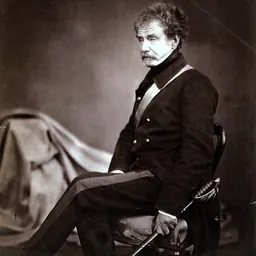
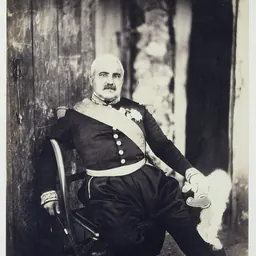
Contemporaries
People whose lives overlapped Hendrik George de Perponcher Sedlnitsky's





Frequently asked questions
Who was Hendrik George de Perponcher Sedlnitsky?
Dutch diplomat and general
When was Hendrik George de Perponcher Sedlnitsky born?
Hendrik George de Perponcher Sedlnitsky was born on 19 May 1771 in The Hague.
When did Hendrik George de Perponcher Sedlnitsky die?
Hendrik George de Perponcher Sedlnitsky died on 29 November 1856 in Dresden.
What was Hendrik George de Perponcher Sedlnitsky's occupation?
Hendrik George de Perponcher Sedlnitsky was a military officer, politician and diplomat.
What nationality was Hendrik George de Perponcher Sedlnitsky?
Hendrik George de Perponcher Sedlnitsky was Dutch.
Sources & further reading
· Wikipedia: Hendrik George de Perponcher Sedlnitsky
· DBpedia: Hendrik George de Perponcher Sedlnitsky
Cite this page
APA: Biography.guide. (2026). Hendrik George de Perponcher Sedlnitsky. https://biography.guide/hendrik-george-de-perponcher-sedlnitsky/
MLA: "Hendrik George de Perponcher Sedlnitsky." Biography.guide, https://biography.guide/hendrik-george-de-perponcher-sedlnitsky/.
Chicago: "Hendrik George de Perponcher Sedlnitsky." Biography.guide. https://biography.guide/hendrik-george-de-perponcher-sedlnitsky/.
Data last updated: 2026-09-20 · Spot an error? Report a correction.
Page generated 2026-09-27 05:18 UTC