
About Hendrik Casimir
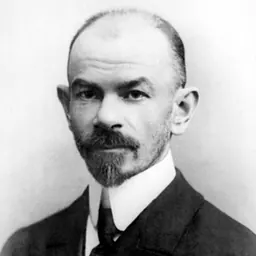
Lived 1909 – 2000 (aged 90). Hendrik Casimir was a Dutch physicist, mathematician and university teacher, known for Casimir effect, Casimir invariant and Casimir pressure.
Hendrik Brugt Gerhard Casimir (15 July 1909 – 4 May 2000) was a Dutch physicist who made significant contributions to the field of quantum mechanics and quantum electrodynamics. He is best known for his work on the Casimir effect, which describes the attractive force between two uncharged plates in a vacuum due to quantum fluctuations of the electromagnetic field.
Hendrik Casimir is also known for his research on the two-fluid model of superconductors (together with C. J. Gorter ) in 1934.
Biography Casimir was born 15 July 1909. under Paul Ehrenfest, where he received his Ph.D. in 1931. His Ph.D. thesis dealt with the quantum mechanics of a rigid spinning body and the group theory of the rotations of molecules. During that time he also spent some time in Copenhagen with Niels Bohr, where he helped Bohr support the latter's hypothesis of the gunslinger effect with mock shoot-outs on campus.
From 1932 to mid-1933, Casimir worked as an assistant to Wolfgang Pauli at ETH Zurich. During this period, he worked on the relativistic theory of the electron, in particular, evaluating deviations of the Klein-Nishina equation in the case of bound electrons. To attack the problem, he invented a number of mathematical tools. One in particular is still referred to as the "Casimir trick": in particle interaction calculations, it is a familiar procedure of trace formation and projections using products of Dirac matrices.
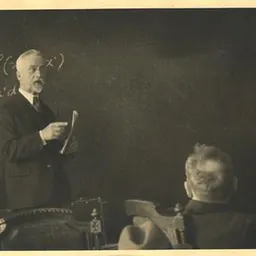
In 1938, Casimir became a physics professor at Leiden University. At that time, he was actively studying both heat conduction and electrical conduction, and contributed to the attainment of millikelvin temperatures.
In 1942, during World War II, Casimir moved to the Philips Natuurkundig Laboratorium (Philips Physics Laboratory, NatLab) in Eindhoven, the Netherlands. He remained an active scientist and in 1945 wrote a well-known paper on Lars Onsager's principle of microscopic reversibility. He became a co-director of Philips NatLab in 1946 and a member of the board of directors of the company in 1956. He retired from Philips in 1972.
Although he spent much of his professional life in industry, Hendrik Casimir was one of the great Dutch theoretical physicists. Casimir made many contributions to science during his years in research from 1931 to 1950. These contributions include: pure mathematics, Lie groups (1931); hyperfine structure, calculation of nuclear quadrupole moments, (1935); low temperature physics, magnetism, thermodynamics of superconductors, paramagnetic relaxation (1935–1942); applications of Onsager's theory of irreversible phenomena (1942–1950). He helped found the European Physical Society and became its president from 1972 till 1975. In 1979 he was one of the key speakers at CERN's 25th anniversary celebrations. In 1946 he became member of the Royal Netherlands Academy of Arts and Sciences.
While at Philips NatLab, in 1948 Casimir, collaborating with Dirk Polder, predicted the quantum mechanical attraction between conducting plates now known as the Casimir effect, which has important consequences in Micro Electro-Mechanical Systems (MEMS), among others.
He was awarded six honorary doctor degrees by universities outside the Netherlands. He received numerous awards and prizes, among them the illustrious IRI Medal from the Industrial Research Institute in 1976. He was a Foreign Associate of the National Academy of Engineering. In 1982, he was awarded the Wilhelm Exner Medal. He was an elected member of the American Academy of Arts and Sciences, the United States National Academy of Sciences, and the American Philosophical Society.
Publications
H. B. G. Casimir, Haphazard Reality: half a century of science (Harper & Row, New York, 1983); Casimir's autobiography in English. H. B. G. Casimir, Het toeval van de werkelijkheid: Een halve eeuw natuurkunde (Meulenhof, Amsterdam, 1992); Casimir's autobiography in Dutch.
H. B. G. Casimir, On the attraction between two perfectly conducting plates, Proceedings of the Royal Netherlands Academy of Arts and Sciences, Vol. 51, pp. 793–795 (1948). H. B. G. Casimir, and J. Ubbink, "The Skin Effect", "Philips Technical Review", Vol. 28, pp; 300–315 (1967)
Notes and references
Don’t just read it —
keep it.
Full-length biographies made to live with: read them, listen on the way to work, watch them tonight.
- E-book
- Audio
- Video
Instant download · yours to keep · every purchase keeps this site free
Important facts
People in Hendrik Casimir's life
Named in this biography and alive at the same time
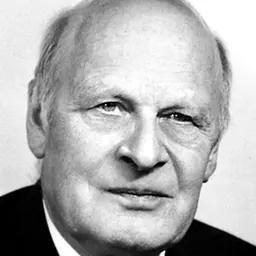

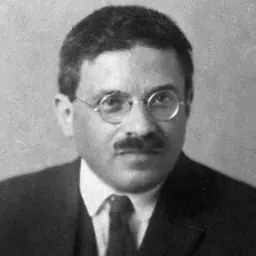


Related people
Same field, nearest in time

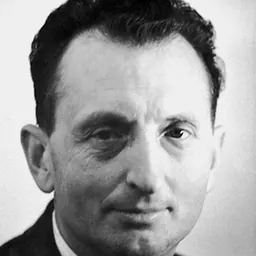
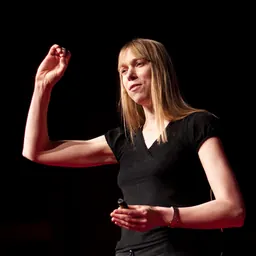


Contemporaries
People whose lives overlapped Hendrik Casimir's



Frequently asked questions
Who was Hendrik Casimir?
Dutch physicist (1909–2000)
When was Hendrik Casimir born?
Hendrik Casimir was born on 15 July 1909 in The Hague.
When did Hendrik Casimir die?
Hendrik Casimir died on 4 May 2000 in Heeze.
What was Hendrik Casimir's occupation?
Hendrik Casimir was a physicist, mathematician and university teacher.
What was Hendrik Casimir known for?
Hendrik Casimir was known for Casimir effect, Casimir invariant and Casimir pressure.
What nationality was Hendrik Casimir?
Hendrik Casimir was Dutch.
Sources & further reading
Cite this page
APA: Biography.guide. (2026). Hendrik Casimir. https://biography.guide/hendrik-casimir/
MLA: "Hendrik Casimir." Biography.guide, https://biography.guide/hendrik-casimir/.
Chicago: "Hendrik Casimir." Biography.guide. https://biography.guide/hendrik-casimir/.
Data last updated: 2026-09-26 · Spot an error? Report a correction.
Page generated 2026-09-27 05:15 UTC