
About Helmuth Hübener
Lived 1925 – 1942 (aged 17). Helmuth Hübener was a resistance fighter and apprentice.
Helmuth Günther Guddat Hübener (8 January 1925 – 27 October 1942) was a German youth who was executed at age 17 by beheading for his opposition to the Nazi regime. He was the youngest person of the German resistance to Nazism to be sentenced to death by the Sondergericht ("special court") People's Court (Volksgerichtshof) and executed.
Life Helmuth Hübener, born in Hamburg on 8 January 1925, came from an apolitical, religious family in Hamburg, Germany. He was a member of the Church of Jesus Christ of Latter-day Saints, as were his mother and grandparents. His adoptive father, Hugo, a Nazi sympathizer, gave him the name Hübener.
Since early childhood, Hübener had been a member of the Boy Scouts, an organization strongly supported at the time by the Church of Jesus Christ of Latter-day Saints, but in 1935 the National Socialists banned scouting from Germany. He then joined the Hitler Youth, as required by the government, but quit after Kristallnacht in 1938, when the Nazis, including the Hitler Youth, destroyed Jewish businesses and homes. Helmuth began listening to the BBC on his own, and he used what he heard to compose various anti-National Socialist texts and anti-war leaflets, of which he also made many copies.
In late 1941, his listening involved three friends: Karl-Heinz Schnibbe and Rudi Wobbe, both of whom were fellow Latter-day Saints, and later Gerhard Düwer. Hübener had them help him distribute about 39 different pamphlets, all containing typewritten material from the British broadcasts. They distributed them throughout Hamburg, using such methods as surreptitiously pinning them on bulletin boards, inserting them into letterboxes, and stuffing them in coat pockets.
Arrest and execution On 5 February 1942, Hübener was arrested by the Gestapo at his workplace, the Hamburg Social Authority in the Bieberhaus in Hamburg. While trying to translate the pamphlets into French and have them distributed among prisoners of war, he had been noticed by co-worker and Nazi Party member Heinrich Mohn, who denounced him.
On 11 August 1942, aged 17, Hübener was tried as an adult by the Special People's Court (Volksgerichtshof) in Berlin, which had jurisdiction over matters of treason. Hübener was sentenced to death by Judge . Consequently, some church members saw Hübener as a troublemaker who made things difficult for other Latter-day Saints in Germany. This recommendation did not change after Kristallnacht, which occurred the year following Grant's visit, after which he evacuated all non-German Latter-day Saint missionaries.
The local Latter-day Saint branch president, Arthur Zander (1907–1989), was a supporter of the Nazi Party, and had affixed a notice to the meetinghouse entrance stating "Jews not welcome." Ten days after the arrest of Hübener, on 15 February 1942, Zander claimed to have excommunicated the young man. The district president, Otto Berndt, refused to provide the second required signature on the excommunication certificate. However, a member of the mission presidency later provided the second required leadership signature to finalize the excommunication. In a personal account, Berndt explained that he had refused to cut Hübener off from the Church, citing that while the excommunication certificate was signed by the mission authorities (i.e., a mission presidency member and branch president), he, as the District president, had protested against it and stated, "I believe that my protest and that of other members prevented the excommunication of Brothers Schnibbe and Wobbe." He further asserted, "if I had known what the boys were doing, I would have given them a helping hand." The Church also asserts that Otto Berndt did not countersign the excommunication certificate, and that Helmuth Hübener's membership was posthumously reinstated after the war ended.
In 1946, four years later and after the war, Hübener's "excommunication" was declared null and void by the Church's First Presidency and the Church's new German mission president Max Zimmer, who said the excommunication was not carried out properly. He was also posthumously ordained an elder, with full Church temple blessings restored in 1948 to clarify that his membership in the Church was never in doubt.
Legacy
A youth centre and school in Hamburg are named after Hübener, as is a pathway between Greifswalder Straße and Kirchenweg in St. Georg. At the former Plötzensee Prison in Berlin, an exhibit about Hübener's resistance, trial, and execution was located in the former guillotine chamber; it has since been changed to highlight other victims. Floral tributes are often placed in memory of Hübener and others put to death by the Nazis there. Hübener also has a Stolperstein at Sachsenstraße 42 in Hamburg-Hammerbrook.
On 8 January 1985, exactly sixty years after Hübener's birth, ceremonies in his memory were held in Hamburg by city officials. His fellow resisters, Schnibbe and Wobbe, both of whom had emigrated to the U.S. after the war, returned to Hamburg for the commemoration, where they were honoured guests and speakers.
In 1976, Thomas F. Rogers, a university teacher at Brigham Young University, wrote a play titled Huebener, which was first performed at BYU for the fall season, and has had several runs in various venues. Hübener's two co-accused friends, Karl-Heinz Schnibbe and Rudi Wobbe, attended some of the performances, albeit in different circumstances. Wobbe died of cancer in 1992; Schnibbe died in 2010. In February 2014, Huebener made its high school premiere in St. George, Utah.
In 1995, the first-hand account When Truth Was Treason was published, narrated by Karl-Heinz Schnibbe and written by Blair R. Holmes, a professional historian, and Alan F. Keele, a German-language specialist; a revised, second edition was published in 2020.
The only biography of Helmuth Hubener, Hübener vs. Hitler by Richard Lloyd Dewey, was first published in 2003 and revised in 2025. It includes interviews with all then-living friends and close relatives of Hübener, and utilizes primary investigative documents from the Nazi era.
Rudolf Gustav Wobbe (Hübener's other co-resistance fighter) wrote the book Before the Blood Tribunal. also covers Hübener's story.
The 2026 historical novel The Boys Who Dared Hitler by Richard Lloyd Dewey, is based on his nonfiction work. Jim Cox of Midwest Book Review and Library Bookwatch states, “Dewey has a genuine flair for character and narrative driven storytelling that fully engages the reader from start to finish," adding what differentiates it from other novels: "An unusual historical novel, it features seventy four pages of Author's Notes separating fiction from fact and is inherently fascinating in providing an historical perspective and background. Deftly crafted fiction. Unreservedly recommended."
Hübener's story was documented in the 2003 documentary Truth & Conviction, written and directed by Rick McFarland and Matt Whitaker.
The story was also depicted in Resistance Movement, an independent 2012 film.
In 2020, an exhibition about Helmuth Hübener named 'You may not know him, but....' by German artist Cordula Ditz took place at Kunsthalle Hamburg.
A narrative film adaptation of Hübener's story, titled Truth & Treason was released on 17 October 2025 by Angel in the US. The film is produced by Kaleidoscope Pictures. It opened at number 6 in domestic releases that weekend to overwhelming positive reviews at Rotten Tomatoes and IMDb metascore of 8.2.
Don’t just read it —
keep it.
Full-length biographies made to live with: read them, listen on the way to work, watch them tonight.
- E-book
- Audio
- Video
Instant download · yours to keep · every purchase keeps this site free
Important facts
People in Helmuth Hübener's life
Named in this biography and alive at the same time

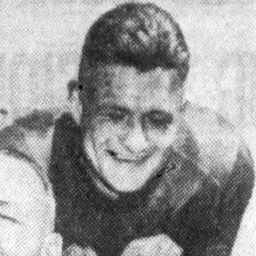
Related people
Same field, nearest in time




Frequently asked questions
Who was Helmuth Hübener?
German resistance member (1925–1942)
When was Helmuth Hübener born?
Helmuth Hübener was born on 8 January 1925 in Hamburg.
When did Helmuth Hübener die?
Helmuth Hübener died on 27 October 1942 in Plötzensee Prison, Berlin.
What was Helmuth Hübener's occupation?
Helmuth Hübener was a resistance fighter and apprentice.
What nationality was Helmuth Hübener?
Helmuth Hübener's recorded nationality: German Reich.
Sources & further reading
Cite this page
APA: Biography.guide. (2026). Helmuth Hübener. https://biography.guide/helmuth-hubener/
MLA: "Helmuth Hübener." Biography.guide, https://biography.guide/helmuth-hubener/.
Chicago: "Helmuth Hübener." Biography.guide. https://biography.guide/helmuth-hubener/.
Data last updated: 2026-09-25 · Spot an error? Report a correction.
Page generated 2026-09-27 05:12 UTC