
Helmut Rüffler
German fighter ace and Knight's Cross recipient
About Helmut Rüffler
Lived 1918 – 2001 (aged 83). Helmut Rüffler was a German.
Helmut Rüffler (18 January 1918 – 21 September 2001) was a German Luftwaffe ace and recipient of the Knight's Cross of the Iron Cross during World War II. The Knight's Cross of the Iron Cross, and its variants were the highest awards in the military and paramilitary forces of Nazi Germany during World War II. Rüffler was credited with 88 victories in 690 missions, a further 10 victories were claimed but not confirmed.
Career Rüffler was born on 18 January 1918 in Waldenburg, present-day Wałbrzych in Poland, at the time in the Province of Lower Silesia within the German Empire. Following flight training, he was posted to the Ergänzungsgruppe of Jagdgeschwader 3 Udet (JG 3—3rd Fighter Wing) on 28 September 1940. Holding the rank of Unteroffizier, Rüffler was transferred to 7. Staffel (7th squadron) of JG 3 on 1 February 1941.
Operation Barbarossa The Gruppe relocated to an airfield at Moderówka on 18 June where the Gruppe concluded their last preparations for Operation Barbarossa, the German invasion of the Soviet Union. At the start of the campaign, JG 3 was subordinated to the V. Fliegerkorps (5th Air Corps), under command of General der Flieger Robert Ritter von Greim, which was part of Luftflotte 4 (4th Air Fleet), under command of Generaloberst Alexander Löhr. These air elements supported Generalfeldmarschall Gerd von Rundstedt's Heeresgruppe Süd (Army Group South), with the objective of capturing Ukraine and its capital Kiev.
Defense of the Reich Combat box of a 12-plane B-17 squadron. Three such boxes completed a 36-plane group box. In early August 1943, II. Gruppe of JG 3 was withdrawn from the Eastern Front for service in Defense of the Reich on the Western Front. The Gruppe spent one-month training in northern Germany before they arrived at the Schiphol airfield near Amsterdam in the Netherlands on 12 September. While based at Uetersen Airfield, Rüffler joined the Gruppe which received the Messerschmitt Bf 109 G-6 and was equipped with Y-Control for fighters, a system used to control groups of fighters intercepting United States Army Air Forces (USAAF) bomber formations. Rüffler was assigned to 4. Staffel commanded by Oberleutnant Werner Lucas while the Gruppe was headed by Major Kurt Brändle. On 20 October, the USAAF targeted Düren. II. Gruppe intercepted the bombers near Venlo but were fended off by the escorting Republic P-47 Thunderbolt fighters. Elements of II. Gruppe managed to reach the bombers on their return. Two Boeing B-17 Flying Fortress bombers were shot down, including one by Rüffler. On 11 December, the USAAF VIII Bomber Command launched an attack on Emden. Defending against this attack, Rüffler was credited with an Herausschuss (separation shot) over a B-17 bomber—a severely damaged heavy bomber forced to separate from its combat box which was counted as an aerial victory.
On 24 February 1944, the USAAF Eighth and Fifteenth Air Force attacked German aircraft manufacturing during Operation Argument, also known as "Big Week". II. Gruppe intercepted west of Gotha, making several passes through the combat box formations. During this encounter, II. Gruppe pilots claimed seven bombers shot and two Herausschüsse, including one Consolidated B-24 Liberator bomber shot down by Rüffler. On 8 April, the USAAF committed 664 bombers in an attack on Luftwaffe airfields in northwest Germany and aircraft manufacturing near Braunschweig. That day, Rüffler claimed one of the attacking B-24 bombers shot down. On 18 April, the Eighth Air Force targeted the industrial area of Berlin. II. Gruppe was scrambled at 13:17 and without sustaining any losses claimed three B-17 bombers shot down, including one by Rüffler. The next day, Rüffler was credited with two aerial victories, a B-17 shot down and an Herausschuss over a second B-17. That day, the USAAF again targeted the German aircraft industry as well as Luftwaffe airfields in Westphalia and Hesse. On 8 May, the Eighth Air Force again headed for Berlin and Braunschweig. II. Gruppe was scrambled at 08:42 and were vectored to Hamburg and then southwest towards Bremen were Rüffler claimed an Herausschuss over a B-17 bomber.
On 18 July 1944, Rüffler engaged in aerial combat with North American P-51 Mustang fighters west of Caen. During this engagement, he claimed two P-51 fighters shot down before he was himself shot down and wounded in his Bf 109 G-6 (Werknummer 165 451—factory number). His injuries were so severe that he was out of action for several months. Following his convalescence, Rüffler did not return to JG 3 but was trained to fly the Messerschmitt Me 262 jet fighter in February 1945 but did not claim any aerial victories flying the Me 262. He then transferred to Jagdgeschwader 51 "Mölders" (JG 51—51st Fighter Wing) where he served as Schwarmführer of 9. Staffel of JG 51. Flying with JG 51 during the final days of the war, Rüffler claimed 25 further aerial victories on the Eastern Front.
Later life Following World War II, Rüffler joined the German Air Force, at the time referred to as the Bundesluftwaffe of the Bundeswehr. In 1963/64, he flew Sikorsky H-34 helicopters for German VIPs, such us Helmut Schmidt and Kai-Uwe von Hassel. His final rank was Oberstabsfeldwebel (sergeant major), a rank he received thanks to Eduard Adorno. Rüffler died on 21 September 2001 in Lohmar-Heide.
Summary of career
Aerial victory claims According to US historian David T. Zabecki, Rüffler was credited with 88 aerial victories, while Spick lists him with 98 aerial victories. Forsyth states that he shot eight four-engined heavy bombers. Mathews and Foreman, authors of Luftwaffe Aces — Biographies and Victory Claims, researched the German Federal Archives and state that he claimed at least 54 aerial victories, with over 50 claims on the Eastern Front and four claims over the Western Allies, including one four-engined bomber.
Victory claims were logged to a map-reference (PQ = Planquadrat), for example "PQ 15 S/NA-7". The Luftwaffe grid map covered all of Europe, western Russia and North Africa and was composed of rectangles measuring 15 minutes of latitude by 30 minutes of longitude, an area of about . These sectors were then subdivided into 36 smaller units to give a location area in size.
Chronicle of aerial victories – 7. Staffel of Jagdgeschwader 3 –Operation Barbarossa — 22 June – 6 November 1941 1 22 June 1941 08:10 I-15 6 4 October 1941 16:40 SB-3 southeast of Dmitrovsk 2 23 July 1941 13:42 DB-3 northeast of Bila Tserkva 7 5 October 1941 15:40 Pe-2 southeast of Oryol 3 25 July 1941 18:55 SB-3 southeast of Bila Tserkva 8 14 October 1941 07:05 SB-3 northeast of Oryol 4 10 August 1941 10:47 DB-3 east of Kiev 9 29 October 1941 12:00 R-10 (Seversky) southeast of Tula 5 23 September 1941 10:50 Il-2 northeast of Poltava – 7. Staffel of Jagdgeschwader 3 "Udet" –Eastern Front — 10 February – 14 April 1942 10 4 March 1942 09:06 U-2 southeast of Staraya Russa 14 28 March 1942 13:53 I-301 (LaGG-3) northeast of Staraya Russa 11 9 March 1942 10:55 Pe-2 southwest of Demyansk 15 28 March 1942 13:55 I-16? northeast of Staraya Russa 12 17 March 1942 09:18 I-61 (MiG-3) east of Sutschowka 16 29 March 1942 07:53 U-2 northeast of Demyansk 13 28 March 1942 13:50 I-301 (LaGG-3) northeast of Staraya Russa 17 30 March 1942 15:30? I-61 (MiG-3) east of Staraya Russa – 7. Staffel of Jagdgeschwader 3 "Udet" –Eastern Front — July 1942 18 25 July 1942 07:30 MiG-3 northeast of Kalach – 1. Staffel of Jagdgeschwader 3 "Udet" –Eastern Front — August – December 1942 19 5 August 1942 15:15 LaGG-3 south of Nowo Grigorewskaja 36 17 October 1942 06:02 Il-2 east of Stalingrad 20 23 August 1942 08:55 LaGG-3 east of Katschalinsskaja 37 17 October 1942 06:04? LaGG-3 northeast of Stalingrad 21 27 August 1942 16:20 LaGG-3 northeast of Stalingrad 38 17 October 1942 06:05 Il-2 northeast of Stalingrad 22 28 August 1942 07:26 R-5 northeast of Stalingrad 39 24 October 1942 13:45 LaGG-3 north of Stalingrad 23 27 September 1942 08:50 MiG-1 north of Srednyaya Akhtuba 40 24 October 1942 13:55 Il-2 north of Leninsk 24 27 September 1942 09:15 LaGG-3 east of Dubovka 41♠ 28 October 1942 09:44 Il-2 east of Kotluban train station north of Gumrak 25 28 September 1942 08:50 Yak-1 northwest of Dubovka 42♠ 28 October 1942 09:47 Il-2 northeast of Kotluban train station north of Grebenka 26 28 September 1942 09:05 Yak-1 northwest of Dubovkawest of Rulew 43♠ 28 October 1942 09:49 Il-2 west of Dubovka 27 28 September 1942 15:15 Il-2 northeast of Akhtuba 44♠ 28 October 1942 09:50 LaGG-3 southeast of Losnoje 28 30 September 1942 05:35 LaGG-3 north of Losnoje 45♠ 28 October 1942 15:10 LaGG-3 east of Nowo Nikolskoje 29 1 October 1942 06:45 Yak-4 northeast of Nowo Nikolskoje 46 31 October 1942 13:50 Il-2 southeast of Stalingrad 30 2 October 1942 12:20 Il-2 northeast of Kotluban train station 47 1 November 1942 15:00 LaGG-3 east of Wladimirowka 31 2 October 1942 12:25 Il-2 northeast of Kotluban train station 48 1 November 1942 15:12 LaGG-3 southeast of Kapustin-Jar 32 2 October 1942 15:40 Yak-1 north of Kotluban train station north of Gumrak 49 16 November 1942 10:30 LaGG-3 east of Grasnoje 33 6 October 1942 11:20 Pe-2 north of Konylenskij southwest of Obliwskaja 50 16 November 1942 10:32 LaGG-3 east of Grasnoje 34 8 October 1942 08:20 LaGG-3 south of Iwanowka 24 November 1942 12:05 unknown 35 10 October 1942 07:45 Su-2 (Seversky) northeast of Stalingrad – 4. Staffel of Jagdgeschwader 3 "Udet" –Defense of the Reich — 12 September 1943 – 6 June 1944 51? 20 October 1943 14:45 B-17 55? 18 April 1944 B-17 52? 11 December 1943 B-17* 56? 19 April 1944 B-17 53 24 February 1944 13:42 B-24 PQ 15 S/NA-7southwest of Ansbach 57? 19 April 1944 B-17* 54? 8 April 1944 B-24 58? 8 May 1944 B-17* – 4. Staffel of Jagdgeschwader 3 "Udet" –Invasion of Normandy — 7 June – 22 August 1944 59 30 June 1944 20:50 P-51 PQ 05 Ost TAvicinity of Pont-l'Évêque 61 18 July 1944 09:21 P-51 PQ 04 Ost N/AAvicinity of Vimoutiers 60 16 July 1944 20:17 Spitfire PQ 14 West AT-3/5vicinity of Vire 62? 18 July 1944 09:21 P-51 PQ 04 Ost N/AAvicinity of Vimoutiers
Awards Front Flying Clasp of the Luftwaffe Wound Badge (1939) in Black Iron Cross (1939) 2nd and 1st Class Honor Goblet of the Luftwaffe on 19 October 1942 as Feldwebel and pilot German Cross in Gold on 3 December 1942 as Feldwebel in the I./Jagdgeschwader 3 Knight's Cross of the Iron Cross on 23 December 1942 as Oberfeldwebel and pilot in the 4./Jagdgeschwader 3 "Udet"
Don’t just read it —
keep it.
Full-length biographies made to live with: read them, listen on the way to work, watch them tonight.
- E-book
- Audio
- Video
Instant download · yours to keep · every purchase keeps this site free
Important facts
People in Helmut Rüffler's life
Named in this biography and alive at the same time
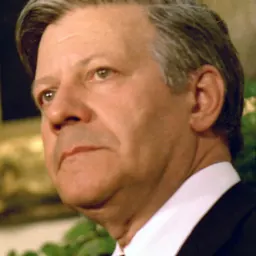
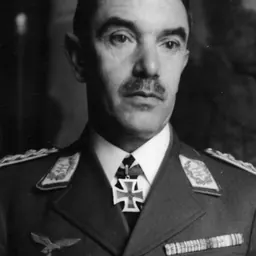

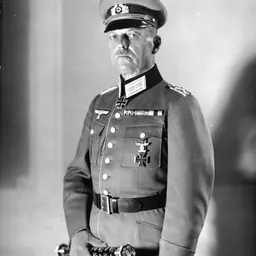
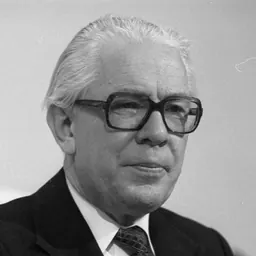


Contemporaries
People whose lives overlapped Helmut Rüffler's


Frequently asked questions
Who was Helmut Rüffler?
German fighter ace and Knight's Cross recipient (1918–2001)
When was Helmut Rüffler born?
Helmut Rüffler was born on 18 January 1918 in Wałbrzych.
When did Helmut Rüffler die?
Helmut Rüffler died on 21 September 2001 in Niederkassel.
What nationality was Helmut Rüffler?
Helmut Rüffler was German.
Sources & further reading
Cite this page
APA: Biography.guide. (2026). Helmut Rüffler. https://biography.guide/helmut-ruffler/
MLA: "Helmut Rüffler." Biography.guide, https://biography.guide/helmut-ruffler/.
Chicago: "Helmut Rüffler." Biography.guide. https://biography.guide/helmut-ruffler/.
Data last updated: 2026-09-20 · Spot an error? Report a correction.
Page generated 2026-09-27 05:20 UTC