
About Helene Kröller-Müller
Lived 1869 – 1939 (aged 70). Helene Kröller-Müller was a Dutch art collector, philanthropist, painter and art.
Helene Emma Laura Juliane Kröller-Müller (; ; 11 February 1869 – 14 December 1939) was a German art collector. She was one of the first European women to put together a major art collection. She is credited with being one of the first collectors to recognise the genius of Vincent van Gogh. Her entire collection was eventually sold to the Dutch government, along with her and her husband, Anton Kröller's, large forested country estate. Today it is the Kröller-Müller Museum and sculpture garden and Hoge Veluwe National Park, one of the largest national parks in the Netherlands.
Life and career Helene Emma Laura Juliane Müller was born in , Essen, into a wealthy industrialist family. Her father, Wilhelm Müller, owned Wm. H. Müller & Co., a prosperous supplier of raw materials to the mining and steel industries.
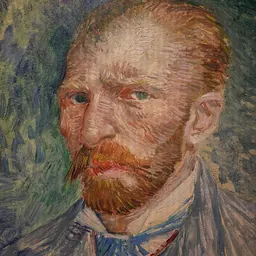
She studied under painter Henk Bremmer in 1906–1907. As she was one of the wealthiest women in the Netherlands at the time, Bremmer recommended that she form an art collection. In 1907, she began her collection with the painting Train in a Landscape by Paul Gabriël. Subsequently, Helene Kröller-Müller became an avid art collector, and one of the first people to recognise the genius of Vincent van Gogh. She eventually amassed more than 90 van Gogh paintings and 185 drawings, the world's largest collection of the artist's work at the time, and today the second largest after the subsequently created Van Gogh Museum in Amsterdam. She also bought more than 400 works by Dutch artist Bart van der Leck, but his popularity did not take off like van Gogh's.
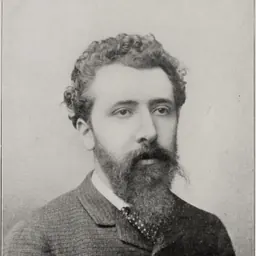
Kröller-Müller also collected works by modern artists, such as Picasso, Georges Braque, Jean Metzinger, Albert Gleizes, Fernand Léger, Diego Rivera, Juan Gris, Piet Mondrian, Gino Severini, Joseph Csaky, Auguste Herbin, Georges Valmier, María Blanchard, Léopold Survage and Tobeen. However, Bremmer advised her not to buy A Sunday Afternoon on the Island of La Grande Jatte by Georges Seurat, which turned out to be an important icon of 20th-century art. She did purchase however Le Chahut by Seurat, another icon in the history of modern art. Also, she steered away from artists of her native Germany, whose work she found "insufficiently authoritative." In 1928, Anton and Helene created the Kröller-Müller Foundation to protect the collection and the estates. In 1935, they donated to the Dutch people their entire collection totaling approximately 12,000 objects, on condition that a large museum be built in the gardens of her park. Held in the care of the Dutch government, the Kröller-Müller Museum was opened in 1938.
The Kröller-Müller Museum is nestled in their 75-acre (300,000 m2) forested country estate, today the largest national park in the Netherlands, the Hoge Veluwe National Park near the town of Otterlo and the city of Arnhem. A lavish art gallery was planned near their iconic lakeside Jachthuis Sint Hubertus hunting lodge and landscape statue of their close personal friend, the South African Boer General Christian de Wet on the estate. Due to threat of war the plans were never implemented in their lifetime but once the war was over a large forest sculpture garden and understated open exhibition extension was opened, housing statues by Rodin and the second largest collection of van Gogh paintings in the world, including the famous Sunflowers.
From 13 September 2025, to 8 February 2026, the National Gallery, London exhibited Radical Harmony: Helene Kröller-Müller's Neo-Impressionists. The exhibition focused on some of the works she collected, as well as other neo-impressionist works from various public and private collections. It was organized by the Kröller-Müller Museum and the National Gallery. The exhibition catalog was written by Julien Domercq, Christopher Riopelle, and Chiara Di Stefano.
Don’t just read it —
keep it.
Full-length biographies made to live with: read them, listen on the way to work, watch them tonight.
- E-book
- Audio
- Video
Instant download · yours to keep · every purchase keeps this site free
Important facts
People in Helene Kröller-Müller's life
Named in this biography and alive at the same time




Related people
Same field, nearest in time


Contemporaries
People whose lives overlapped Helene Kröller-Müller's





Frequently asked questions
Who was Helene Kröller-Müller?
German art collector (1869-1939)
When was Helene Kröller-Müller born?
Helene Kröller-Müller was born on 11 February 1869 in Essen.
When did Helene Kröller-Müller die?
Helene Kröller-Müller died on 14 December 1939 in Otterlo.
What was Helene Kröller-Müller's occupation?
Helene Kröller-Müller was an art collector, philanthropist, painter and art.
What nationality was Helene Kröller-Müller?
Helene Kröller-Müller was Dutch.
Sources & further reading
· Wikipedia: Helene Kröller-Müller
· DBpedia: Helene Kröller-Müller
Cite this page
APA: Biography.guide. (2026). Helene Kröller-Müller. https://biography.guide/helene-kroller-muller/
MLA: "Helene Kröller-Müller." Biography.guide, https://biography.guide/helene-kroller-muller/.
Chicago: "Helene Kröller-Müller." Biography.guide. https://biography.guide/helene-kroller-muller/.
Data last updated: 2026-09-22 · Spot an error? Report a correction.
Page generated 2026-09-27 05:30 UTC