
About Hélène Fleury-Roy
Lived 1876 – 1957 (aged 80). Hélène Fleury-Roy was a French composer and music educator.
Hélène-Gabrielle Fleury-Roy (21 June 1876 – 18 April 1957) was a French composer and the first woman to gain a prize at the prestigious Prix de Rome for composition.
Background Fleury was born in Carlepont, Department Oise, France. She studied with Henri Dallier, Charles-Marie Widor, and André Gedalge at the Paris Conservatory. In the late 1890s, she lived in La Ferte-sous-Jouarre (Seine-et-Marne). She sent compositions to the Journal Musical Santa Cecilia Reims Composition Competition, and won in 1899 with Symphony Allegro for organ.
Fleury-Roy was the first woman admitted in 1903 to the Prix de Rome competition. On her first attempt at the prize, she failed the fugue test, but the next year she tried again and succeeded with the cantata Medora (libretto: Édouard Adenis) for two male and one female voice. She was awarded a third prize in the Grand Prix.
Hélène Fleury-Roy became a piano teacher after marrying her husband Louis Roy, a professor of mechanics at the university of Toulouse, in about 1906, and resided in Paris. In 1928, she became a professor at the Conservatory of Toulouse, teaching harmony, composition and piano. Her notable students at the conservatory included the conductor Louis Auriacombe (the future founder of the Toulouse Chamber Orchestra), composer Charles Chaynes, and violinist Pierre Dukan.
She died in Saint-Gaudens, Haute-Garonne aged 80.
Selected works Fleury-Roy's works include songs, piano, violin, cello and organ pieces and a piano quartet.
Arabesque for piano Bourrée Gavotte for piano Canzonetta for piano Djinns et farfadets for piano Espérance piano Étude for the Left Hand Alone (1899) for piano Fleur des champs for piano La Nuit (1898) for piano Menuet (1898) for piano 4-hands Pensée (1897) for piano Scherzo for the Left Hand Alone (1898) for piano Valse Caprice for piano Allegro symphonique (1899) for organ Pastorale (1914) for organ Medora (1904) cantata; for le Prix de Rome, on a text of Édouard Adenis Soir de Bataille, poème symphonique (1934) for voice and orchestra Coeur virginal for voice and piano Matin for voice and piano Mattutina for voice and piano Ne pleurez pas! (1897) for voice and piano Soir de Bretagne (1904) for voice and piano Brise du soir for violin Sonate for violin and piano Trois pièces faciles (1911) for violin and piano Fantaisie, Op. 18 (1906) for viola (or violin) and piano Grande Fantaisie de concert (1906) for viola and piano Rêverie (1904) for cello Quatuor pour piano et cordes (1909) for violin, viola, cello and piano Trois esquisses symphoniques (1924)
Don’t just read it —
keep it.
Full-length biographies made to live with: read them, listen on the way to work, watch them tonight.
- E-book
- Audio
- Video
Instant download · yours to keep · every purchase keeps this site free
Important facts
People in Hélène Fleury-Roy's life
Named in this biography and alive at the same time



Related people
Same field, nearest in time


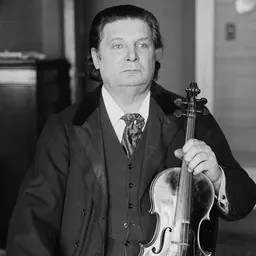

Contemporaries
People whose lives overlapped Hélène Fleury-Roy's
Frequently asked questions
Who was Hélène Fleury-Roy?
French composer (1876–1957)
When was Hélène Fleury-Roy born?
Hélène Fleury-Roy was born on 21 June 1876 in Carlepont.
When did Hélène Fleury-Roy die?
Hélène Fleury-Roy died on 18 April 1957 in Saint-Gaudens.
What was Hélène Fleury-Roy's occupation?
Hélène Fleury-Roy was a composer and music educator.
What nationality was Hélène Fleury-Roy?
Hélène Fleury-Roy was French.
Sources & further reading
· Wikipedia: Hélène Fleury-Roy
Cite this page
APA: Biography.guide. (2026). Hélène Fleury-Roy. https://biography.guide/helene-fleury-roy/
MLA: "Hélène Fleury-Roy." Biography.guide, https://biography.guide/helene-fleury-roy/.
Chicago: "Hélène Fleury-Roy." Biography.guide. https://biography.guide/helene-fleury-roy/.
Data last updated: 2026-09-20 · Spot an error? Report a correction.
Page generated 2026-09-27 05:22 UTC