
About Helena Mercier
Lived 1839 – 1910 (aged 70). Helena Mercier was a Dutch writer and women's rights activist.
Helena Mercier (17 October 1839 – 1 February 1910) was a Dutch social-liberal feminist, a social reformer, a writer, and one of the founders of the idea of social work in the Netherlands.
Early life Helena Mercier was born in Amsterdam, Netherlands on 17 October 1839. She was the daughter of Carel Eduard Mercier, a commission agent, and Francijntje Fonger, members of the liberal Dutch Reformed Church. She was the sixth of eight siblings. She went to school until she was fifteen, after which she devoted herself exclusively to looking after her father who had fallen ill. After his death, she was too old to return to school. Moreover, she was, herself, not well, suffering from a "nervous disorder". In 1861 she began to prepare to take an exam to become a teacher but she was unable to take this until 1869, due to a long illness. In 1870 she met the Amsterdam Hogere Burgerschool teacher Willem Doorenbos, who was an advocate of women's emancipation. Thanks, in part, to him, her interest in literature and the position of women developed.
Feminism Mercier published her first articles in 1870, under the pseudonym of Stella, in Onze Roeping Orgaan voor de Nederlandsche Vrouw (Onze Roeping. Organ of the Dutch woman). In it she drew the attention of parents to the fact that their daughters were brought up to be 'fluff and waste of time' and that they, especially unmarried women, were condemned to a purposeless life. In her book Verbonden Schakels (Linked Shackles), she published a collection of articles that for the most part had appeared between 1878 and 1888 in the magazines Vragen des Tijds and, later, Sociaal Weekblad. In these articles she argued for better education for women. At first, she thought that this should mainly serve as preparation for marriage and that only unmarried women without money needed paid work. In later articles she considered paid work useful for all women.
Mercier became one of the founders of social work in the Netherlands. As founder or co-founder of several institutions, she created a field of work for women of her class and at the same time contributed to the improvement of social conditions. In 1887 she established the first community kitchen in the Amsterdam Jordaan district, financed by sugar refiner Willem Spakler. The aim was to provide workmen with a nutritious hot meal at an affordable price. The price, nevertheless, had to cover the costs in order to avoid the appearance of charity. In 1890 a second and third kitchen followed and a society of people's kitchens was founded. These kitchens were initially a success but, from 1893, visits decreased due to competition from kitchens offering a greater element of charity and the desire of working-class women to continue to provide the hot meal themselves. The kitchens had to be closed in 1899.
The third area that Mercier became involved with was inspired by the work of Arnold Toynbee. With financial help from Janssen, the school, Ons Huis (Our House), was opened in 1892 in Amsterdam. Mercier was closely involved in the content of the lessons, courses, lectures and clubs that Ons Huis offered and which were intended for children, women and men. Although she did not want to take on the management of Ons Huis because she believed that a man as director would be better able to attract male visitors, she was part of the board and left a strong mark on the working method and content of the programmes. The fourth area she became involved with was the establishment of a School voor Maatschappelijk Werk (School for Social Work). The initiative for this came from Marie Muller-Lulofs, who was inspired by Mercier's article On the threshold of social life, which had been published in 1885. Mercier had argued that women should only engage in social work with a solid knowledge of society. She turned down an application to become the headmistress of the school on health grounds and because of her age. However, she remained closely involved in the progress of the school.
Mercier was a pioneer, who inspired many Dutch women. A large number of women followed in her footsteps including Muller-Lulofs, who founded a children's home in Utrecht for after-school care in 1904, with the aim of providing children of working mothers with a safe and healthy home while the mothers were still working. Emilie Knappert (1860–1952) was the founder of the Leidse Volkshuis, a social meeting place for workers in Leiden, and from 1915 to 1926 was one of the directors of the School for Social Work. Finally, Johanna ter Meulen (1867–1933) played an important role in the development of social housing.
Don’t just read it —
keep it.
Full-length biographies made to live with: read them, listen on the way to work, watch them tonight.
- E-book
- Audio
- Video
Instant download · yours to keep · every purchase keeps this site free
Important facts
People in Helena Mercier's life
Named in this biography and alive at the same time

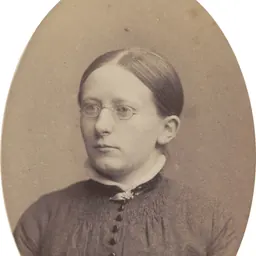

Related people
Same field, nearest in time
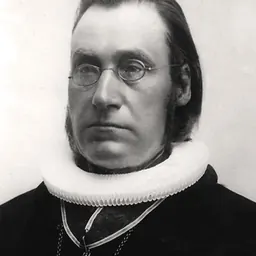
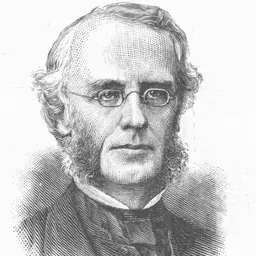
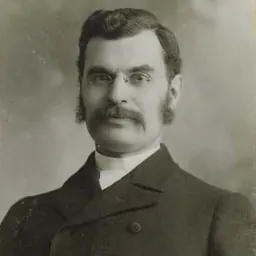
Contemporaries
People whose lives overlapped Helena Mercier's


Frequently asked questions
Who was Helena Mercier?
Dutch writer and feminist (1839–1910)
When was Helena Mercier born?
Helena Mercier was born on 17 October 1839 in Amsterdam.
When did Helena Mercier die?
Helena Mercier died on 1 February 1910 in Amsterdam.
What was Helena Mercier's occupation?
Helena Mercier was a writer and women's rights activist.
What nationality was Helena Mercier?
Helena Mercier was Dutch.
Sources & further reading
Cite this page
APA: Biography.guide. (2026). Helena Mercier. https://biography.guide/helena-mercier/
MLA: "Helena Mercier." Biography.guide, https://biography.guide/helena-mercier/.
Chicago: "Helena Mercier." Biography.guide. https://biography.guide/helena-mercier/.
Data last updated: 2026-09-22 · Spot an error? Report a correction.
Page generated 2026-09-27 05:24 UTC