
About Helen Zughaib
Born 1959. Helen Zughaib is an American painter.
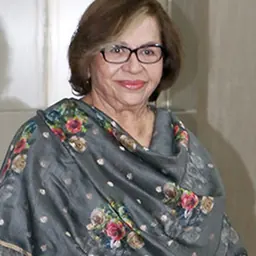
Helen Zughaib ( ; born 1959) is an American painter and multimedia artist living and working in Washington, D.C. She was the daughter of a State Department civil servant. Her family left Lebanon in 1975 due to the outbreak of the Lebanese Civil War, and moved to Europe as a teenager, attending high school in Paris. She studied at Northeast London Polytechnic School of Art. She moved to the United States to study visual and performing arts at Syracuse University graduating in 1981 with her BFA. Her themes are centered around hopefulness, healing, and spirituality, using visual arts to shape and foster positive ideas about the Middle East.
Artworks Zughaib illustrated Kaleel Sakakeeny's book "Laila's Wedding" published in 1994.
Zughaib's work has been purchased by the United States government to be given as gifts to foreign leaders. In 2009 Secretary of State Hillary Clinton gave Moroccan King Mohamed V Zughaib's interpretation of the Washington Monument during Clinton's trip to Morocco. In 2010 President Barack Obama presented Iraqi Prime Minister Nouri al-Maliki with Zughaib's painting "Midnight Prayers" during the Prime Minister's visit to the White House. Her notable series of 23 paintings titled "Stories My Father Told Me," for example, is based on the folks tales and family history that her Lebanese father has told her over the years, and includes numerous stories of migration and displacement. The complete series was shown at the Arab American National Museum in 2015.
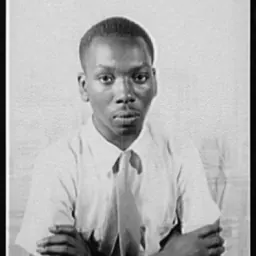
Her 2019 "Syrian Migration Series" shown at the Jerusalem Fund Gallery in Washington, DC was inspired by Jacob Lawrence's 1940 "Migration Series."
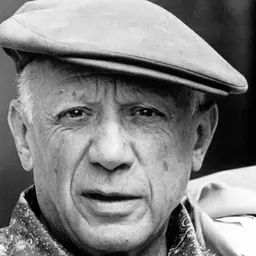
Zughaib's style combines a variety of art historical references and influences including post-Impressionism and pop art with Islamic art motifs of geometric patterns and floral arabesque. Her work has been influenced by the styles of Pablo Picasso and Jacob Lawrence. Her work can be found in many notable collections, such as The White House, World Bank, Library of Congress, and the Arab American National Museum.
Circle Home (2010) Circle Home/Beit is an ink on etching paper created by Zughaib in 2010. Shown at a show in Beirut 35 years after she had left, the piece highlights the theme of journey and represents the endless questioning of Zughaib of a possible return to home. She emphasizes that home is not only the physical structures in a community but also everything that defines the meaning of home. The cyclical nature of the work combines the past sentiments of sadness with future aspirations of return. While she calls this piece circle home, all of her Arab friends refer to the piece as beit. Beit means home in Arabic. Helen recalled her father explaining bait to her: "bait is not just the physical structure, it's the village. It's your extended family. It's your tribe. It's all these other elements that are meaning. It's much larger than the actual structure." She wrote the word repeatedly as a type of catharsis. Zughaib cites the significance of this piece to her personally, referencing how incessantly writing the same word over again left a pain in her hand that felt "strongly appropriate." The inmates used rust, blood, and chicken bones to write the names of every person on scraps of cloth. The list was then sewn into the shirt collar and cuffs of Omari's shirt. He was able to share the list of the disappeared upon his escape. Helen's piece was inspired by Omari's story and is a commemoration to all the individuals who have disappeared.
The Places They'll Go The Places They'll Go is a series of 24 children's shoes painted with acrylic gouache. Helen named this series after Dr. Seuss. Shoes hold a double meaning for Helen. They are a symbol that represents the ability to run away from danger and also towards one's dreams. Zughaib inserts this symbol into her artwork to help signal the overall theme of journey and discovery. For Zughaib, she recounts her experience as a young girl in Beirut Lebanon, using her artwork to tell the story of her uprooted life. Once the Civil War had begun, she remembers living under curfew, not being able to attend school or go outside, sleeping on the floor, and eventually being evacuated. Remembering her father's words telling her to leave, she channels this theme into her artwork to highlight the theme of journey. is a book written by Helen Zughaib with Elia Kamal Zughaib and illustrated by Helen Zughaib. This book contains 24 full color plates of original art by Helen accompanied by her father, Elia Zughaib's, stories from his childhood in Syria and Lebanon in the 1930s. Elia would write down his stories, and, though they were not very long, they were filled with vivid detail of rich culture, lifestyles, and traditions that were then translated into Helen's artwork. This gives audiences a look into life full of Lebanese and Syrian Christian culture and traditions.
Don’t just read it —
keep it.
Full-length biographies made to live with: read them, listen on the way to work, watch them tonight.
- E-book
- Audio
- Video
Instant download · yours to keep · every purchase keeps this site free
Important facts
People in Helen Zughaib's life
Named in this biography and alive at the same time


Related people
Same field, nearest in time

Contemporaries
People whose lives overlapped Helen Zughaib's



Frequently asked questions
Who is Helen Zughaib?
American painter
When was Helen Zughaib born?
Helen Zughaib was born in 1959 in Beirut.
What is Helen Zughaib's occupation?
Helen Zughaib is a painter.
What nationality is Helen Zughaib?
Helen Zughaib is American.
Sources & further reading
Cite this page
APA: Biography.guide. (2026). Helen Zughaib. https://biography.guide/helen-zughaib/
MLA: "Helen Zughaib." Biography.guide, https://biography.guide/helen-zughaib/.
Chicago: "Helen Zughaib." Biography.guide. https://biography.guide/helen-zughaib/.
Data last updated: 2026-09-25 · Spot an error? Report a correction.
Page generated 2026-09-27 05:09 UTC