
About Helen van Dongen
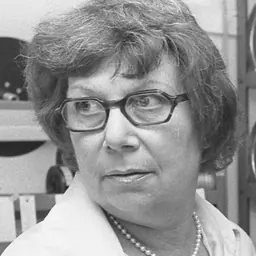
Lived 1909 – 2006 (aged 97). Helen van Dongen was a Dutch film editor, film producer and cinematographer.
Life and career Born in Amsterdam, van Dongen met Joris Ivens in her teens and eventually became his key collaborator. In the 1930s she was credited as the editor of Ivens' films including Nieuwe Gronden (1934), Misère au Borinage (1934), The Spanish Earth (1937), and The 400 Million (1939). Bob Mastrangelo has written that these four films "earned Ivens a worldwide reputation and solidified van Dongen's status as one of the most important editors of her generation." and she co-produced and edited his film Louisiana Story (1948). Cecile Starr also credits van Dongen for the final form of The Land. Van Dongen kept a diary during her work on Louisiana Story which she later published, and that is considered an important record both of the film and of Flaherty's career.
During World War II, van Dongen served as a filmmaker with the U.S. Office of War Information alongside editors Sidney Meyers and Ralph Rosenblum, the latter of whom she mentored.
Van Dongen also produced several films on her own. Her 1937 film, Spain in Flames, was a compilation of Spanish Civil War newsreel footage that was narrated by John Dos Passos. Van Dongen's personal favorite among her independent films was News Review No. 2 (1944–45), which has apparently been lost; it was a compilation film of Second World War combat footage. Her final film was Of Human Rights (1950), which she produced, directed, and edited; the film was made for the United Nations to celebrate the Universal Declaration of Human Rights.
Selected filmography This filmography is based on the comprehensive filmography posted by Hans Schoots. Schoots filmography incorporates the filmography in the book, Filming Robert Flaherty's Louisiana Story: The Helen Van Dongen Diary. The director of each film is indicated in parentheses. 1931: Philips Radio (Ivens): Co-editor 1933: Nieuwe Gronden (Ivens): Editor 1934: Misère au Borinage (Ivens/Storck): Editor (Note: For the subsequent Russian-language version) 1934: Daily Life (Richter): Editor 1936: Spain in Flames: Editor, Producer 1937: The Spanish Earth (Ivens): Editor 1939: The 400 Million (Ivens): Editor 1939: Pete-Roleum and His Cousins (van Dongen & Losey): Director, editor 1941: Power and the Land (Ivens): Editor 1942: The Land (Flaherty): Editor 1943: Russians at War (van Dongen): Director, editor 1943: Peoples of Indonesia: Editor, director 1944: Know Your Enemy: Japan: Co-editor 1946: Gift of Green (van Dongen and David Flaherty): Director, editor 1948: Louisiana Story (Flaherty): Editor 1950: Of Human Rights: Director, producer, editor
Don’t just read it —
keep it.
Full-length biographies made to live with: read them, listen on the way to work, watch them tonight.
- E-book
- Audio
- Video
Instant download · yours to keep · every purchase keeps this site free
Important facts
Family & relationships
People in Helen van Dongen's life
Named in this biography and alive at the same time




Related people
Same field, nearest in time


Contemporaries
People whose lives overlapped Helen van Dongen's



Frequently asked questions
Who was Helen van Dongen?
Dutch film editor
When was Helen van Dongen born?
Helen van Dongen was born on 5 January 1909 in Amsterdam.
When did Helen van Dongen die?
Helen van Dongen died on 28 September 2006 in Brattleboro.
What was Helen van Dongen's occupation?
Helen van Dongen was a film editor, film producer and cinematographer.
What nationality was Helen van Dongen?
Helen van Dongen was Dutch.
Sources & further reading
Cite this page
APA: Biography.guide. (2026). Helen van Dongen. https://biography.guide/helen-van-dongen/
MLA: "Helen van Dongen." Biography.guide, https://biography.guide/helen-van-dongen/.
Chicago: "Helen van Dongen." Biography.guide. https://biography.guide/helen-van-dongen/.
Data last updated: 2026-09-22 · Spot an error? Report a correction.
Page generated 2026-09-27 05:16 UTC