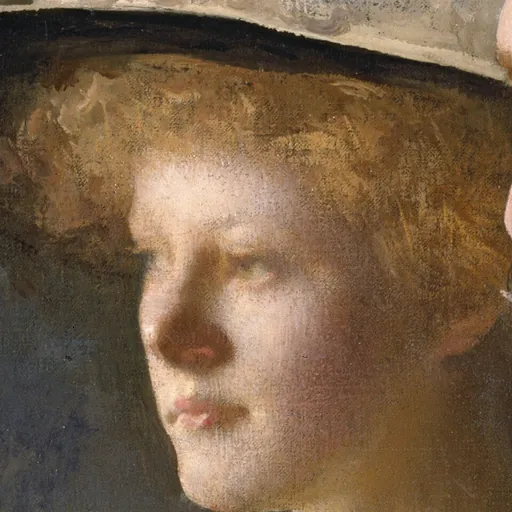
About Helen Clay Frick
Lived 1888 – 1984 (aged 96). Helen Clay Frick was an American art collector and philanthropist.
Helen Clay Frick (September 2, 1888 – November 9, 1984) The Library houses photographs and archival records that document the history of Western art, many of which were lost during World Wars I and II. She also established an art library at the University of Pittsburgh and, later in her life, built the Frick Art Museum on the grounds of Clayton to house part of her private art collection.
Her interests and philanthropy efforts also extended to the environment. In 1908, she requested that her debutante gift from her father be a donation of land to the city of Pittsburgh for the purpose of becoming a public park. This land donation would become Frick Park. In the 1950s, she made her own land donation and established Westmoreland Sanctuary, a nature preserve in Mount Kisco, New York. She was also an avid gardener and belonged to the Bedford Garden Club.
Early life in Pittsburgh and New York
Helen's father was chairman of the Carnegie Steel Company, a partner in business with Andrew Carnegie. In 1901, J.P. Morgan acquired Carnegie and other corporations to form the United States Steel Corporation.
A year earlier his first-born daughter, Martha, died – from swallowing a pin while on a trip in Europe – after suffering excruciatingly painful effects that lasted several years. Her sister's illness formed Helen's earliest memories. After the deaths of her siblings, Helen grew up in a household of obsessive mourning, and she was greatly affected by witnessing her sister's death. In the 1890s, after the Homestead Strike, Carnegie and Frick became bitter enemies after Carnegie attempted to hold Frick responsible for the bloodshed. They also fought over control of Carnegie's holdings. Helen went to finishing school at the Spence School, graduating in 1908. She returned frequently to Pittsburgh, where she had her social debut in 1906.
Helen traveled frequently and kept detailed diaries and notes about galleries and museums she visited. By age 17, she had been to Europe nine times, visiting the Louvre, Uffizi, Prado, Pinakothek, the National Gallery, as well as visiting churches and cathedrals. Additionally, she gained access to private collections with her father on buying expeditions. It was during these trips that she became interested in art archives, spending time in the archives at London's Record Office and in Paris' Musee des Archives.
Helen Frick and her father, portrait by Edmund Charles Tarbell, c. 1910 Back in New York, she established a home for women textile workers in Wenham, Massachusetts. The home became known as the "Iron Rail Vacation Home for Working Girls".
World War I and inheritance In 1917, when the United States entered World War I, the romantic relationship between Helen and Fordyce St. John was severed when his hospital sent him to serve in a surgical unit at a war hospital in northern France. The relationship may have begun as early as 1913, but the two kept it quiet, although they were seen together in public on occasion. St. John apparently adored Helen and she seemed to be in love with him, and an engagement announcement between the two had been expected before his departure. Why he left for Europe without following through on his promise to marry Helen is unknown, but was perhaps because Helen's brother told St. John that Frick would never sanction a marriage between the two.
Helen decided to join the war effort: she applied for and received permission to establish a Frick unit under the Red Cross. With four other women, Helen left for France in November 1917, arriving in Paris in December where she went to work immediately helping to wrap 150,000 Christmas packages being sent to soldiers at the front. After Christmas she arrived in Bourg-en-Bresse where her unit worked with refugee women and children. Eventually she would become responsible for refugees in 70 villages, and she asked her father for funds to build an orphanage. During that trip she witnessed the destruction of art works and churches. making her the country's wealthiest unmarried woman. She received $5 million outright; the rest in shares, properties and companies; as well as $15 million to endow the Frick art collection and control of the collection – which would become entirely hers if the city of New York refused its offer as a museum. Her mother and older brother, Childs Frick, received considerably less, which would cause ongoing tension and conflict for Helen in future years. In the meantime, she bought a farm in Bedford Village, New York, and joined the exclusively male board of the Frick collection.
Art archives and Frick Collection She devoted her adult life to defending her father's public image from attack and continuing his tradition of philanthropy.
In 1920, she went back to Europe, revisiting sites she had known before the war, taking pictures and documenting the damage. In northern France, traveling through Berry-au-Bac and on to Soissons, she was appalled at the destruction, particularly to Soissons Cathedral. She photographed the damage, accumulating a record of the devastation wrought during the war. It was on that trip that she came to blame the Germans for damaging sites she had visited before the war, an attitude that would strengthen throughout her life. Eventually the references were moved to New York where the Frick Art Reference Library opened in 1924,
In the mid-1920s she responded to John Gabbert Bowman's request for funding the University of Pittsburgh. The institution was deeply in debt and had cut fine arts courses, but the acquisition of land in Oakland that previously belonged to the Frick estate provided space in Oakland for expansion. Bowman wanted to build a "cathedral of light" there; Helen funded the university's fine arts department with the proviso of "having the final selection of the department head." She went on to endow and found the university's teaching collection in 1928,
Early in the 1930s, after the 1931 death of her mother, she hired John Russell Pope to expand the Frick Reference Library into two adjacent townhouses. Pope built abundant shelving and windows, and a medieval-style office for Helen. Time magazine said of the building, it was "instantly recognized as one of the most important art libraries in the world." Between 1922 and 1967, Helen commissioned 57,000 large format negatives. In Italy church interiors were lit, making it possible to photograph centuries-old frescoes and altarpieces, such as the now-lost frescoes by Giovanni Baronzio. More than 8,000 photographs are attributed to Italian photographer Mario Sansoni, who worked for Helen for many years. She was insistent that there be no charge for visitors to the Sanctuary and was a lifelong supporter of the nonprofit. A dispute eventually severed the relationship with the university, involving the employment of Germans – Helen's World War I experience instilled an intense dislike of Germans she never overcame – in addition to the university's acquisition of modern art, which she equally disliked. Stevens had written a history of Pennsylvania in which he described the Homestead Strike and working conditions that Helen Frick took exception to. Helen Frick also supported Richard Nixon in his presidential candidacy in 1968 and again in 1970
Notoriously reclusive during her last years, she died at her Clayton home in Pittsburgh at age 96 on November 9, 1984, leaving a personal estate estimated to be worth $15 million.
Don’t just read it —
keep it.
Full-length biographies made to live with: read them, listen on the way to work, watch them tonight.
- E-book
- Audio
- Video
Instant download · yours to keep · every purchase keeps this site free
Important facts
Family & relationships
People in Helen Clay Frick's life
Named in this biography and alive at the same time
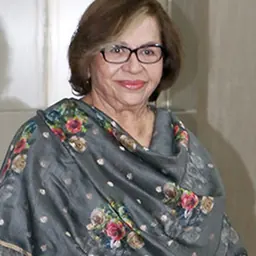

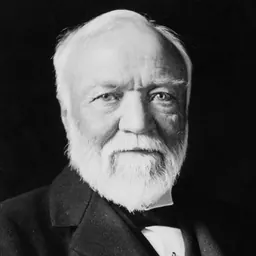
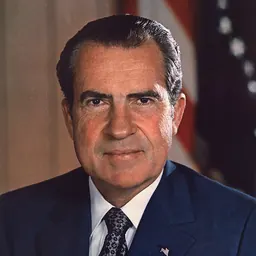
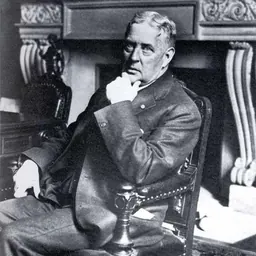
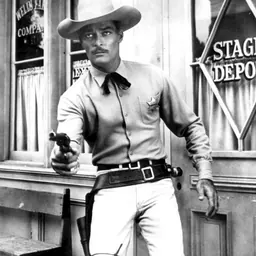
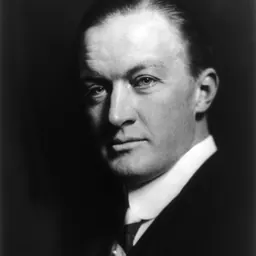
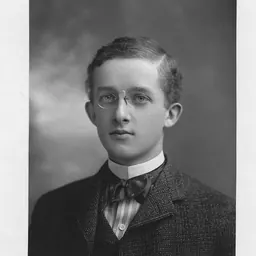
Related people
Same field, nearest in time



Contemporaries
People whose lives overlapped Helen Clay Frick's



Frequently asked questions
Who was Helen Clay Frick?
American philanthropist (1888-1984)
When was Helen Clay Frick born?
Helen Clay Frick was born on 2 September 1888 in Pittsburgh.
When did Helen Clay Frick die?
Helen Clay Frick died on 9 November 1984 in Pittsburgh.
What was Helen Clay Frick's occupation?
Helen Clay Frick was an art collector and philanthropist.
What nationality was Helen Clay Frick?
Helen Clay Frick was American.
Sources & further reading
Cite this page
APA: Biography.guide. (2026). Helen Clay Frick. https://biography.guide/helen-clay-frick/
MLA: "Helen Clay Frick." Biography.guide, https://biography.guide/helen-clay-frick/.
Chicago: "Helen Clay Frick." Biography.guide. https://biography.guide/helen-clay-frick/.
Data last updated: 2026-09-24 · Spot an error? Report a correction.
Portrait: Wikimedia Commons · author & licence
Page generated 2026-09-27 05:08 UTC