
About Heinz Tiessen
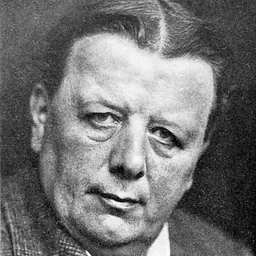
Lived 1887 – 1971 (aged 84). Heinz Tiessen was a German composer, conductor, music educator, music critic, music teacher and musicographer.
Richard Gustav Heinz Tiessen (10 April 1887 – 29 November 1971) was a German composer.
Biography Tiessen was born at Königsberg, where he studied with composer before moving to Berlin. There, he enrolled at Humboldt University and at the Stern'sches Konservatorium, where he studied composition and music theory. He worked as a music critic for Allgemeine Musikzeitung from 1911 to 1917 before becoming a theater Kapellmeister and composer for Volksbühne in 1918. From 1920 to 1922, he conducted the Akademische Orchester and between 1925 and 1945, he taught music theory and composition at the Berliner Musikhochschule. He also co-founded the German division of the International Society for Contemporary Music and served as conductor of the Junger Chor. During the Third Reich, his music was classified as "undesirable" by the Nazi authorities, and after World War II, he almost completely stopped composing. From 1946 to 1949 he directed the city Konservatorium and beginning in 1955, he headed the department of composition and theory at the Berliner Musikhochschule. His best-known pupils were Eduard Erdmann and Sergiu Celibidache, another one was Eva Siewert. He died in Berlin.
Tiessen composed two symphonies, a dance drama and incidental music for a number of plays, some Music for String Orchestra, a Totentanz-Suite for small orchestra, chamber works, pieces for piano and organ, lieder, and choral music. The music of Richard Strauss, who in 1917 had helped Tiessen obtain a job at the Berlin State Opera, influenced much of his early works: the First Symphony is dedicated to Strauss. From 1918 onwards his musical idiom inclined more towards an individual form of Expressionism, to which his many theatre scores contributed in evolving a highly dramatic, free-form style.
Works Symphony No. 1 in C, 1910–11 Symphony No. 2 "Stirb und Werde", op.17, 1911–12 Natur-Trilogie for piano, op.18 1913 Amsel-Septett (Blackbird Septet), op.20 1914-15 Hamlet-Suite, 1919–21 Incidental music for Merlin by Karl Leberecht Immermann Incidental music for Die armseligen Besenbinder by Carl Hauptmann Incidental music for The Post Office by Rabindranath Tagore Incidental music for Antigone by Sophocles Incidental music for Masse Mensch by Ernst Toller Incidental music for Hamlet by William Shakespeare, op.30 Incidental music for Cymbeline by Shakespeare Incidental music for Advent by August Strindberg Incidental music for The Tempest by Shakespeare Three Pieces for Piano, 1923 String Quintet, op.32 Salambo, dance drama, op.34 1924 Incidental music for Abenteuer in Moll by Hanns Braun, 1924 Duo-Sonate for violin and piano, 1925 Incidental music for Don Juan und Faust by Christian Dietrich Grabbe, 1925 Vorspiel zu einem Revolutionsdrama, op.33 1926 Incidental music for Musik by Hauptmann, 1934 Concertante Variations for Piano and Orchestra, 1961
Don’t just read it —
keep it.
Full-length biographies made to live with: read them, listen on the way to work, watch them tonight.
- E-book
- Audio
- Video
Instant download · yours to keep · every purchase keeps this site free
Important facts
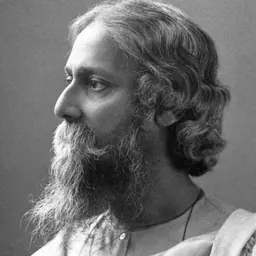
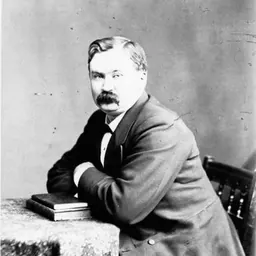
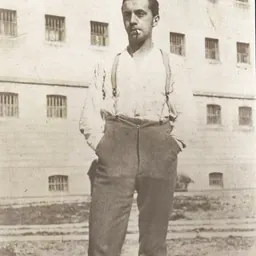
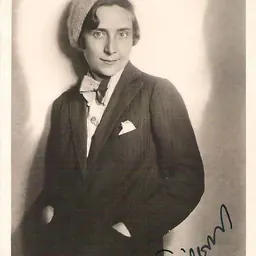
People in Heinz Tiessen's life
Named in this biography and alive at the same time




Related people
Same field, nearest in time



Contemporaries
People whose lives overlapped Heinz Tiessen's

Frequently asked questions
Who was Heinz Tiessen?
German composer (1887-1971)
When was Heinz Tiessen born?
Heinz Tiessen was born on 10 April 1887 in Königsberg.
When did Heinz Tiessen die?
Heinz Tiessen died on 29 November 1971 in Berlin.
What was Heinz Tiessen's occupation?
Heinz Tiessen was a composer, conductor, music educator, music critic, music teacher and musicographer.
What nationality was Heinz Tiessen?
Heinz Tiessen was German.
Sources & further reading
Cite this page
APA: Biography.guide. (2026). Heinz Tiessen. https://biography.guide/heinz-tiessen/
MLA: "Heinz Tiessen." Biography.guide, https://biography.guide/heinz-tiessen/.
Chicago: "Heinz Tiessen." Biography.guide. https://biography.guide/heinz-tiessen/.
Data last updated: 2026-09-20 · Spot an error? Report a correction.
Page generated 2026-09-27 05:14 UTC