
About Heinz Knobloch
Lived 1926 – 2003 (aged 77). Heinz Knobloch was a German journalist, writer, essayist, narrator and editing staff.
Heinz Knobloch (3 March 1926 – 24 July 2003) was a German writer and journalist, who spent most of his professional career working in the German Democratic Republic (East Germany).
Life
Early years Knobloch was born in Dresden, the son of a photographer. When his father became unemployed the family moved to Berlin in 1935.
Writing Heinz Knobloch was known in Germany for his Feuilletons. The flexibility of the feuilleton form makes it hard to define succinctly, but the principal ingredients of Knoblich's feuilletons are nevertheless familiar enough to English speaking readers. Over four decades he contributed more than 1,600 of these insightful sometimes whimsical and relatively compact opinion pieces, often triggered by some passing personal experience. Most of them appeared between 1958 and 1978 in the weekly newspaper Wochenpost under the by-line "Mit beiden Augen" ("With both eyes [open]"). and Victor Auburtin.
He also produced intensively researched, accurately presented and illuminating biographies of other individuals from German history many of whom had disappeared from the historical mainstream during the turbulent middle decades of the twentieth century. His book "Herr Moses in Berlin" ("Mr Moses in Berlin") portrays the eighteenth century Berlin philosopher (and composer's grandfather) Moses Mendelssohn. In "Meine liebste Mathilde" ("My dearest Matilda") Knobloch tells of Mathilde Jacob, Rosa Luxemburg's longstanding secretary and confidante, who was murdered in a concentration camp.
Beyond simple biography, "Der beherzte Reviervorsteher" ("The Courageous District Overseer") recounted the story of how the burning of the Berlin New Synagogue was thwarted in Oranienburger Straße during the Kristallnacht pogroms of November 1938, as a result of the courage of the police officer Wilhelm Krützfeld.
"Der arme Epstein" ("For poor [Sally] Epstein") shed light on the death of Horst Wessel, a man whose name would have been known to every German of Knobloch's generation thanks to the Horst Wessel song which the government had designated a parallel national anthem in Germany during the Nazi years.
Awards and honours (not a complete list)
1963: Literature Prize of the Free German Trade Union Federation 1965: 1979: 1980: Louis Fürnberg Prize 1986: Lion-Feuchtwanger Prize 1986: National Prize of East Germany 1994: from the Berlin Senate 1998: Order of Merit of Berlin
On 3 March 2005 the piece of green space in front of the row of houses which for many years had included Knobloch's home was renamed "Heinz-Knobloch-Platz". More recently, on 24 July 2013, a memorial tablet was placed on the outside of his former home in Berlin-Pankow.
Selected publications Books Ein gewisser Reginald Hinz. Eulenspiegel-Verlag 1963 Pardon für Bütten. Eulenspiegel-Verlag 1965, Verlag der Nation 1976
Feuilleton collections Mir gegenüber. 1960 Herztöne und Zimmermannssplitter. 1962 Die guten Sitten. 1964 Du liebe Zeit. 1966 Täglich geöffnet. 1970 Rund um das Bett. 1970 Bloß wegen der Liebe. 1971 Beiträge zum Tugendpfad. 1972 Innere Medizin. 1972 Man sieht sich um und fragt. 1973 Allerlei Spielraum. 1973 Kreise ziehen. 1974 Stäubchen aufwirbeln. 1974 Schattensprünge. 1975 Das Lächeln der Zeitung. 1975 Der Blumenschwejk. 1976, Mitteldeutscher Verlag Halle 1984 Der Berliner zweifelt immer. Buchverlag Der Morgen, Berlin 1977 Mehr war nicht drin. 1979, Mitteldeutscher Verlag Halle 3. Auflage 1983 Nachträgliche Leckerbissen. Aufbau-Verlag, Berlin, Weimar 1979. 180 S. Handwärmekugeln. Verlag Tribüne, Berlin 1979 Berliner Fenster – Feuilletons. 1981, Mitteldeutscher Verlag Halle 1987. Stadtmitte umsteigen – Berliner Phantasien. 1982, viele Neuauflagen bis 2002, Jaron Verlag Berlin 2002. Angehaltener Bahnhof. Das Arsenal, Berlin 1984 Nicht zu verleugnen – Feuilletons. 1985, Mitteldeutscher Verlag Halle 2. Auflage 1986. Zur Feier des Alltags – Feuilletons. 1986, Buchclub 65 Berlin 1988. Berliner Grabsteine. 1987, Morgenbuch-Verlag Berlin 1991. ⇒ Alte und neue Grabsteine. Jaron Verlag 2000. Im Lustgarten – ein preußischer Garten im Herzen Berlins (mit Hendrik Gottfriedsen) 1989, Jaron Verlag 2001. Die schönen Umwege – Beobachtungen. 1993, Transit-Verlag Berlin 3. Aufl. 1996. Geisterbahnhöfe – Westlinien unter Ostberlin (mit Michael Richter und Thomas Wenzel), 1994, Links-Verlag Berlin 2008. Mißtraut den Grünanlagen! – Extrablätter. Transit-Verlag Berlin 1996. "Lässt sich das drucken?" – Feuilletons gegen den Strich. UVK Konstanz 2002. Berlins alte Mitte – rund um den Lustgarten; Geschichte zum Begehen. Jaron Verlag Berlin 1996. Gartenlust und Gartenliebe – Abenteuer hinterm Zaun. edition hüne Berlin 2009.
Epilogue zu Julius Rodenberg – Bilder aus dem Berliner Leben. Neuauflage. Berlin 1987, S. 355–374.
Monographs Herr Moses in Berlin. 1979, 1993, Taschenbuch 1996, Jaron-Verlag Berlin 2006. Meine liebste Mathilde – Die Freundin der Rosa Luxemburg. 1985, Fischerverlag, Frankfurt 1997. Der beherzte Reviervorsteher – Ungewöhnliche Zivilcourage am Hackeschen Markt. 1989, Jaron Verlag Berlin 2003. Der arme Epstein – Wie der Tod zu Horst Wessel kam. 1993, Aufbau-Verlag, Berlin 1996. Die Suppenlina – Eine Menschenfreundin. Ed. Hentrich, Berlin 1997.
Biographical Nase im Wind – Zivile Abenteuer. Transit-Verlag, Berlin 1994. Eierschecke – Eine Dresdner Kindheit. Transit-Verlag, Berlin 1995. Eine Berliner Kindheit. Jaron Verlag, Berlin 1999. Mit beiden Augen – Bd. 1 Von Dresden nach Tennessee. 1999. Mit beiden Augen – Bd. 2 Mein Leben zwischen den Zeilen. Transit-Verlag, Berlin 1999. Das Lächeln der Wochenpost. Jaron Verlag, Berlin 2002. Schriftwechsel 1997–2003 Heinz Knobloch – Rolf Pfeiffer. Berlin 2006.
Don’t just read it —
keep it.
Full-length biographies made to live with: read them, listen on the way to work, watch them tonight.
- E-book
- Audio
- Video
Instant download · yours to keep · every purchase keeps this site free
Important facts
People in Heinz Knobloch's life
Named in this biography and alive at the same time



Related people
Same field, nearest in time


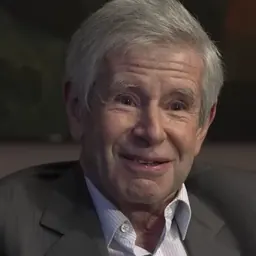
Contemporaries
People whose lives overlapped Heinz Knobloch's

Frequently asked questions
Who was Heinz Knobloch?
German writer (1926–2003)
When was Heinz Knobloch born?
Heinz Knobloch was born on 3 March 1926 in Dresden.
When did Heinz Knobloch die?
Heinz Knobloch died on 24 July 2003 in Berlin.
What was Heinz Knobloch's occupation?
Heinz Knobloch was a journalist, writer, essayist, narrator and editing staff.
What nationality was Heinz Knobloch?
Heinz Knobloch was German.
Sources & further reading
Cite this page
APA: Biography.guide. (2026). Heinz Knobloch. https://biography.guide/heinz-knobloch/
MLA: "Heinz Knobloch." Biography.guide, https://biography.guide/heinz-knobloch/.
Chicago: "Heinz Knobloch." Biography.guide. https://biography.guide/heinz-knobloch/.
Data last updated: 2026-09-25 · Spot an error? Report a correction.
Page generated 2026-09-27 05:10 UTC