
About Heinz-Gerhard Vogt
Lived 1911 – 1945 (aged 33). Heinz-Gerhard Vogt was a military personnel.
Gerhard Vogt (29 November 1919 – 14 January 1945) was a German Luftwaffe military aviator and fighter ace during World War II. He is credited with 48 aerial victories, claimed over the Western Front and in Defense of the Reich in 174 combat missions.
Born in Raudten, Vogt grew up in the Weimar Republic and Nazi Germany. He joined the military service in the Luftwaffe and was trained as a fighter pilot. Following flight training, he was posted to Jagdgeschwader 26 "Schlageter" (JG 26—26th Fighter Wing) in September 1941. Flying with this wing, Vogt claimed his first aerial victory on 6 November 1941 on the Western Front over a Royal Australian Air Force fighter aircraft. In August 1944, he was appointed squadron leader of 5. Staffel (5th squadron) of JG 26 and was awarded the Knight's Cross of the Iron Cross on 25 November 1944 for 46 aerial victories claimed. On 14 January 1945, Vogt was killed in action when he was shot down by United States Army Air Forces fighters southeast of Cologne-Eil.
Early life Vogt was born on 29 November 1919 in Raudten near Lüben, present-day Rudna in south-western Poland, at the time in the Province of Lower Silesia, a Free State of Prussia in the Weimar Republic.
World War II World War II in Europe began on Friday 1 September 1939 when German forces invaded Poland. In September 1941, Vogt was transferred from the Ergänzungs-Jagdgruppe West, a supplementary training unit for fighter pilots destined to fight on the Western Front, to Jagdgeschwader 26 "Schlageter" (JG 26—26th Fighter Wing). Vogt was assigned to the 6. Staffel (6th squadron) on 16 September. His unit was subordinated to II. Gruppe (2nd group) of JG 26 and had just been equipped with the Focke-Wulf Fw 190 A-1. The commanding officers were Oberleutnant Walter Schneider, Staffelkapitän (squadron leader), and Hauptmann Walter Adolph, the Gruppenkommandeur (group commander). Already two days later, Adolph was killed in action and replaced by Hauptmann Joachim Müncheberg.
Vogt claimed his first victory when he shot down a Royal Australian Air Force (RAAF) Supermarine Spitfire fighter from No. 452 Squadron over Calais on 6 November 1941. No. 452 Squadron was part of the Kenley Wing on a mission to attack targets of opportunity in northern France. Later that month, on 23 November, he claimed his second aerial victory when he shot down a Spitfire from the No. 315 Polish Fighter Squadron west of Dunkirk. On 24 March 1942, Vogt made a forced landing in his Fw 190 A-1 (Werknummer 0013—factory number) at Abbeville-Drucat Airfield following combat with a Spitfire. Vogt, who was wounded in this encounter, was probably shot down by Warrant Officer L.N. Powell from No. 412 Squadron.
Defense of the Reich On 17 August 1942, the United States Army Air Forces (USAAF) flew its first heavy bomber mission over Europe. As part of "Circuses" No. 204, 17 USAAF Boeing B-17 Flying Fortress bombers, supported by four Spitfire squadrons from the Biggin Hill Wing and Tangmere Wing, attacked the Rouen railroad yards. Scrambled to intercept this attackforce, Vogt claimed a Spitfire from either No. 401 Squadron or No. 402 Squadron shot down in combat north-northwest of Fécamp. He claimed a Spitfire from No. 111 Squadron destroyed on 27 August. The Spitfire was on a fighter escort mission for bombers targeting the Luftwaffe airfield at Abbeville-Drucat and was shot down west of the Baie de Somme.
On 2 February 1943, Vogt was shot down in Messerschmitt Bf 109 G-4 (Werknummer 16129) by Spitfires from No. 331 Squadron in combat near Ypres. Forced to bail out, he was wounded in the encounter. His victor may have been Flight Lieutenant Helner Grundt-Spang. He claimed his first heavy bomber in Defense of the Reich on 22 June during the Battle of the Ruhr. That day, the USAAF VIII Bomber Command flew a mission to the Ruhr area. The primary target was the synthetic rubber plant at Hüls. Vogt shot down a B-17 bomber from either 381st Bombardment Group or 384th Bombardment Group west of Dunkirk.
On 30 July, he was wounded again when he bailed out of his Fw 190 A-5 (Werknummer 410006) following combat with a B-17 bomber northeast of Duisburg. A month later, he made a forced landing at Romilly after his Fw 190 A-4 (Werknummer 42456) sustained combat damage. Vogt shot down Australian Flight Lieutenant Tony Gaze from No. 66 Squadron on 4 September near Le Tréport. Gaze was on a fighter escort mission for American Martin B-26 Marauder bombers and RAF Douglas A-20 Havoc, Lockheed Ventura and North American B-25 Mitchell bombers into northern France.
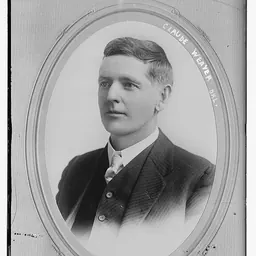
Combat box of a 12-plane B-17 squadron. Three such boxes completed a 36-plane group box. On 28 January 1944, Vogt claimed a Spitfire from the Royal Canadian Air Force (RCAF) No. 403 Squadron in combat southwest of Albert. Pilot Officer Claude Weaver was critically injured and died shortly after in a hospital. On 8 March, the Eighth Air Force, formerly known as VIII Bomber Command, targeted Berlin with 702 heavy bombers, in particular the ball bearing factory at Erkner. In total, 17 escort fighters and 37 bombers were lost, including two B-17 bombers credited to Vogt. The first B-17, from either 96th Bombardment Group or 388th Bombardment Group was shot down southwest of Gardelegen. The second B-17 from the 452d Bombardment Group, for which he received credit, was a Herausschuss (separation shot) claimed east of Nienburg. A Herausschuss was a severely damaged heavy bomber forced to separate from its combat box which normally was counted as an aerial victory.
Vogt was awarded the German Cross in Gold on 20 March. On 12 April, Vogt was credited with two aerial victories over Consolidated B-24 Liberator bombers from the 445th Bombardment Group. The next day, he was credited with his fifth aerial victory over a heavy bomber on 13 April 1944. That day, he claimed a Herausschuss over a B-17 in the vicinity of Trier. In May, he became an officer, attaining the rank of Leutnant (second lieutenant).
After the Allies launched Operation Overlord, the invasion of Normandy on 6 June, Luftflotte Reich sent additional units to the invasion front. By 8 June, Jagdgeschwader 1, Jagdgeschwader 3, Jagdgeschwader 11 and III. Gruppe of Jagdgeschwader 54 had arrived in France and were subordinated to Fliegerkorps II. II. Gruppe of JG 26 was fully operational at Guyancourt and flew multiple missions to the combat area that day. In the early morning, Vogt claimed a North American P-51 Mustang fighter from the RAF No. 168 Squadron. The P-51 had been on a tactical reconnaissance mission and was shot down north of Caen.
Squadron leader On 20 June, Vogt temporarily took command of 7. Staffel of JG 26 when Oberleutnant Waldemar Radener had been seriously wounded in aerial combat on 15 June. The Eighth Air Force and Allied Expeditionary Air Force (AEAF) sent over a thousand bombers to support the breakout of Normandy beachhead on 22 June. II. Gruppe of JG 26 was ordered to intercept the bombers and fighter escorts heading for Paris. During this mission, Vogt was credited with a Herausschuss over a B-17 near Paris.
Command of 7. Staffel was officially handed to Leutnant Hans Prager on 15 August while Vogt was appointed Staffelkapitän of 5. Staffel of JG 26 on 14 August 1944, replacing Hauptmann Walter Matoni who was transferred. On 21 September, during the Battle of Arnhem, Vogt shot down an unarmed Douglas C-47 Skytrain transport aircraft on a mission to drop reinforcements for the British 1st Airborne Division. On 23 September, the Allied flew resupplies to the combat area around Arnhem. The transport aircraft were protected by 519 fighters from the VIII Fighter Command and 40 Lockheed P-38 Lightning fighters from the Ninth Air Force. German fighters dispatched by Luftflotte Reich never reached the transports. Over Goch, II. Gruppe intercepted a flight of P-51 fighters from the 352nd Fighter Group. For the loss of one of their own, II. Gruppe shot down four P-51 fighters, including two by Vogt.
In November II. Gruppe was ordered to relocate to an airfield at Reinsehlen, south of Hamburg, where the pilots received the Fw 190 D-9, equipped with an inline engine. Vogt claimed his last aerial victory flying a radial engined Fw 190 A on 19 November when he shot down a Spitfire from RCAF No. 412 Squadron. On 25 November, two pilots of JG 26 were awarded the Knight's Cross of the Iron Cross , Vogt for 46 aerial victories and Major Karl Borris, the commander of I. Gruppe, for 41 aerial victories. He claimed his 48th and last aerial victory on 26 December during the Siege of Bastogne as part of Battle of the Bulge. That day, he was credited with an Auster shot down near Bastogne.
Operation Bodenplatte and death Vogt led 5. Staffel during Operation Bodenplatte on 1 January 1945, an attempt at gaining air superiority during the stagnant stage of the Battle of the Bulge. II. Gruppe, under the leadership of Major Anton Hackl was based at Nordhorn at attacked the Evere Airfield at Brussels. Together with III. Gruppe, which was led by Hauptmann Walter Krupinski, the attack on Evere was the only successful mission. II. Gruppe lost 13 Fw 190s destroyed and two damaged. Nine of its pilots were missing; five were killed and four captured. While III. Gruppe lost six Bf 109s and four pilots, one of them was captured, the others were killed. Allied losses are given at Evere as 32 fighters, 22 twin-engine aircraft and 13 four-engine aircraft destroyed, plus another nine single-, six twin- and one four-engine aircraft damaged.
On 14 January, during the retreat of German forces in the Ardennes, Vogt was shot down and killed by USAAF P-51 fighters of the 78th Fighter Group in his FW 190 D-9 (Werknummer 210176) southeast of Cologne-Eil. That day, JG 26 lost 13 pilots killed in action, more than on any other day of the war.
Summary of career
Aerial victory claims According to Weal, Vogt was credited with 48 aerial victories. Obermaier also lists him with 48 aerial victories, all of which over the Western Allies, claimed in 174 combat missions. Mathews and Foreman, authors of Luftwaffe Aces — Biographies and Victory Claims, researched the German Federal Archives and found records for 47 aerial victories, plus one further unconfirmed claim. All of his aerial victories were claimed over the Western Allies and includes eight four-engined bombers.
Chronicle of aerial victories Claim Date Time Type Location Claim Date Time Type Location – 6. Staffel of Jagdgeschwader 26 "Schlageter" –At the Channel and over England — 22 June – 31 December 1941 1 6 November 1941 15:40 Spitfire Calais 2 23 November 1941 13:28 Spitfire west of Dunkirk – 6. Staffel of Jagdgeschwader 26 "Schlageter" –On the Western Front — 1 January – 31 December 1942 3 4 April 1942 11:40 Spitfire Watten 8 27 August 1942 13:43? Spitfire west of the Baie de Somme 4 1 May 1942 19:46? Spitfire Dover 9 2 November 1942 15:24? Spitfire southwest of Boulogne 5 8 June 1942 14:03 Spitfire Dunkirk 10 8 November 1942 12:51 Spitfire east of Calais-Marck 6 26 July 1942 13:28 Spitfire west of Le Tréport west of Le Touquet 11 6 December 1942 08:36 Spitfire northwest of Dieppe 7 17 August 1942 18:52? Spitfire north-northwest of Fécamp – 6. Staffel of Jagdgeschwader 26 "Schlageter" –On the Western Front — 1 January – September 1943 12 22 June 1943 11:41 B-17 west of Dunkirk 15 4 September 1943 19:55 Spitfire west of Berck 13 26 July 1943 11:26 Spitfire Mouscron 16 27 September 1943 18:52 Spitfire southeast of Fécamp 14 4 September 1943 10:30 Spitfire south of Le Tréport – 7. Staffel of Jagdgeschwader 26 "Schlageter" –On the Western Front — 29 November – 31 December 1943 17 29 November 1943 10:05 Spitfire Koksijde, southwest of Ostend – 7. Staffel of Jagdgeschwader 26 "Schlageter" –On the Western Front and Defense of the Reich — 1 January – 31 December 1944 18 28 January 1944 15:37 Spitfire southwest of Albert 21 12 April 1944 13:08 B-24* southwest of Liège 29 January 1944 P-47 north of Trier 22 12 April 1944 13:28 B-24* vicinity of Liège 19 8 March 1944 13:30 B-17 southwest of Gardelegen 23 13 April 1944 13:23 B-17* vicinity of Trier 20 8 March 1944 13:33? B-17* east of Nienburg – 5. Staffel of Jagdgeschwader 26 "Schlageter" –On the Western Front and Defense of the Reich — 1 January – 31 December 1944 24 27 April 1944 17:40 P-47 south of Soissons 26 8 June 1944 06:00 P-51 north of Caen 25 29 April 1944 14:30 B-17 northeast of Saint-Omer – 7. Staffel of Jagdgeschwader 26 "Schlageter" –On the Western Front and Defense of the Reich — 20 June – 14 August 1944 27 22 June 1944 19:00? B-17* southeast of Paris 29 24 June 1944 21:33 P-47 west of Dreux 28 23 June 1944 13:08? P-51 Saint-Lô 30 25 June 1944 15:35 P-38 west of Rouen – 7. Staffel of Jagdgeschwader 26 "Schlageter" –On the Western Front and Defense of the Reich — 15 August 1944 – 14 January 1945 31 15 August 1944 12:29? P-47 Versailles 40 23 September 1944 17:33 P-51 Goch 32 19 August 1944 10:24 P-47 northeast of Paris 41 23 September 1944 17:35 P-51 Goch 33 25 August 1944 13:45 P-38 west of Beauvais 42 25 September 1944 17:54? Spitfire Arnhem 34 26 August 1944 09:20 Spitfire east of Neufchâtel 43 27 September 1944 10:41 Spitfire Nijmegen 35 29 August 1944 09:40 Auster Soissons 44 28 October 1944 13:25 Typhoon between Venlo and Kempen 36 17 September 1944 18:00 P-51 Bocholt 45 19 November 1944 14:06 Spitfire north of Kirchhellen 37 18 September 1944 13:25 P-51 Luxembourg 46 24 December 1944 12:28 P-47 Liège 38 19 September 1944 18:03 P-51 EmmerichLuxembourg 47 26 December 1944 14:15 Auster Bastogne 39 21 September 1944 17:17 C-47 Nijmegen
Awards Iron Cross (1939) 2nd and 1st Class Honor Goblet of the Luftwaffe on 17 January 1944 as Feldwebel and pilot German Cross in Gold on 20 March 1944 as Feldwebel in the 7./Jagdgeschwader 26 Knight's Cross of the Iron Cross on 25 November 1944 as Leutnant and Staffelführer of the 5./Jagdgeschwader 26 "Schlageter"
Don’t just read it —
keep it.
Full-length biographies made to live with: read them, listen on the way to work, watch them tonight.
- E-book
- Audio
- Video
Instant download · yours to keep · every purchase keeps this site free
Important facts
People in Heinz-Gerhard Vogt's life
Named in this biography and alive at the same time




Related people
Same field, nearest in time



Contemporaries
People whose lives overlapped Heinz-Gerhard Vogt's





Frequently asked questions
Who was Heinz-Gerhard Vogt?
German Luftwaffe fighter ace (1911-1945)
When was Heinz-Gerhard Vogt born?
Heinz-Gerhard Vogt was born on 29 November 1911 in Rudna.
When did Heinz-Gerhard Vogt die?
Heinz-Gerhard Vogt died on 14 January 1945 in Cologne.
What was Heinz-Gerhard Vogt's occupation?
Heinz-Gerhard Vogt was a military personnel.
Sources & further reading
· Wikipedia: Heinz-Gerhard Vogt
Cite this page
APA: Biography.guide. (2026). Heinz-Gerhard Vogt. https://biography.guide/heinz-gerhard-vogt/
MLA: "Heinz-Gerhard Vogt." Biography.guide, https://biography.guide/heinz-gerhard-vogt/.
Chicago: "Heinz-Gerhard Vogt." Biography.guide. https://biography.guide/heinz-gerhard-vogt/.
Data last updated: 2026-09-20 · Spot an error? Report a correction.
Page generated 2026-09-27 05:12 UTC