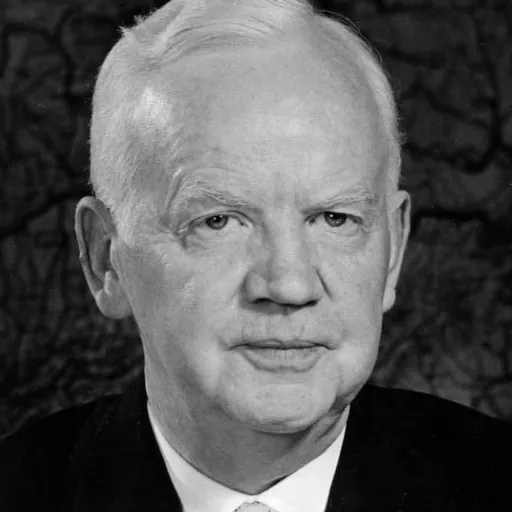
About Heinrich Lübke
Lived 1894 – 1972 (aged 77). Heinrich Lübke was a German politician and engineer.
Karl Heinrich Lübke (; 14 October 1894 – 6 April 1972) was a German politician, who served as president of West Germany from 1959 to 1969.
He suffered from deteriorating health towards the end of his career and is known for a series of embarrassing incidents that may have resulted from his health issues. Lübke resigned three months before the scheduled end of his second term amid a scandal as to his involvement with the Nazi regime during World War II.
Early life
Born in Enkhausen, Westphalia, Lübke had a very humble upbringing. He was the son of a shoemaker and farmer from the Sauerland, and was a surveyor by training. He volunteered for service in World War I in August 1914. He completed his basic training first with the Westphalian Foot Artillery Regiment No.7, with which he was then deployed on the Eastern and Western Fronts. In 1916, he was promoted to Vizefeldwebel. After a gas attack, he was taken to a field hospital. In 1917, he was promoted to lieutenant and became deputy battery chief in the 52nd Reserve Division. He then became an orderly officer and was involved in the Battle of Passchendaele. Before the end of the war, he was transferred to the GHQ of the Supreme Army Command. During the war, he received the Iron Cross 1st and 2nd class. He was discharged from military service in December 1918.
Lübke resumed his studies and received an examination as a surveying and cultural engineer in 1921. During his studies in Bonn, he joined the student association K.D.St.V. Ascania Bonn in the Cartellverband. From 1921 to 1924, he studied economics in Münster and Berlin. From 1921 to 1922, he was employed by the Westphalia tenants and settlers association in Münster. From October 1922, he was managing director of the Reich Association of Small Agricultural Enterprises (from 1925 also medium-sized enterprises). After 1924, he was also a member of the executive committee of the Deutscher Bund für Bodenreform. In 1926, he became managing director of the Deutsche Bauernschaft. From 1927, he was also the managing director of the Bauernland AG settlement company.
In 1929, Lübke married Wilhelmine Keuthen (1885–1981) in Berlin-Wilmersdorf.
In 1930, he became a member of the Roman Catholic Centre Party (Zentrumspartei) and in April 1932 was elected as a member of the Prussian Parliament. From 1932 to 1933, Lübke was a member of the Prussian state parliament for the German Center Party. He was re-elected in the state elections on 5 March 1933. On 18 May 1933, as in the Reich, the state parliament approved an enabling law for Prussia against the votes of the SPD. After that, it never met again. On 14 October 1933, the representative bodies of the federal states were dissolved and finally repealed without replacement on 30 January 1934.
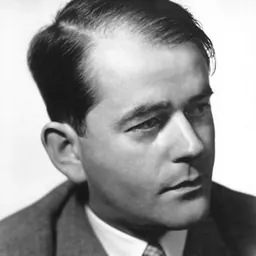
After the seizure of power by the National Socialists in 1933 and the subsequent dissolution of the Zentrumspartei, Lübke was accused of misappropriating public funds and imprisoned; after 20 months in prison, he was released, when no evidence could be produced to back up the politically motivated charges. It was not until 1937 that he was able to get a senior position with a building society (German: Wohnungsbaugesellschaft). In 1939, just before the outbreak of World War II, he moved to a company of building engineers managed by the architect . Here he came to the notice of Albert Speer and was given responsibility for major building projects, some of which were under the aegis of the Armaments Ministry run by Speer. One of these was the extension of the "Army Research Center Peenemünde" (Heeresversuchsanstalt Peenemünde in German, abbreviated HVP) and the "Air Force Test Centre"(Erprobungsstelle der Luftwaffe in German), Peenemünde-West. and at the very least he had been aware of the use of slave labour on his projects; building plans bearing his signature and containing concentration camp barrack blocks were advanced as evidence of his complicity, but these were dismissed in the West as East German and Eastern Bloc propaganda.
In September 1966, Lübke's office claimed that the document with his signature on display in Munich was a "forgery" and was Communist inspired. The document contained a directive for the construction of a wartime concentration camp.
The historian Tony Judt has observed that Lübke's presidency, like the chancellorship of Kurt Georg Kiesinger, showed the "a glaring contradiction in the Bonn Republic's self-image" in view of their previous Nazi allegiances. Lübke's status as a one-time political prisoner under the National Socialists placed him in good stead. Nevertheless, the potential scandal threatened to damage the office of the president; on 14 October 1968, Lübke announced that he would resign on 30 June 1969, his resignation taking effect three months before the scheduled end of his term of office.
The former president's health deteriorated. His intention to live in West Berlin from time to time could not be realised, nor could he, with his private library of about 5,000 books, pursue his scientific hobbies in comparative linguistics and microbiology.
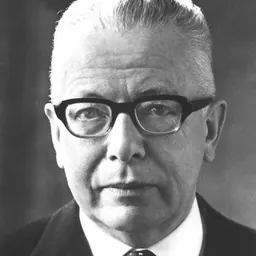
Lübke's political friends ignored him, if they did not avoid him. His successor in the presidency, Gustav Heinemann, however, kept in contact with him. Trips to Tenerife, in autumn 1969 and at Christmas in 1970 and 1971, brought no improvement in his condition. Arteriosclerosis of the arteries in both his brain and his limbs was becoming increasingly noticeable, leading to serious speech disorders, declining physical mobility, and progressive memory loss. In retrospect, it was clear that this disease had started several years earlier and explained many aspects of the West German president's behaviour during his last years in office. In November 1971, the former president visited his birthplace in Enkhausen for the last time.
On 30 March 1972, an acute stomach hemorrhage required an emergency operation during which it was discovered that he was suffering from a very advanced form of stomach cancer which had already spread to his brain. After two more haemorrhages, Lübke died on 6 April 1972 at the age of 77 in the West German capital of Bonn.
As a speaker Lübke was a poor public speaker and was frequently subject to ridicule, especially near the end of his term of office when his age and his failing health started to affect his memory and general cognitive abilities. He frequently forgot where he was (Lübke: "When I talk to you today in...eh... in.." Voice from the crowd shouting: "Helmstedt!" Lübke: "...eh...when I talk to you today in ... Helmstedt, then it was following my own will...", etc.). This was further ridiculed in the German translation of Danger Mouse, where Penfold is called "Lübke" and is frequently ordered to "shut up" ("Lübke, Schnauze!").
Various other slips are well documented, such as the address in Antananarivo, Madagascar: "My very dear Mr. President, dear Mrs. Tananarive..." His word-for-word translations of German into English (see Lübke English) were also the subject of much mockery.
Tapes from Lübke's speeches were collected by the German satirical magazine Pardon and distributed on a best-selling record.
Honours
National honour
Foreign honours
Ethiopia:
Iran:
Somalia:
Don’t just read it —
keep it.
Full-length biographies made to live with: read them, listen on the way to work, watch them tonight.
- E-book
- Audio
- Video
Instant download · yours to keep · every purchase keeps this site free
Important facts
Family & relationships
People in Heinrich Lübke's life
Named in this biography and alive at the same time


Related people
Same field, nearest in time





Contemporaries
People whose lives overlapped Heinrich Lübke's


Frequently asked questions
Who was Heinrich Lübke?
German politician (1894-1972)
When was Heinrich Lübke born?
Heinrich Lübke was born on 14 October 1894 in Sundern (Sauerland).
When did Heinrich Lübke die?
Heinrich Lübke died on 6 April 1972 in Bonn.
What was Heinrich Lübke's occupation?
Heinrich Lübke was a politician and engineer.
What nationality was Heinrich Lübke?
Heinrich Lübke was German.
Sources & further reading
Cite this page
APA: Biography.guide. (2026). Heinrich Lübke. https://biography.guide/heinrich-lubke/
MLA: "Heinrich Lübke." Biography.guide, https://biography.guide/heinrich-lubke/.
Chicago: "Heinrich Lübke." Biography.guide. https://biography.guide/heinrich-lubke/.
Data last updated: 2026-09-20 · Spot an error? Report a correction.
Portrait: Wikimedia Commons · author & licence
Page generated 2026-09-27 04:58 UTC