
Heinrich Grüber
German politician and theologian
About Heinrich Grüber
Lived 1891 – 1975 (aged 84). Heinrich Grüber was a German politician, theologian, resistance fighter, pastor and translator.
Heinrich Grüber (; 24 June 1891 – 29 November 1975) was a Reformed theologian, pacifist and opponent of Nazism.
Life
Until 1933 Heinrich Grüber was born on 24 June 1891 in Stolberg in the Prussian Rhine Province (today part of North Rhine-Westphalia). His parents were the teacher Ernst Grüber and Alwine Grüber, née Cleven from Gulpen,
On 2 February 1934, the presbytery (Domkirchenkollegium) of the Berlin Supreme Parish and Collegiate Church appointed the Reformed Grüber as the new pastor of the Kaulsdorf congregation, since this church held the ius patronatus, giving its presbytery the advowson for the Jesus Church in Kaulsdorf. The German Christian-dominated Kaulsdorf presbytery strictly rejected Grüber for being an opponent of their Faith Movement. The office as old-Prussian pastor included the function as executive-in-chief of the Kaulsdorf presbytery. Thus conflicts were unavoidable. The German Christian presbyters of Kaulsdorf steadily denounced Grüber within the ecclesiastical bureaucracy for criticising Ludwig Müller, the then old-Prussian regional bishop , and the Nazi party local group leader denounced him at the Gestapo, for criticising the Nazi sterilisation laws (see Nazi Eugenics) and for mercy and sympathy with the Jews.
Once in office, Grüber built up a Confessing Church congregation at Jesus Church, convening the few congregants opposing the Nazi interference and adulteration of Protestantism, previously unable to organise as a group in Kaulsdorf. As the officially appointed pastor Grüber held the regular services in Jesus Church, preaching against the cult of personality for Hitler, the severing armament of Germany and anti-Semitism.
However, other events, such as collections of money for purposes of the Confessing Church, meetings of its adherents or elections of their brethren council, paralleling the German Christian-dominated presbytery, were forbidden to take place as events open for the public, but only card-carrying members of the opposing Confessing Church were allowed. Grüber carried the – due to their colour so-called – Red Card No. 4, issued on 22 December 1934 by the Kaulsdorf Confessing congregation.
The information about Grüber's appointment spread among the adherents of the Confessing Church in neighbouring congregations comprising the competent deanery Berlin Land I, such as , , Blumberg, Fredersdorf bei Berlin, , , Tabor Church (Hohenschönhausen), , , , , , Neuenhagen bei Berlin, Petershagen bei Berlin, or mostly without a local pastor supporting them. They started to travel for Sunday services to Jesus Church. Grüber encouraged them to establish Confessing congregations of their own and attended e.g. the formal foundation of Friedrichsfelde Confessing congregation on 1 February 1935.
Grüber presided over the Confessing synod of the deanery Berlin Land I, which constituted with Confessing synodals from the pertaining congregations on 3 March 1935 and paralleled the official deanery synod dominated by German Christians. The Confessing congregants in Kaulsdorf's congregation became a great support for Grüber. He also provided for Confessing pastors, who would act in his place once he could not hold the service himself. In August 1935 his colleague Pastor Neumann from Köpenick preached instead of him, criticising the anti-Semitic policy of the German government, which earned him a denunciation by the Kaulsdorf presbytery. German Christian presbyters denounced Grüber again for his opposing attitudes at the and the Gestapo. The NSDAP local party leader (Ortsgruppenleiter) threatened Grüber to prompt his deportation to a concentration camp.
The mainstream Nazi anti-Semitism considered the Jewry being a group of people bound by close, so-called blood (genetic) ties, to form a unit, which one could not join or secede from. The influence of Jews was declared to have detrimental impact on Germany, justifying their discrimination and persecution. To be spared from that, one had to prove one's affiliation with the group of the so-called Aryan race. Paradoxical was, that never genetic tests or outward allegedly racial features in one's physiognomy determined one's affiliation, although the Nazis palavered a lot about physiognomy, but only the records of religious affiliations of one's grandparents decided. However, while the grandparents were earlier still able to choose their religion, their grandchildren in the Nazi era were compulsorily categorised as Jews, if three or four grandparents were enrolled as members of a Jewish congregation.
This Nazi categorisation as Jews of course included mostly Jews of Jewish descent, but also many Gentiles of Jewish descent, such as Catholics, irreligionists, and Protestants, who happened to have had grandparents belonging – according to the records – to a Jewish congregation. While Jewish congregations in Germany tried – little as they were allowed – to help their persecuted members, the Protestant church bodies ignored their parishioners who were classified as Jews (according to the Nuremberg Laws), and the somewhat less persecuted Mischlinge of partially Jewish descent.
On 31 January 1936, the International Church Relief Commission for German Refugees constituted in London, but its actually envisaged German counterpart never materialised. So Bishop George Bell gained his sister-in-law Laura Livingstone to run an office for the international relief commission in Berlin. The failure of the Confessing Church was evident, even though 70–80% of the Christian Germans of Jewish descent were Protestants.
It was Grüber and some enthusiasts, who had started a new effort in 1936. They forced the Confessing Church's hand, which in 1938 supported the new organisation, named by the Gestapo , but after its official recognition Relief Centre for Protestant Non-Aryans. Collaborators of the Bureau Grüber gave pastoral care to non-Aryans and helped them emigrate. Soon over 30 people worked in the Grüber Bureau, working closely with other organisations in Germany and abroad.
Since emigration opportunities for Jews were severely limited, even free nations forming traditional immigration destinations had shut their gates, pastoral care was a priority. The bureau also provided illegal aid to persecuted people, including false passports and medicine and food for concentration camp inmates. Grüber's brother-in-law, Ernst Hellmut Vits, was head of the rayon manufacturer Vereinigte Glanzstoff-Fabriken and gave financial support to Grüber for the Bureau.
In the night of 9 to 10 November 1938, the Nazi government organised the November Pogrom, often euphemised as Kristallnacht. The well-organised Nazi squads killed several hundreds; 1,200 Jewish Berliners were deported to Sachsenhausen concentration camp. Many men went into hiding from arrest and also appeared at Grüber's home in the rectory of the Jesus Church. He organised their hiding in the cottages of the allotment clubs in his parish.
The Nazis only released the arrested inmates if they would immediately emigrate. Thus getting visas became the main target and problem of Grüber's Bureau. Grüber was allowed to travel several times to the Netherlands and Great Britain in order to persuade the authorities there to grant visas for the persecuted from Germany. So Grüber found hardly time any more to serve his actual office as pastor in Kaulsdorf. Eichmann asked Grüber in a meeting about Jewish emigration why Grüber, not having any Jewish family and with no prospect for any thank, does help the Jews. Grüber answered because the Good Samaritan did so, and my Lord told me to do so.
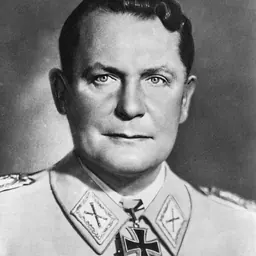
By autumn 1939, a new degree of persecution loomed. The Nazi authorities started to deport Jewish Austrians and Gentile Austrians of Jewish descent to German-occupied Poland. On 13 February 1940 the same fate hit 1,200 Jewish Germans and Gentile Germans of Jewish descent from the Stettin Region, who were deported to Lublin. Grüber learned about it by the Wehrmacht commander of Lublin and then protested at every higher ranking superior up to the then Prussian Minister-President Hermann Göring, who forbade further deportations from Prussia for the time being. The Gestapo warned Grüber never to adopt party for the deported again. The deported were not allowed to return.
On 22–23 October, 6,500 Jewish Germans and Gentile Germans of Jewish descent from Baden and the Palatinate were deported to Gurs, German-occupied France. Now Grüber got himself a passport, with the help of Dietrich Bonhoeffer's brother-in-law Hans von Dohnanyi from the Abwehr, to visit the deported in the Gurs (concentration camp). But before he left the Gestapo arrested Grüber on 19 December and deported him two days later to Sachsenhausen concentration camp, and in September 1941 to Dachau concentration camp, becoming the inmate with the No. 27832. Grüber survived Dachau and built up good relations with many other inmates, among them also communists. He was eventually released due to international efforts and multiple interventions by Vits to his family in Kaulsdorf on 23 June 1943, after signing an agreement not to help the persecuted any more. He could not resume his rescue work.
Grüber then resumed his office as pastor of Kaulsdorf and the Confessing Church in the Berlin Land I deanery. He reported in the Confessing congregations of the deanery about the truth in a concentration camp, such as Dachau and Sachsenhausen. On 22 April 1945 at the invasion of the Red Army into the Kaulsdorf neighbourhood Grüber gathered some undaunted Kaulsdorfers to follow him with white flags marching in direction of the Soviet soldiers in order to avoid further bloodshed. In 1945 Kaulsdorf turned out to be part of the Soviet Eastern Sector of Berlin.
Grüber reopened his Bureau, now serving survivors, returning from the concentration camps, in Berlin's in the American Sector of Berlin. Otto Dibelius, who had assumed the post-war leadership of the old-Prussian March of Brandenburg ecclesiastical province for the time being, appointed Grüber as one of the Nazi opposing pastors for the new leading bodies to be established.
On 18 May 1945, Berlin's provisional city council, newly installed by the Soviet occupational power, had appointed Grüber as advisor for ecclesiastical affairs. This earned him a bilingual Russian-German certificate, issued on 21 May, to spare him from the usual robbery of bikes by Soviet soldiers, so that he could move at all in the city, with all the transportation system having collapsed, and an exemption from the curfew valid for Germans, issued on 9 July. On 15 July 1945 Dibelius appointed Grüber as Provost of St. Mary's and St. Nicholas' Church in Berlin and invested him on 8 August in a ceremony in St. Mary's Church, only partially cleared from the debris. Thus his time as pastor in Kaulsdorf ended.
In 1946, Grüber prepared and became in 1947 one of the co-founders of the Union of Persecutees of the Nazi Regime in the boards of which he collaborated until 1948.
In 1959, the Evangelical Relief Centre for the formerly Racially Persecuted opened a modern home for the elderly formerly Persecuted, named Heinrich-Grüber-Haus, removed by 1968. 1961, 18 October: Wald Dr. Heinrich Grüber / dedicated within the Jerusalem Forest 1962: honorary degree of the Theological department of the Lutheran Wagner College on Staten Island, New York City 1962, 28 July: honorary degree of the Theological Brethren Church Faculty in Chicago 1962, 10 October: honorary degree of Human Letters by the Hebrew Union College, New York City 1963: Order of Merit of the Federal Republic of Germany 1st class 1964, 28 July: Grüber recognised as Righteous Among the Nations by Yad Vashem 1966, 21 June: Commander of Order of Orange-Nassau, decorated by Juliana of the Netherlands 1965, 9 December: Carl von Ossietzky Medal awarded by the 1966: honorary president of the German-Israeli Society 1967, January: Albert Schweitzer Medal by the 'Nederlands Albert Schweitzer Fonds' in Amsterdam 1968: Silver Youth Aliyah Medal by the Jewish Agency for Israel 1970: Luther Medal of the Evangelical Church in Berlin-Brandenburg 1970, 8 May: honorary citizenship of West Berlin 1971: Golden Cross of the Diakonisches Werk 1971, 31 March: decoration as 'Defender of Freedom', by George M. Seignious, Commandant of the American Sector of Berlin 1975: honorary grave on the 'Cemetery II' of the Protestant Congregation of the Supreme Parish and Collegiate Church on Müllerstraße, Wedding (Berlin). 1991, 24 June: renaming of 'Hönower Straße' into Heinrich-Grüber-Straße in Kaulsdorf, Berlin 1997, 22 December: inauguration of a memorial plaque for Grüber on the outside wall of Jesus Church, Kaulsdorf 2007: 'Hauptschule Liester' school in Stolberg (Rhineland) renamed as Propst-Grüber-Schule 2008, 21 May: square in Kaulsdorf renamed as Heinrich-Grüber-Platz.
Don’t just read it —
keep it.
Full-length biographies made to live with: read them, listen on the way to work, watch them tonight.
- E-book
- Audio
- Video
Instant download · yours to keep · every purchase keeps this site free
Important facts
People in Heinrich Grüber's life
Named in this biography and alive at the same time



Related people
Same field, nearest in time





Contemporaries
People whose lives overlapped Heinrich Grüber's


Frequently asked questions
Who was Heinrich Grüber?
German politician and theologian (1891-1975)
When was Heinrich Grüber born?
Heinrich Grüber was born on 24 June 1891 in Stolberg.
When did Heinrich Grüber die?
Heinrich Grüber died on 29 November 1975 in Berlin.
What was Heinrich Grüber's occupation?
Heinrich Grüber was a politician, theologian, resistance fighter, pastor and translator.
What nationality was Heinrich Grüber?
Heinrich Grüber was German.
Sources & further reading
Cite this page
APA: Biography.guide. (2026). Heinrich Grüber. https://biography.guide/heinrich-gruber/
MLA: "Heinrich Grüber." Biography.guide, https://biography.guide/heinrich-gruber/.
Chicago: "Heinrich Grüber." Biography.guide. https://biography.guide/heinrich-gruber/.
Data last updated: 2026-09-20 · Spot an error? Report a correction.
Page generated 2026-09-27 05:21 UTC