
About Heinrich Gerhard Kuhn
Lived 1904 – 1994 (aged 90). Heinrich Gerhard Kuhn was a British and German physicist and university teacher.
Heinrich Gerhard Kuhn (10 March 1904 – 25 August 1994) was a British physicist. A graduate of the University of Göttingen, where he studied for his doctorate under the direction of James Franck, winner of the 1925 Nobel Prize for Physics, he left Germany after the Nazi Party came to power there in 1933, and moved to Britain, where relatives had settled, becoming a British subject in 1939. At the invitation of Frederick Alexander Lindemann, he worked for Imperial Chemical Industries at the Clarendon Laboratory in Oxford, where he studied hyperfine structure. During the Second World War, he worked on isotope separation for Tube Alloys and the Manhattan Project. He was the first physicist to become a fellow at Balliol College, Oxford, in 1950, and published textbooks on atomic spectra in German in 1934 and English in 1962.
Biography Heinrich Gerhard Kuhn was born in Breslau, Germany, on 10 March 1904, the second son of Wilhelm Felix Kuhn, a rechtsanwalt (lawyer) and notary public, and his wife Marthe née Hoppe. His older brother became a philosophy professor. His paternal grandmother was Charlotte Kuhn née Henschel, the half-sister of George Henschel, a musician who emigrated to Britain.
Kuhn became a demonstrator at Göttingen in 1926, and then a lecturer in 1931. He continued his studies of the Franck–Condon principle and the Stark effect for his habilitation in February 1931, which allowed him to become a privatdozent. He married Marie Bertha Nohl, the daughter of the Göttingen philosophy professor Herman Nohl and cousin of Ludwig Wittgenstein and Paul Wittgenstein. Although his father was Jewish, he had been baptised when he married, and Kuhn was brought up as a Christian. This meant little when the Nazi Party came to power in Germany in 1933. Kuhn was classified as non-Aryan because he had two Jewish grandparents. He was dismissed from his university positions, and his habilitation was revoked. As a decorated veteran of the First World War, Franck was not dismissed from his post, but elected to resign in protest rather than dismiss colleagues for their race or political beliefs.
Before leaving Germany, Franck attempted to find positions for his former students and colleagues. He introduced Kuhn to Professor Frederick Lindemann, 1st Viscount Cherwell, Scientific Adviser to Winston Churchill, who invited Kuhn to come to the Clarendon laboratory at Oxford University, where he could work on atomic spectra with Derek Jackson. Kuhn and his wife left Germany for Britain in August 1933. They were welcomed by his relatives, the Henschels, and Kuhn received a grant of £400 per annum from ICI, initially for two years, but it was extended to three, and then six. His two sons, Anselm Thomas and Nicholas John, were born in Britain. They attended Dragon School and St Edward's, and entered Balliol College, Oxford, where they earned doctorates. Kuhn became a naturalised British subject in 1939. At the Clarendon laboratory, Jackson and Kuhn studied the hyperfine structure and Zeeman effects of the light elements such a lithium, sodium and potassium.
Jackson left Britain for tax purposes after the war, but Kuhn remained at Oxford, where he continued his research into atomic spectra with G.W. Series and G.K. Woodgate. Kuhn had become a lecturer at University College, Oxford, in 1938, and he began tutoring students in physics in 1941. Germany restored his habilitation, and he was given the status and pension of a full professor, but he declined offers to return to Germany.
Kuhn had published a textbook on atomic spectra in German, Atomspektren, in 1934. In 1962, he published an updated version, Atomic Spectra, in English; it was still widely used two decades later. He died in Oxford on 26 August 1994 after a long illness.
Don’t just read it —
keep it.
Full-length biographies made to live with: read them, listen on the way to work, watch them tonight.
- E-book
- Audio
- Video
Instant download · yours to keep · every purchase keeps this site free
Important facts
People in Heinrich Gerhard Kuhn's life
Named in this biography and alive at the same time
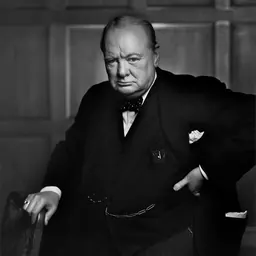
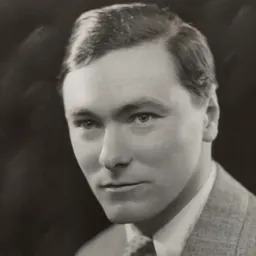





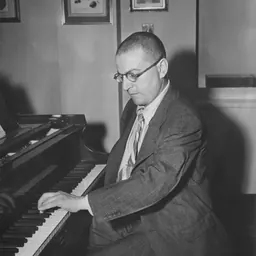
Related people
Same field, nearest in time


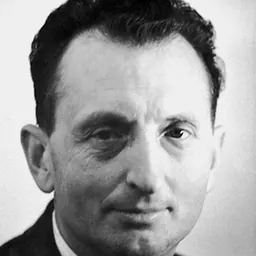

Contemporaries
People whose lives overlapped Heinrich Gerhard Kuhn's


Frequently asked questions
Who was Heinrich Gerhard Kuhn?
German-born British physicist
When was Heinrich Gerhard Kuhn born?
Heinrich Gerhard Kuhn was born on 10 March 1904 in Wrocław.
When did Heinrich Gerhard Kuhn die?
Heinrich Gerhard Kuhn died on 26 August 1994 in Oxford.
What was Heinrich Gerhard Kuhn's occupation?
Heinrich Gerhard Kuhn was a physicist and university teacher.
What nationality was Heinrich Gerhard Kuhn?
Heinrich Gerhard Kuhn was British and German.
Sources & further reading
· Wikipedia: Heinrich Gerhard Kuhn
· DBpedia: Heinrich Gerhard Kuhn
Cite this page
APA: Biography.guide. (2026). Heinrich Gerhard Kuhn. https://biography.guide/heinrich-gerhard-kuhn/
MLA: "Heinrich Gerhard Kuhn." Biography.guide, https://biography.guide/heinrich-gerhard-kuhn/.
Chicago: "Heinrich Gerhard Kuhn." Biography.guide. https://biography.guide/heinrich-gerhard-kuhn/.
Data last updated: 2026-09-20 · Spot an error? Report a correction.
Page generated 2026-09-27 04:59 UTC