
Heidi Durham
American labor activist, political candidate, and electrician
About Heidi Durham
Lived 1953 – 2015 (aged 62). Heidi Durham was an American trade unionist, activist and electrician.
Hildreth (Heidi) Durham was an American socialist feminist and labor activist with the Freedom Socialist Party and Radical Women. Durham was one of the first female electricians to work at Seattle City Light, where she faced significant barriers due to pervasive sexism and suffered a nearly fatal accident that left her paralyzed for the rest of her life. In 1991, Durham was a candidate in the Seattle City Council elections on the Freedom Socialist Party ticket with Yolanda Alaniz.
Early life Heidi Durham was born in 1953 in San Pedro, Los Angeles, California. Her mother was paralyzed due to multiple sclerosis, which created a consciousness around injustices for Durham at a young age. Her father was a minister who had been a conscientious objector during World War II and spoke out in favor of civil rights and against the Vietnam War. Her older siblings participated in anti-war protests at the University of California, Berkeley and in desegregation efforts with the Student Nonviolent Coordinating Committee (SNCC). Durham moved to the Pacific Northwest in 1971 to attend Western Washington University in Bellingham, Washington. In 1973 she moved to Seattle, where she was introduced to Radical Women by her sister, Guerry Hodderson, who was already a member.
Seattle City Light career Durham's acceptance letter into the Electrical Trades Trainee program In 1974, Durham was recruited and accepted into the all-women Electrical Trades Trainee training program, an affirmative action program designed by Clara Fraser at Seattle City Light to integrate women into male-dominated trades jobs. Durham was the youngest trainee, having recently turned 21 when the program began. Two other members of Radical Women, Megan Cornish and Teri Bach, were also accepted into the program. The program was cancelled after the first week, however, due to souring relations between Fraser and management. After a year, eight of the ten female trainees were laid off, officially due to budget cuts but widely seen as an act of retaliation. Fraser was also terminated within months. Durham joined in a lawsuit along with seven of the other female trainees against Seattle City Light alleging discrimination on the basis of sex. In 1976, a court ruled in the women's favor, ordering City Light to reinstate them and make them eligible for apprenticeships.
Durham returned to City Light and was accepted as a lineworker apprentice following the court ruling. Management, angered by the order, intentionally placed Durham, along with the other two women apprentices, on teams that were known to be the most hostile. Durham's team, in particular, had members who were especially hostile and was supervised by a man known by everyone to be a sexist, racist, and heavy drinker. In addition, many male electricians who Durham worked with had become demoralized after a failed strike in 1975 and were angered by the women trainees' court victory. Durham faced persistent harassment and unfair performance evaluations in which she was given worse ratings than her male colleagues that accused her of not possessing adequate strength for the job. On July 1, 1977, the day after she was given a particularly bad evaluation, Durham fell 28 feet from a pole and broke her back. From her hospital bed, she organized with other members of her union to rewrite her accident report, to no avail. Despite the obvious and pervasive sexism she faced, Durham chose to not sue the union, as she did not want to sow further division among City Light workers. She believes that the decision to allow her to become a power station operator was motivated by the political pressure placed on City Light from Clara Fraser's lawsuit. Durham became junior power station operator at City Light and eventually rose to the rank of senior operator. In 1983, Durham worked with other women and pro-affirmative action men to establish the Employee Committee for Equal Rights at City Light (CERCL) to pressure the City of Seattle Human Rights Department to investigate instances of discrimination. She also helped to form and co-chair the Ad Hoc Committee for Fair Employment and Open Housing. In 1991 Durham was jointly awarded the Advocate of the Year award, along with Megan Cornish, by Washington Women in the Trades. She retired in 2004. Durham lost in the primary round, but Alaniz advanced on to the general election and lost, finishing with 21% of the vote.
Later life and death Durham continued her involvement in political activism after her retirement. She remained a critic of conservative labor leaders and business-unionist trends in the AFL- CIO. In 2004, she served as a member of the Seattle Organizing Committee for the Million Worker March on Washington, DC, where she was a featured speaker.
Durham experienced long-term health effects from her injuries in 1977, causing her to walk with a crutch for the rest of her life. She died in 2015 at age 62 from early onset Alzheimer's disease, believed to be connected to her fall.
Don’t just read it —
keep it.
Full-length biographies made to live with: read them, listen on the way to work, watch them tonight.
- E-book
- Audio
- Video
Instant download · yours to keep · every purchase keeps this site free
Important facts
People in Heidi Durham's life
Named in this biography and alive at the same time

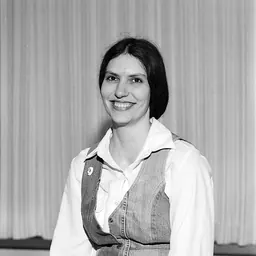

Related people
Same field, nearest in time






Contemporaries
People whose lives overlapped Heidi Durham's
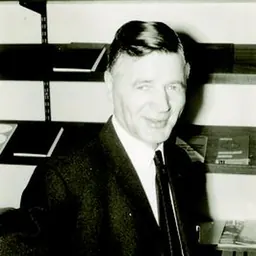
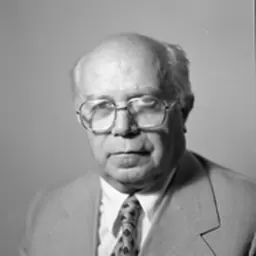
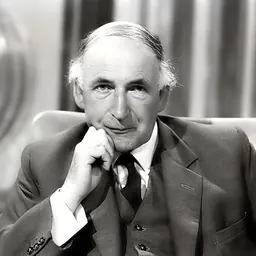


Frequently asked questions
Who was Heidi Durham?
American labor activist, political candidate, and electrician (1953–2015)
When was Heidi Durham born?
Heidi Durham was born on 9 July 1953 in San Pedro.
When did Heidi Durham die?
Heidi Durham died on 23 August 2015 in Seattle.
What was Heidi Durham's occupation?
Heidi Durham was a trade unionist, activist and electrician.
What nationality was Heidi Durham?
Heidi Durham was American.
Sources & further reading
Cite this page
APA: Biography.guide. (2026). Heidi Durham. https://biography.guide/heidi-durham/
MLA: "Heidi Durham." Biography.guide, https://biography.guide/heidi-durham/.
Chicago: "Heidi Durham." Biography.guide. https://biography.guide/heidi-durham/.
Data last updated: 2026-09-22 · Spot an error? Report a correction.
Page generated 2026-09-27 05:13 UTC