
Héctor Timerman
Argentine journalist and politician
About Héctor Timerman
Lived 1953 – 2018 (aged 65). Héctor Timerman was an Argentine diplomat, journalist, human rights defender and politician.
Héctor Marcos Timerman (16 December 1953 – 30 December 2018) was an Argentine journalist, politician, human rights activist and diplomat. He served as his country's Minister of Foreign Affairs from 2010 to 2015, during the presidency of Cristina Fernández de Kirchner.
Biography
Early life and career Héctor Timerman was born in Buenos Aires, to Risha (née Mindlin) and Jacobo Timerman. He was of Lithuanian Jewish descent.
He was named editor-in-chief of La Tarde, one of a number of periodicals owned by his father, in 1976, and steered the daily in support of the newly installed dictatorship. His father's kidnapping on 15 April 1977 prompted Timerman to become active in the defense of human rights, however, and in 1978 he was exiled to New York City, where, in 1981, he co-founded Americas Watch, the Western Hemisphere counterpart to Helsinki Watch that proceeded the creation of the unified Human Rights Watch. He later served in the board of directors of the Fund for Free Expression, a press freedom advocacy group based in London. During his exile in the U.S., he gained American citizenship.
Journalist and activist Timerman earned a master's degree in international relations at Columbia University in 1981, and wrote several op-ed columns for the New York Times, Los Angeles Times, Newsweek, and The Nation. After returning to Argentina in 1989, he founded two news magazines, Tres Puntos and Debate, and became a regular contributor to Noticias and Ámbito Financiero.
Timerman remained active in human rights advocacy. He served as a director of the Buenos Aires office of the Permanent Assembly for Human Rights from 2002 to 2004, and was President of the International Coalition of Historic Site Museums of Conscience. Timerman was the first witness to give testimony in the trial of Christian von Wernich, a former Buenos Aires Province Police chaplain convicted of complicity in numerous dictatorship-era murders and tortures (including that of his father). Taiana's replacement by Timerman was announced the same day.
Timerman's tenure was marked by intensified diplomatic foreign controversies. Bringing perpetrators of the 1994 AMIA bombing to justice was prioritized, pursuant to which he persuaded the neighboring government of Bolivia to cut short a state visit to that country in 2011 by Iranian Defense Minister Ahmad Vahidi (whose arrest Argentine authorities had sought since 2007 in connection with the attack), while also working to establish a Truth Commission jointly with Iran in 2013 to investigate the 1994 bombing. He likewise advanced ongoing efforts against vulture funds seeking payment at face value on bonds bought from resellers for pennies on the dollar, and whose attempts to block payments to all other bondholders continued to threaten Argentina's successful earlier debt restructuring.
The longstanding Falkland Islands sovereignty dispute figured prominently during Timerman's tenure as well. Timerman said, "We have been trying to find a peaceful solution for 180 years. I think the fanatics are not in Buenos Aires." His policy regarding the dispute remained assertive, refusing to accept a letter from a member of the Legislative Assembly of the Falkland Islands who ambushed Timerman following talks in February 2013 with U.K. Foreign Secretary William Hague, obtaining declarations in support of Argentine sovereignty from African and Latin American nations, and later declaring that the Falklands "will be under our control within 20 years." He nevertheless described the dispute in January 2014 as a "peaceful struggle". After his double-dealing regarding Argentine relations with Iran and the fraudulent efforts to attain justice for the 1994 AMIA bombing, the Argentine Jewish community released a joint non-condolence "no comment" release after his death.
Honours and awards Foreign honours
Don’t just read it —
keep it.
Full-length biographies made to live with: read them, listen on the way to work, watch them tonight.
- E-book
- Audio
- Video
Instant download · yours to keep · every purchase keeps this site free
Important facts
People in Héctor Timerman's life
Named in this biography and alive at the same time

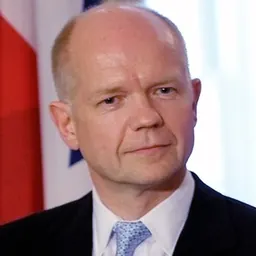

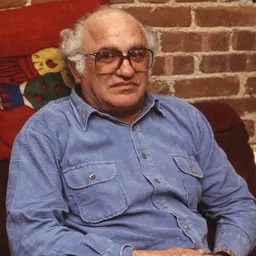

Related people
Same field, nearest in time
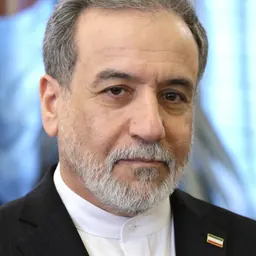
Contemporaries
People whose lives overlapped Héctor Timerman's


Frequently asked questions
Who was Héctor Timerman?
Argentine journalist and politician
When was Héctor Timerman born?
Héctor Timerman was born on 16 December 1953 in Buenos Aires.
When did Héctor Timerman die?
Héctor Timerman died on 30 December 2018 in Buenos Aires.
What was Héctor Timerman's occupation?
Héctor Timerman was a diplomat, journalist, human rights defender and politician.
What nationality was Héctor Timerman?
Héctor Timerman was Argentine.
Sources & further reading
Cite this page
APA: Biography.guide. (2026). Héctor Timerman. https://biography.guide/hector-timerman/
MLA: "Héctor Timerman." Biography.guide, https://biography.guide/hector-timerman/.
Chicago: "Héctor Timerman." Biography.guide. https://biography.guide/hector-timerman/.
Data last updated: 2026-09-27 · Spot an error? Report a correction.
Page generated 2026-09-27 05:17 UTC