
About Ahmad Vahidi
Born 1958. Ahmad Vahidi is an Iranian politician and army officer.
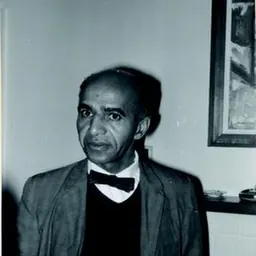
Vahid Shahcheraghi (, born 27 June 1958), better known as Ahmad Vahidi, is an Iranian major general currently serving as Commander-in-Chief of the Islamic Revolutionary Guard Corps (IRGC) since 1 March 2026 and a member of the Expediency Discernment Council.
In 1988, he was appointed commander of the IRGC's extraterritorial unit, the Quds Force. He was the minister of defense under Mahmoud Ahmadinejad from 3 September 2009 until 15 August 2013. Vahidi was president of the Supreme National Defense University from August 2016 to 2021. He served as the deputy commander of the IRGC from December 2025 until the death of Mohammad Pakpour in the 2026 Iran war. Vahidi also served as the Minister of Interior from 2021 to 2024.
He is sanctioned by Canada, the United States and the European Union for alleged involvement in terrorism and nuclear proliferation. Argentina's highest court formally charged Vahidi for the 1994 attack on the AMIA Jewish Community center in Buenos Aires. Argentina issued an Interpol arrest warrant against him.
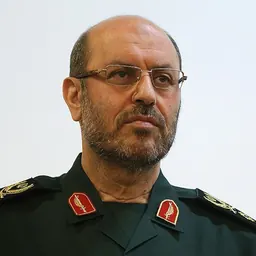
Early life and education Vahid Shah Cheraghi was born on 27 June 1958 in Shiraz. He holds a bachelor's degree in electronics and a master's degree in industrial engineering. From 1988 to 1998, he led the Quds Force. He was in office until 2009. In August 2009, he was appointed minister of defense by President Mahmoud Ahmadinejad. He received 79.3% of the votes of the members of the parliament. Vahidi's term ended on 15 August 2013 and Hossein Dehghan replaced him in the post. As defence minister, Vahidi prioritized strengthening Lebanon's army as one of Iran's strategic objectives.
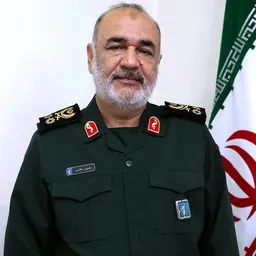
He was appointed the temporary chief of the Islamic Revolutionary Guard Corps following the death of former commander-in-chief Hossein Salami during the June 2025 Israeli strikes on Iran. On 1 March 2026, he was appointed as the commander-in-chief of the IRGC, following the death of Mohammad Pakpour in the 2026 Iran war.
Controversies According to Mohammad Ali Shabani of the Middle Eastern newspaper Amwaj, Vahidi is a known hardliner as the commander-in-chief of the IRGC compared to his predecessors, Mohammad Pakpour and Hossein Salami.
Vahidi is subject to sanctions imposed by the United States and the European Union on allegations of involvement in terrorism and nuclear proliferation activities.
Nuclear weapons development
According to The Daily Telegraph, Vahidi was one of the hand-picked individuals who joined a secretive cohort accompanying Supreme Leader Ali Khamenei's trip to North Korea during the 1980s, which was "designed to acquire missile and nuclear technology." In June 2010, Vahidi was blacklisted by the US government. This measure aims to freeze the assets of proliferators of weapons of mass destruction (WMD) and their supporters, thereby isolating them from the US financial and commercial systems.
Mahsa Amini protests In 2022 amid the Mahsa Amini protests, Vahidi criticized those inciting violence and following the "United States, European countries and anti-revolutionary groups." Later, he was sanctioned by the US government for serious human rights violations due to him maintaining oversight over all Police Command of the Islamic Republic of Iran (FARAJA), which were deployed to suppress protesters.
Anti-American activities According to the Foundation for Defense of Democracies, Vahidi's time at the IRGC is "replete with efforts to kill Americans" coinciding with threats from Tehran toward US personnel. As a leader of the Quds Force, he was linked to the 1983 bombing of US Marine barracks in Beirut. In the mid-1980s, Vahidi was involved in secret contacts between Iran and US President Ronald Reagan's administration related to the Iran-Contra affair and arms deliveries. Vahidi was serving as the commander of a special unit of Iran's Revolutionary Guard known as the Quds Force when the attack took place. while Argentine prosecutors accuse him of involvement in planning and executing the attack.
In 2009, his anti-Zionist speech during his nomination as defence secretary was well received by the Iranian parliament, with deputies chanting "death to Israel". His nomination as defence minister was condemned by the Argentinian government.
In May 2011, Vahidi paid an official visit to Bolivia. In June 2011, Bolivia apologized to Argentina for Vahidi visiting the country, and announced that he would be leaving the country immediately.
Vahidi is accused of being one of those responsible for the AMIA bombing in Argentina.
In January 2015, Argentine federal prosecutor Alberto Nisman, who was investigating the AMIA bombing, was scheduled to appear before the Argentine National Congress to denounce the National Government for conspiring with the Iranian regime to lift INTERPOL's red notices against those accused of the attack and prevent the trial from continuing, in exchange for oil and grain purchases. Nisman was found shot in the head and dead in the bathroom of his Buenos Aires apartment one day before his scheduled appearance before Congress.
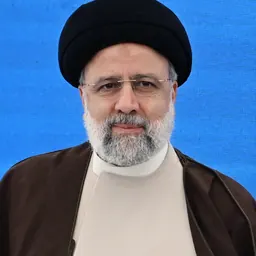
In August 2021, Vahidi was made Interior Minister by the newly elected president Ebrahim Raisi. This triggered condemnation from Argentina given his suspected role in the 1994 AMIA bombing, with the now-former head of the Ministry of Foreign Affairs and Worship of Argentina describing the appointment of Vahidi as "an insult to Argentina and a blow to the families of the victims" of the bombing.
In April 2024, Argentina's criminal court (Court of cassation) ruled that the attack had been planned by Iran, and carried out by the Iran-backed organization Hezbollah. In May 2024 the Argentine Foreign Ministry officially announced that Interpol had issued a red notice for the arrest of Vahidi in connection with the AMIA bombing. This red notice states that Vahidi is being sought by Argentina for charges of alleged aggravated murder and damages.
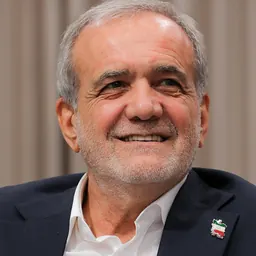
2026 Iran war During the 2026 Iran war, Iran International reported major disagreements between Vahidi and Iranian president Masoud Pezeshkian about how to handle the economic effects of the war. Later reports indicated that Vahidi was practically controlling the country, blocking the attempts of Pezeshkian to appoint a new intelligence minister. It was said that all candidates including Hossein Dehghan were rejected by Vahidi, and that that he insisted that during wartime all critical and sensitive leadership positions must be decided by the IRGC.
According to a New York Times investigation, Vahidi was among the powerful figures pushing for Mojtaba Khamenei’s appointment as Iran’s supreme leader.
On 21 April, the Institute for the Study of War reported a major disagreement between Vahidi and Iranian parliament speaker Mohammad Bagher Ghalibaf, with Ghalibaf favoring participating in negotiations and Vahidi opposing participation.
On August 10, Aljazeera reported Vahidi is official confirmed appointed Chief of Commander IRGC with the rank of Major General .
Don’t just read it —
keep it.
Full-length biographies made to live with: read them, listen on the way to work, watch them tonight.
- E-book
- Audio
- Video
Instant download · yours to keep · every purchase keeps this site free
Important facts
People in Ahmad Vahidi's life
Named in this biography and alive at the same time


Related people
Same field, nearest in time


Contemporaries
People whose lives overlapped Ahmad Vahidi's




Frequently asked questions
Who is Ahmad Vahidi?
Iranian politician
When was Ahmad Vahidi born?
Ahmad Vahidi was born on 27 June 1958 in Shiraz.
What is Ahmad Vahidi's occupation?
Ahmad Vahidi is a politician and army officer.
What nationality is Ahmad Vahidi?
Ahmad Vahidi is Iranian.
Sources & further reading
Cite this page
APA: Biography.guide. (2026). Ahmad Vahidi. https://biography.guide/ahmad-vahidi/
MLA: "Ahmad Vahidi." Biography.guide, https://biography.guide/ahmad-vahidi/.
Chicago: "Ahmad Vahidi." Biography.guide. https://biography.guide/ahmad-vahidi/.
Data last updated: 2026-09-20 · Spot an error? Report a correction.
Page generated 2026-09-27 05:29 UTC