
About Hayter Reed
Lived 1849 – 1936 (aged 87). Hayter Reed was a Canadian politician.
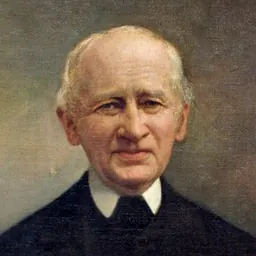
Hayter Reed (May 26, 1849 – December 21, 1936) was a Canadian politician. He served on the 1st Council of the Northwest Territories.
Early life
Birth Hayter Reed was born in L'Orignal, Canada West, on 26 May 1849. His father was George Decimus Reed, an immigrant from Surrey, England, a registrar for the United Counties of Prescott and Russell, who had married Hayter's mother, Harriet McKay, a Canadian born.
Career
Military service Having graduated in 1865, Hayter Reed aligned himself with the military service of Canada. On 15 June 1866, he joined the 14th Battalion Volunteer Militia Rifles, Canada, and immediately thereafter he was appointed drill instructor. In 1879, Hayter Reed served as a notary public in Prince Albert, North-West Territories.
Civil service In April 1880, Hayter Reed was commissioned by the Department of the Interior as chief land guide in Winnipeg; he was responsible for the distribution of both immigrants and settlers with the aid of several agencies throughout Canada. Immediately thereafter, the Department of the Interior issued a request to fill several vacant positions within their Indian Affairs Branch and in February 1881, Reed was appointed Indian agent in Battleford, North-West Territories. In March 1881, Edgar Dewdney (then Commissioner of Indian Affairs) sought to settle Canada's Indigenous population on reserves. Accordingly, in 1882, Dewdney instructed Reed (then appointed to the North-West Territorial Council) minimize the expenditure of funds by (1) restricting the amount of food supplied to the reserves inhabited by Indigenous peoples (flour, bacon or beef and excluding luxury goods such as tea, sugar and tobacco) and (2) demanding manual labour from the Indigenous peoples as recompense.
Reed is responsible for purposely hindering flourishing Indigenous economic agricultural development in the plains through the Peasant Farming Policy, which aimed to push Indigenous peoples to the socioeconomic positions of peasants. Using his position as deputy superintendent general, Reed implemented a policy which restricted indigenous peoples from using modern farming equipment. As head of the Indian Affairs Department, Reed was also instrumental in implementing a pass system which restricted Indigenous people from leaving their reserves without a temporary certificate from a government agent. He later overruled the North-West Mounted Police, who wanted to abolish the policy, but acknowledged in 1893 that the pass system was not grounded in law. In 1882, Reed was appointed as a member of the North-West Territorial Council; during his time on the council he filled in for the lieutenant governor in his absence. He lived in Regina. He served on the council until 1888, and later worked for Canadian Pacific Railway hotels. He died in 1936.
Don’t just read it —
keep it.
Full-length biographies made to live with: read them, listen on the way to work, watch them tonight.
- E-book
- Audio
- Video
Instant download · yours to keep · every purchase keeps this site free
Important facts
People in Hayter Reed's life
Named in this biography and alive at the same time

Related people
Same field, nearest in time




Contemporaries
People whose lives overlapped Hayter Reed's



Frequently asked questions
Who was Hayter Reed?
Canadian politician
When was Hayter Reed born?
Hayter Reed was born on 26 May 1849 in L'Orignal.
When did Hayter Reed die?
Hayter Reed died on 21 December 1936 in Montreal.
What was Hayter Reed's occupation?
Hayter Reed was a politician.
What nationality was Hayter Reed?
Hayter Reed was Canadian.
Sources & further reading
Cite this page
APA: Biography.guide. (2026). Hayter Reed. https://biography.guide/hayter-reed-politician/
MLA: "Hayter Reed." Biography.guide, https://biography.guide/hayter-reed-politician/.
Chicago: "Hayter Reed." Biography.guide. https://biography.guide/hayter-reed-politician/.
Data last updated: 2026-09-20 · Spot an error? Report a correction.
Page generated 2026-09-27 05:19 UTC