
About Hasui Kawase
Lived 1883 – 1957 (aged 74). Hasui Kawase was a Japanese painter, printmaker, graphic artist, landscape painter, visual artist and ukiyo-e artist.
was a Japanese artist who was one of 20th century Japan's most important and prolific printmakers. He was a prominent designer of the shin-hanga ("new prints") movement, whose artists depicted traditional subjects with a style influenced by . Like many earlier ukiyo-e prints, Kawase's works were commonly landscapes, but displayed atmospheric effects and natural lighting.
Kawase designed almost one thousand woodblock prints over a career that spanned nearly forty years. Towards the end of his life the government recognized him as a Living National Treasure for his contribution to Japanese culture.
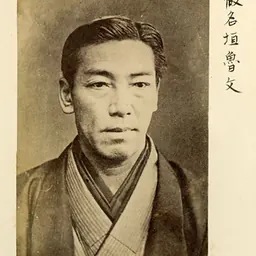
Life Born Bunjiro Kawase in 1883, as a youth he dreamed of an art career. His paternal uncle was Robun Kanagaki (1829–94), a Japanese author and journalist, who produced the first manga magazine. Kawase went to the school of the painter Bokusen Aoyagi as a young man. He sketched from nature, copied the masters' woodblock prints, and studied brush painting with Kanyu Araki. His parents had him take on the family rope and thread wholesaling business, but its bankruptcy when he was 26 led him to pursue art.
He approached Kiyokata Kaburagi to teach him , but Kaburagi instead encouraged him to study , which he did with Saburōsuke Okada for two years. Two years later he again applied as a student to Kaburagi, who this time accepted him.
Kawase built a new house in Magome in 1930, and Moon at Magome from the series Twenty Views of Tōkyō sold that year became his second best-selling work. thumb In the garden of artist Shinsui Itō’s Tokyo home. Left to right, back row: Tesutaro Moriyama (assistant to publisher Watanabe); Hasui Kawase, collector Robert O. Muller, Inge Muller, Yoshiko Itō and Shinsui Itō. Left to right, front row: Shirō Kasamatsu and publisher Shōzaburō Watanabe, April 1940
Style Kawase worked almost exclusively on landscape and townscape prints based on sketches and watercolors he made in Tokyo and during travels around Japan. However, his prints are not merely meisho (famous places) prints that are typical of earlier ukiyo-e masters such as Utagawa Hiroshige and Katsushika Hokusai (1760-1849). Kawase's prints feature locales that are tranquil and obscure in urbanizing Japan.
Evening Snow at Terashima Village, 1920. From series Twelve Scenes of Tokyo In 1920, Kawase designed his first falling snow print. His snow scenes are among the most original and best of his works. He later recalled "In my earlier works there are novel expressions in carving line and forms: the artisans used to complain." He said of the relationship between designer and printer:
Kawase considered himself a realist and employed his training in yōga in his compositions. Like Hiroshige he made travel and landscape prints, though his subjects were less known locations rendered with naturalistic light, shade, and texture, without the captions and titles that were standard in prints of Hiroshige's age.
Kawase left a large body of woodblock prints and watercolors: many of the watercolors are linked to the woodblock prints. He also produced oil paintings, traditional hanging scrolls and a few byōbu (folding screens).
Gallery
Important series and works
Twelve Scenes of Tokyo (1919–1921) Souvenirs of Travel, Vol. I (1919–1920) Vol. II (1921) Vol. III (1924–1929) The Mitsubishi Villa in Fukagawa (1920) Selected Views of Japan (1922–1926) Twenty Views of Tokyo (1925–1930) New Eight Views of Japan (1927) Selected Views of the Tokaido Road (1931–1947) Collected Views of Japan, Eastern Japan (1932–1936) Collected Views of Japan II, Kansai (1933–1943) Collected Views of Kennan Mountain Villa in Moto-Hakone (1935) One-hundred Views of New Tokyo (1936) Shinto and Its Architecture (1936) Eight Views of Korea (1939) Pacific Transport Lines (1952) Snow at Zōjō-ji (1953) Hall of the Golden Hue, Hiraizumi (1957; Kawase's final work)
About dating of the prints: Many of them are reprinted 1960 after Kawase's death. (In Japan, it is unusual to number the prints, e.g. "5th of 100".)
Works in museums Hasui Kawase's works are currently kept in several museums worldwide, including the British Museum, the Toledo Museum of Art, the Brooklyn Museum, the Indianapolis Museum of Art, the Museum of Fine Arts, Boston, the Metropolitan Museum of Art, the Portland Art Museum, the Los Angeles County Museum of Art, the University of Michigan Museum of Art, the Minneapolis Institute of Art, the Stanley Museum of Art, the Walters Art Museum, the Clark Art Institute, the Smart Museum of Art, the Nelson-Atkins Museum of Art, and the Virginia Museum of Fine Arts.
Don’t just read it —
keep it.
Full-length biographies made to live with: read them, listen on the way to work, watch them tonight.
- E-book
- Audio
- Video
Instant download · yours to keep · every purchase keeps this site free
Important facts
People in Hasui Kawase's life
Named in this biography and alive at the same time


Related people
Same field, nearest in time

Contemporaries
People whose lives overlapped Hasui Kawase's


Frequently asked questions
Who was Hasui Kawase?
Japanese ukiyo-e artist, printmaker (1883-1957)
When was Hasui Kawase born?
Hasui Kawase was born on 18 May 1883 in Shiba-ku.
When did Hasui Kawase die?
Hasui Kawase died on 7 November 1957 in Ota.
What was Hasui Kawase's occupation?
Hasui Kawase was a painter, printmaker, graphic artist, landscape painter, visual artist and ukiyo-e artist.
What nationality was Hasui Kawase?
Hasui Kawase was Japanese.
Sources & further reading
Cite this page
APA: Biography.guide. (2026). Hasui Kawase. https://biography.guide/hasui-kawase/
MLA: "Hasui Kawase." Biography.guide, https://biography.guide/hasui-kawase/.
Chicago: "Hasui Kawase." Biography.guide. https://biography.guide/hasui-kawase/.
Data last updated: 2026-09-26 · Spot an error? Report a correction.
Page generated 2026-09-27 05:14 UTC