
About Hassan Konopacki
Lived 1878 – 1953 (aged 75). Hassan Konopacki was a Polish and Russian journalist, soldier, officer and politician.
Hasan Konopacki (, Hasan Amuratavič Kanapacki) (1879–1953) was a Lipka Tatar politician, journalist and military officer that served in the Imperial Russian, Lithuanian and Polish armies. Hasan Konopacki was closely connected with the Belarusian national movement and was a commander of Belarusian military units in the Lithuanian Army (1918–1919), Polish Army (1919–1920) as well as a member of the Poland-close Belarusian Military Commission. Before that, he participated in the Russo-Japanese War (1904–1905) as an artillery colonel and in World War I on the Russian side. During the Second Polish Republic (1918–1939) he worked as a politician and a journalist of the Belarusian minority in Poland, advocating the creation of a Belarusian state in close cooperation with Poland.
Life Youth and Russian military service
Konopacki was born on February 25, 1879, in Minsk, then in Russian Empire. His noble Muslim family belonged to the Lipka Tatars. His father Amurat Konopacki, worked as a Collegiate assessor. He graduated from the Polotsk Cadet Corps and transferred in 1897 to Saint Petersburg Artillery School. He spent his military service with the rank of second lieutenant of the Imperial Russian Army.
In 1904, Konopacki was sent to the Transbaikal Oblast, where the First Siberian Artillery Brigade was being formed. There, he was appointed officer of the 1st Battery. From 1904 to 1905, he participated in the Russo-Japanese war, where he was wounded during the Battle of Liaoyang (August 1904). In 1906, his brigade moved to Nerchinsk, east of Lake Baikal.
As a battery officer, he performed various functions: member of the Honorary Court; member of the Officer's Capital Loan Commission; manager of the officers' library. In 1909, he was promoted to the rank of captain. Subsequently, he left Nerczyńsk to the Chinese border, at Blagoveshchensk, near the Amur river, to set up and command the 2nd Battery of the 10th Siberian Field Artillery Brigade. On 8 September 1912, he was sent further east to Khabarovsk to train recruits. Upon his own request, on 13 October 1912, Hasan moved to the 3rd Field Artillery Brigade in Kaluga, southwest of Moscow. On 18 July 1914, he was appointed Commander of the 5th Battery of the 57th Field Artillery Brigade.
In the middle of 1919, Minsk was recaptured from the Bolsheviks by the Polish forces; Hasan then championed the creation of a Belarusian state alongside the Second Polish Republic.
From this "Vilnius" period, Hasan kept long life friend: in addition to poet, playwright and journalist Kupala, there were Maksim Tank and writer Frantsishak Alyakhnovich. At the train station, they were looked after by Mr. and Mrs. Markovich, from the State Repatriation Office, who lived at Plac Wolności: momentarily housed in a barrack near Poznańska Square (at today's Św. Trójcy Street), they moved first at 41 Śniadeckich Street (November 8, 1946 to May 13, 1947) before living on the first floor of the tenement at 11 Mazowiecka street. At that time, Hasan was already weak from the travel and stays at several hospital to fight an atherosclerosis. was then 22 year old; she was related on her mother's side to the Achmatowicz, a rich Tatar family. The wedding occurred in Minsk and the witnesses were Bogdan Aleksandrowicz and Aleksander Ilyasewicz, a lieutenant-colonel from the 27th Artillery Brigade. In parallel, he began working with the Polish Radio Białystok , which on June 15, 1958, aired "Magazyn Belaruski", the first broadcast in Belarusian. He settled in Sopot in 1956: he worked as the press spokesman of the Gdańsk Shipyard "Lenin" from 1966 to 1972).
Maciej Konopacki was a researcher, historian and promoter of Tatar history. In particular, he was one of the precursors of a dialogue between Islam and the Catholic Church in Poland. He co-founded the "Museum of the Earth" in Sokółka, managing the Tatar department. He supported the development of a tourist route, called the "Tatar trail" , leading from Białystok to Sokółka. He was the Patriarch of the Polish Orient.
Maciej died on December 3, 2020, in Sopot.
Awards and commemoration Hasan Konopacki was awarded the following orders: During the event, a Muslim prayer was led by Imam Mahmud Taha Żuk.
Don’t just read it —
keep it.
Full-length biographies made to live with: read them, listen on the way to work, watch them tonight.
- E-book
- Audio
- Video
Instant download · yours to keep · every purchase keeps this site free
Important facts
People in Hassan Konopacki's life
Named in this biography and alive at the same time
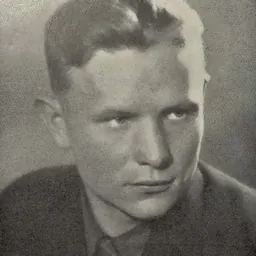
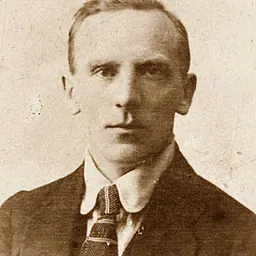
Related people
Same field, nearest in time
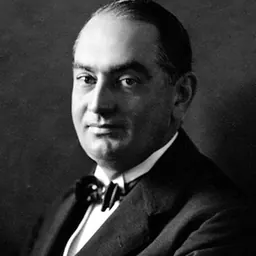

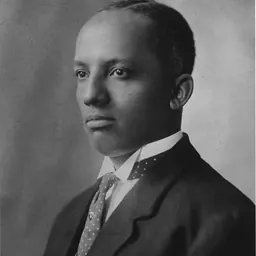

Contemporaries
People whose lives overlapped Hassan Konopacki's




Frequently asked questions
Who was Hassan Konopacki?
Polish journalist (1879-1953)
When was Hassan Konopacki born?
Hassan Konopacki was born on 25 February 1878 in Minsk.
When did Hassan Konopacki die?
Hassan Konopacki died on 11 May 1953 in Bydgoszcz.
What was Hassan Konopacki's occupation?
Hassan Konopacki was a journalist, soldier, officer and politician.
What nationality was Hassan Konopacki?
Hassan Konopacki was Polish and Russian.
Sources & further reading
Cite this page
APA: Biography.guide. (2026). Hassan Konopacki. https://biography.guide/hassan-konopacki/
MLA: "Hassan Konopacki." Biography.guide, https://biography.guide/hassan-konopacki/.
Chicago: "Hassan Konopacki." Biography.guide. https://biography.guide/hassan-konopacki/.
Data last updated: 2026-09-22 · Spot an error? Report a correction.
Page generated 2026-09-27 05:18 UTC