
Harry Yount
First national park ranger, Yellowstone National Park
About Harry Yount
Lived 1839 – 1924 (aged 85). Harry Yount was an American explorer, miner and military personnel.
Harry S. Yount (March 18, 1839 – May 16, 1924) was an American Union Army soldier, mountain man, hunter, prospector, wrangler and wilderness guide. A seasonal employee of the United States Department of the Interior, he was the first game warden in Yellowstone National Park. He was nicknamed "Rocky Mountain Harry Yount".
Yount served two terms in the Union Army during the American Civil War. He first enlisted for a six-month term in November 1861. He was wounded and taken prisoner by the Confederate States Army in an opening skirmish of the Battle of Pea Ridge in Arkansas in March 1862, and held as a prisoner of war for nearly a month until released in a prisoner exchange. He re-enlisted in August 1862 and served until the end of the war. He was promoted three times and was a company quartermaster sergeant when he was discharged in July 1865.
He worked as a hunter and a prospector, and as a bullwhacker for the U.S. Army, in the years following the Civil War. For seven years in the 1870s he worked as a guide, hunter and wrangler for the expeditions of the Hayden Geological Surveys, which mapped vast areas of the Rocky Mountains.
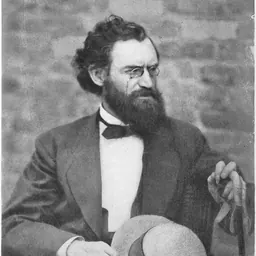
In 1880, Yount was hired by the United States Secretary of the Interior, Carl Schurz, to be the first gamekeeper in Yellowstone National Park, and during his 14 months in that job wrote two annual reports for Schurz, which were then submitted to Congress. His reports described the challenges of protecting the wildlife in the first U.S. national park and influenced the culture of the National Park Service, which was founded 35 years later in 1916. Horace Albright, the second director of the National Park Service, called Yount the "father of the ranger service, as well as the first national park ranger". Yount was a prospector during much of the last four decades of his life.
Family background and early years
Harry Yount's paternal ancestors, Hans George Jundt and Anna Marie Jundt, arrived in Philadelphia in 1731, immigrants from Alsace-Lorraine. Their son, Johannes or John Yount, later moved to Lincoln County, North Carolina. Their grandson, Harry's paternal grandfather, Jacob A Yount, moved to present day Missouri with several other families shortly after the Louisiana Purchase. Harry's parents were David Yount (1795–1881) and Catherine Shell Yount. Harry Yount's father, David Yount, was about 44 years old at the time of Harry's birth, and Harry was the couple's tenth child. and different birth years have been mentioned by various writers, such as the anonymous author of a published biographical sketch who wrote that Yount was born in 1847,
Bullwhacker, hunter and trapper
After the Civil War ended, Yount became engaged to Estella Braun, a Western Union employee in Detroit, Michigan. She was killed in a train wreck before their wedding could take place, and he never married.
Guide for the Hayden Geological Survey
In 1872 or 1873, Yount was hired as a seasonal guide, wrangler and packer for geological survey expeditions with the aim of mapping broad swaths of the Rocky Mountains.
During Hayden's expedition of 1877, Yount engaged in mountaineering with Ingersoll and the cartographer A. D. Wilson in the Wind River Range. They were the first to ascend the south slopes of Wind River Peak, and, with Wilson, Yount was the first to ascend West Atlantic Peak. Hayden's expedition of 1878 conducted surveys in Yellowstone National Park and surrounding areas in 1878. That expedition included the British mountaineer James Eccles and Eccles's favorite Swiss mountain guide, Michel Payot of Chamonix. Eccles wanted to attempt an ascent of the Grand Teton, then unclimbed. This was the third attempt to climb the Grand Teton by members of Hayden's expeditions. Yount served as the guide in a four-man party that included Eccles, Payot and Wilson. Eccles and Payot were held up by the disappearance of two mules carrying their gear, and so were unable to accompany Wilson and Yount on to the higher parts of the mountain. During the climb, Yount slipped on the ice and fell close to a deep chasm in the glacier, where water was streaming down from the cliff above. The hold of his buckskin pants on the ice reportedly prevented him from being carried down into the crevice. Because of the delay and the absence of the experienced Alpine climbers, Yount and Wilson had to turn back a few hundred feet short of the summit, at a spur called The Enclosure. No previous party had come so close to reaching the summit. The undisputed first ascent of the Grand Teton took place 20 years later, in 1898.
Gamekeeper in Yellowstone National Park
Yount was hired as the first gamekeeper for Yellowstone National Park in 1880, at a salary of $1,000 per year, when the park's entire budget was just $15,000 per year.
Yount submitted his first Report of Gamekeeper on November 25, 1880, which was included as Appendix A to the annual report of the Secretary of the Interior. His report described his activities since being hired. He described the range and habits of Yellowstone's large mammals and expressed regret for "the unfortunate breakage of my thermometer when it could not be replaced," along with a submitted synopsis of the weather the previous winter. In this report, he resigned his position "to resume private enterprises now requiring my personal attention," and concluded with a clear recommendation:
There are indications that Yount had a difference of opinion with park superintendent Norris, who wanted him to spend more of his time building roads for the convenience of tourists, while Yount preferred to concentrate on protecting the wildlife.
Recognition as first National Park ranger
Although Yount's official job title was "gamekeeper" rather than "park ranger", and although he only worked in Yellowstone National Park for 14 months, his two annual reports had a lasting impact on the administration of the national parks in the United States. He is "securely positioned in the legend and culture" of the National Park Service, and is considered a figure of "historic proportion". In Oh, Ranger!, a book published in 1928, Horace Albright, who later became the second director of the National Park Service, wrote that "Harry Yount pointed out in a report that it was impossible for one man to patrol the park. He urged the formation of a ranger force. So Harry Yount is credited with being the father of the ranger service, as well as the first US Park Ranger." Stephen Mather, the first director of the National Park Service, wrote the foreword of the book.
Prospecting and later years
After Yount resigned from his job in Yellowstone, he lived for a while in Uva, Wyoming. He homesteaded in the area in 1887 but his claim was sold in a sheriff's sale in 1892. He spent nearly 40 years prospecting in the Laramie Mountains, and developed copper and graphite mining claims. He settled in Wheatland, Wyoming, and worked on developing a marble mining claim west of there. Yount was actively involved in prospecting until the day before his death, when he had been looking for a ride to inspect a possible gold deposit. On May 16, 1924, he walked into downtown Wheatland, as was his daily habit, where he collapsed and died of heart failure near a Lutheran church. He was buried in the Lakeview Cemetery in Cheyenne.
Legacy
Younts Peak, which is high and located in the Absaroka Range at the headwaters of the Yellowstone River, is named after Yount. The peak's name was bestowed by the Hayden Geological Survey. Long after his death, in the 1970s, Yount's marble mining claim finally went into production. It yielded crushed marble for use in landscaping and aquariums.
In 1994, the National Park Service established the Harry Yount Award, given annually to an employee whose "overall impact, record of accomplishments, and excellence in traditional ranger duties have created an appreciation for the park ranger profession." This award is given both nationally and regionally. According to Supernaugh, Yount is "credited with setting the standards for performance and service by which the public has come to judge the rangers of today".
Don’t just read it —
keep it.
Full-length biographies made to live with: read them, listen on the way to work, watch them tonight.
- E-book
- Audio
- Video
Instant download · yours to keep · every purchase keeps this site free
Important facts
People in Harry Yount's life
Named in this biography and alive at the same time


Related people
Same field, nearest in time



Contemporaries
People whose lives overlapped Harry Yount's
Frequently asked questions
Who was Harry Yount?
first national park ranger, Yellowstone National Park
When was Harry Yount born?
Harry Yount was born on 18 March 1839 in Washington County.
When did Harry Yount die?
Harry Yount died on 16 May 1924 in Wheatland.
What was Harry Yount's occupation?
Harry Yount was an explorer, miner and military personnel.
What nationality was Harry Yount?
Harry Yount was American.
Sources & further reading
Cite this page
APA: Biography.guide. (2026). Harry Yount. https://biography.guide/harry-yount/
MLA: "Harry Yount." Biography.guide, https://biography.guide/harry-yount/.
Chicago: "Harry Yount." Biography.guide. https://biography.guide/harry-yount/.
Data last updated: 2026-09-25 · Spot an error? Report a correction.
Page generated 2026-09-27 05:06 UTC