About Harry Wright
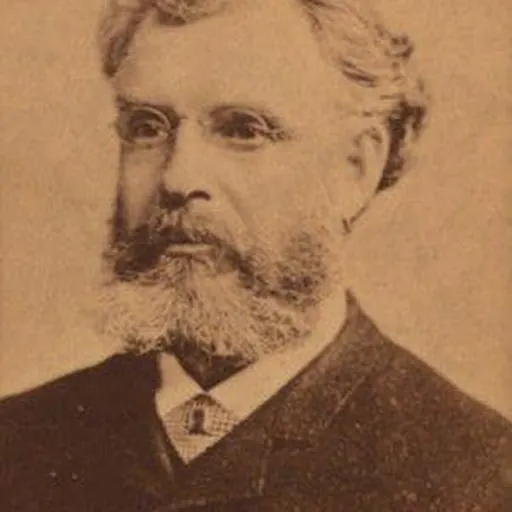
Lived 1835 – 1895 (aged 60). Harry Wright was an American baseball player and cricketer.
William Henry "Harry" Wright (January 10, 1835 – October 3, 1895) was an American professional baseball player, manager, and developer. He assembled, managed, and played center field for baseball's first fully professional team, the 1869 Cincinnati Red Stockings. He is credited with introducing innovations such as backing up infield plays from the outfield and shifting defensive alignments based on hitters' tendencies. For his contributions as a manager and developer of the game, he was inducted into the Baseball Hall of Fame in 1953 by the Veterans Committee.
Wright was the first to make baseball into a business by paying his players up to seven times the pay of the average working man. He is the oldest former professional player in the Hall: a few other inductees were born before him, but none of them played professionally. His younger brother George Wright is also in the Hall. Early life
Born in Sheffield, England, he was the eldest of five children of professional cricketer Samuel Wright and his wife, Annie Tone Wright. His family emigrated to the U.S. when he was nearly three years old, and his father found work as a bowler, coach, and groundskeeper at the St George's Cricket Club in New York. Harry dropped out of school at age 14 to work for a jewelry manufacturer, and worked at Tiffany & Co. for several years.
Both Harry and George, 12 years younger, assisted their father, effectively apprenticing as cricket "club pros". Harry played against the first English cricket team to tour overseas in 1859.
Both brothers played baseball for some of the leading clubs during the amateur era of the National Association of Base Ball Players (NABBP). Harry was already 22 when the baseball fraternity convened for the first time in 1857, at which time he joined the Knickerbocker Base Ball Club. He did not play in a game with the Knickerbockers until July 8, 1858, playing the outfield against Excelsior of Brooklyn. The Knickerbockers lost the game, 31–13.
In 1863, the Knickerbocker club all but withdrew from official competition, and Wright joined Gotham of New York, primarily playing shortstop. Here, he joined his brother George, who had become a member of the team the previous year. During the winter of 1864/65, the Wrights played the curious game of "ice base ball".
Cincinnati Wright left New York on March 8, 1865, bound for Cincinnati, where he had been hired on salary at the Union Cricket Club. When baseball boomed less than a year later in 1866, the first full peacetime season, he became, in effect, club pro at the Cincinnati Base Ball Club, although he is commonly called simply a baseball "manager" from that time. By now, Wright was 31, probably past his athletic prime.
Cincinnati fielded a strong regional club in 1867. With Wright working as the regular pitcher, and still a superior player at that level, the team won 16 matches and lost only to the Nationals of Washington, D.C., on their historic tour. For 1868 he added four players from the East and one from the crosstown Buckeye club, a vanquished rival. The easterners, at least, must have been compensated by club members if not by the club.
When the NABBP permitted professionalism for 1869, Harry augmented his 1868 imports (retaining four of five) with five new men, including three more originally from the East. No one but Harry Wright himself remained from 1867; one local man and one other westerner joined seven easterners on the famous First Nine. The most important of the new men was brother George, probably the best player in the game for a few years, the highest paid man in Cincinnati at $1400 for nine months. George at shortstop remained a cornerstone of Harry's teams for ten seasons.
The Red Stockings toured the continent undefeated in 1869 and may have been the strongest team in 1870, but the club dropped professional baseball after the second season, its fourth in the game. As it turned out, the Association also passed from the scene.
Manager During this early era, the rules of the sport for many years prohibited substitution during games except by mutual agreement with opponents, and the role of a team manager was not as specifically geared toward game strategy as in the modern era; instead, managers of the period combined the role of a field manager with that of a modern general manager in that they were primarily responsible for signing talented players and forming a versatile roster, as well as establishing a team approach through practice and game fundamentals.
Boston
The National Association years
From an invitation in 1870 by Ivers Whitney Adams, the founder and President of the Boston Red Stockings, Wright moved from managing the "Cincinnati Red Stockings" to work professionally with the first-ever baseball team in Boston, the "Boston Red Stockings". The team was to play in the newly formed National Association of Professional Base Ball Players, now known more often as simply the National Association.
The Red Stockings finished third in the NA's inaugural season. Wright, now 36 years old was the second-oldest player in the league, behind Nate Berkenstock, aged 38. As the team's regular center fielder, Wright played 30 of the team's 31 games at that position. He also pitched in nine games in relief of Albert Spalding, notching one win.
In 1872, the Red Stockings won its first championship, beating Maryland's Lord Baltimore Club by games. They won again the next season, finishing four games ahead of the Philadelphia White Stockings.
1874 turned out to be Wright's last year as the team's regular center fielder. He had been the oldest player in the NA for three years running. It was also his third straight championship as a manager. That year, he organized what turned out to be a fairly disastrous attempt to take baseball back home to the British Isles.
In 1875, the final year of the NA, the Red Stockings were an amazing 71–8, finishing a full 15 games ahead of the Athletics. Wright, now the oldest player in the league, continued to play regularly in center field for Boston until 1874. After that, he played in just three more games, one in each of the next three seasons.
The National League years In 1876, the Boston club joined the new National League. Sportswriters tended to refer to them as the "Red Caps" now, in deference to the resurrected Red Stockings name for the new Cincinnati Club.
Team Year Regular season PostseasonGamesWonLostWin %Finish Won Lost Win % ResultBOS 312010 3rd in NA – – – –BOS 48398 1st in NA – – – –BOS 604316 1st in NA – – – –BOS 715218 1st in NA – – – –BOS 82718 1st in NA – – – –BOS 703931 4th in NL – – – –BOS 614218 1st in NL – – – –BOS 604119 1st in NL – – – –BOS 845430 2nd in NL – – – –BOS 864044 6th in NL – – – –BOS 833845 6th in NL – – – –PRO 845232 2nd in NL – – – –PRO 985840 3rd in NL – – – –PHI 1133973 6th in NL – – – –PHI 1115654 3rd in NL – – – –PHI 1197143 4th in NL – – – –PHI 1287548 2nd in NL – – – –PHI 1326961 3rd in NL – – – –PHI 1306364 4th in NL – – – –PHI 683631 3rd in NL – – – –PHI 1386869 4th in NL – – – – PHI 773rd in NL - - - - 78 5th in NL - - - - PHI 1337257 4th in NL – – – –Total 2,145 1,225 885 - - -
Death
Wright died of a lung ailment on October 3, 1895, in Atlantic City, New Jersey. He was 60 years old. He was buried in West Laurel Hill Cemetery, Bala Cynwyd, Pennsylvania.
Wright's influence on professional baseball was profound and his death reverberated through the sport. The National League dedicated April 13, 1896, as "Wright Day" and the receipts of eight games played that day dedicated to the establishment of a memorial in Wright's memory. Albert Spalding, then age 46, agreed to appear at the game in Rockford, Illinois, and Henry Chadwick, age 80, scored the exhibition game in Cincinnati to honor Wright.
The Philadelphia Inquirer wrote, "Harry Wright came to [Philadelphia] in the zenith of his powers as a base ball manager, and what he did for the development of the local end of the national game of base ball is a matter of history. It was here that he passed the evening of his life, beloved by all whose good fortune it was to know him. Here it was that he had his little home stake, and here in the impressive silence of beautiful West Laurel Hill his mortal remains lie buried. His work was an honor to Philadelphians, who will doubtless turn and give substantial evidence of their appreciation of that honor."
Wright was inducted into the Baseball Hall of Fame in 1953. He was inducted into the Cincinnati Reds Hall of Fame in 2005. His brother George is also a member of both Halls; a third brother, Sam, also played professionally.
Don’t just read it —
keep it.
Full-length biographies made to live with: read them, listen on the way to work, watch them tonight.
- E-book
- Audio
- Video
Instant download · yours to keep · every purchase keeps this site free
Important facts
People in Harry Wright's life
Named in this biography and alive at the same time




Related people
Same field, nearest in time

Contemporaries
People whose lives overlapped Harry Wright's



Frequently asked questions
Who was Harry Wright?
Major League Baseball player, manager (1835-1895)
When was Harry Wright born?
Harry Wright was born on 10 January 1835 in Sheffield.
When did Harry Wright die?
Harry Wright died on 3 October 1895 in Atlantic City.
What was Harry Wright's occupation?
Harry Wright was a baseball player and cricketer.
What nationality was Harry Wright?
Harry Wright was American.
Sources & further reading
Cite this page
APA: Biography.guide. (2026). Harry Wright. https://biography.guide/harry-wright-baseball-player/
MLA: "Harry Wright." Biography.guide, https://biography.guide/harry-wright-baseball-player/.
Chicago: "Harry Wright." Biography.guide. https://biography.guide/harry-wright-baseball-player/.
Data last updated: 2026-09-24 · Spot an error? Report a correction.
Portrait: Wikimedia Commons · author & licence
Page generated 2026-09-27 05:08 UTC